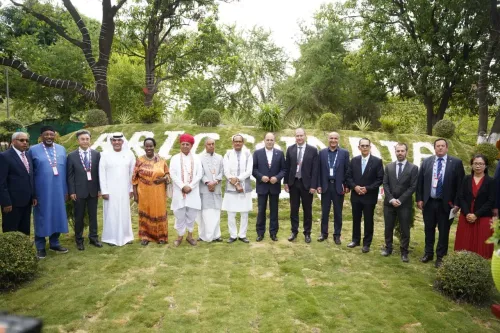
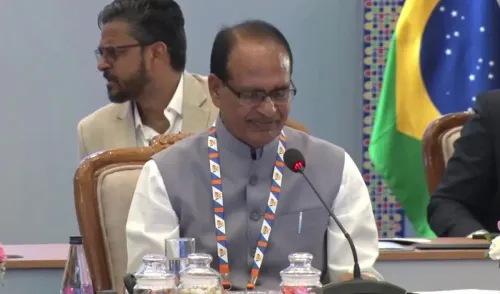
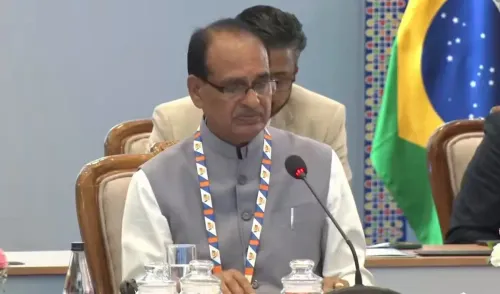
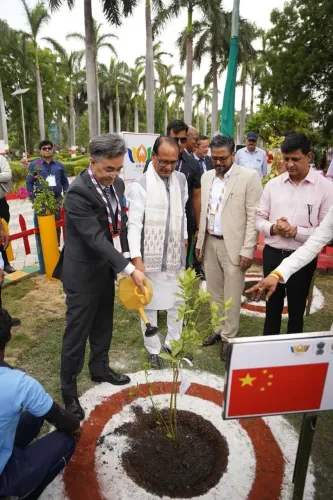
Shivraj Singh Chouhan: India's BRICS Chair a Big Responsibility
Synopsis
Union Agriculture Minister Shivraj Singh Chouhan has called India's 2026 BRICS chairmanship a major responsibility, citing the country's standing as one of the world's largest agricultural producers. His statement signals the ministry's intent to keep food security and farm trade high on the BRICS agenda this year.
Key Takeaways
India holds the BRICS chairmanship in 2026 , with the rotation placing New Delhi at the helm of the grouping's agenda-setting this year.
Union Agriculture Minister Shivraj Singh Chouhan described the chairmanship as 'not merely a matter of pride but a great responsibility.' Chouhan highlighted India's status as one of the world's major agricultural producing nations as central to how it is approaching this responsibility.
India previously held the BRICS chairmanship in 2021 , when it emphasised agricultural cooperation and food security.
The 2024 BRICS expansion increased the grouping's collective share of global agricultural output, raising the stakes of India's farm-policy diplomacy within the forum.
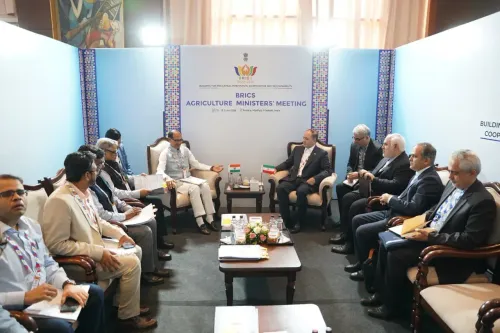
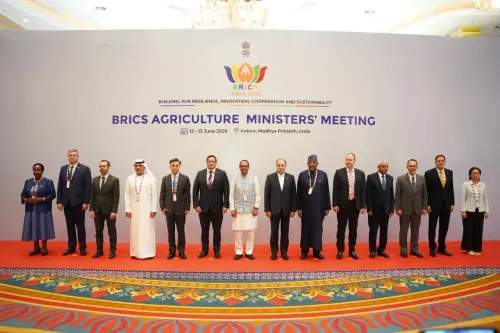
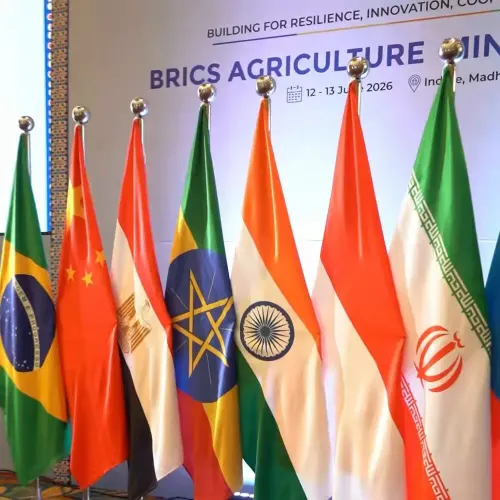
Outcomes to watch include BRICS agriculture ministers' meetings and summit declarations in 2026 focused on food security and trade facilitation.
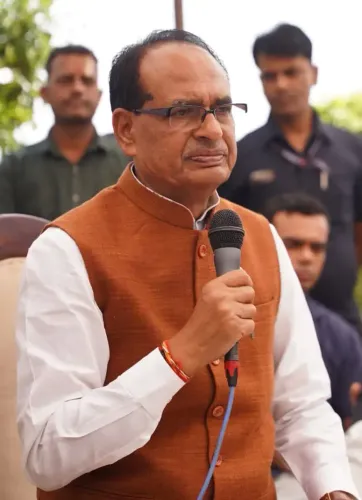
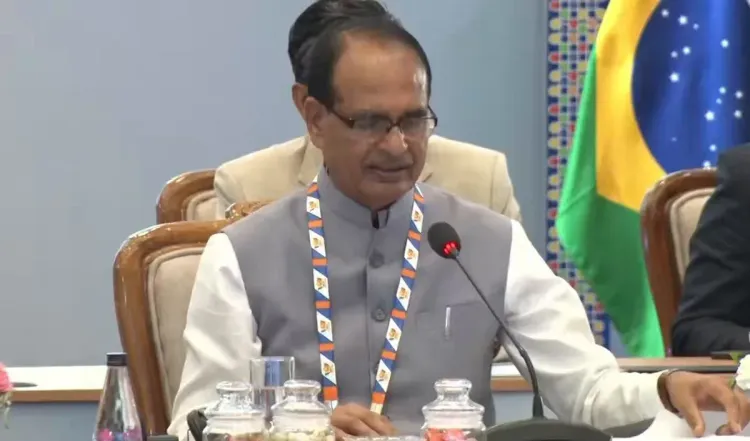
Union Agriculture Minister Shivraj Singh Chouhan on Saturday, June 13, 2026, underscored that India's BRICS chairmanship in 2026 is not merely a matter of national pride but carries a weighty responsibility — particularly given India's stature as one of the world's foremost agricultural producers.
Posting on X with the hashtag #BRICS2026, Chouhan wrote: 'इस वर्ष भारत को ब्रिक्स की अध्यक्षता का दायित्व मिला है। यह हमारे लिए केवल गौरव का विषय नहीं, बल्कि एक बड़ी जिम्मेदारी भी है।' ('This year India has been entrusted with the chairmanship of BRICS. This is not merely a matter of pride for us, but also a great responsibility.') He added that India, as one of the world's major agricultural producing nations, has discharged this responsibility with full seriousness.
Context
BRICS is an intergovernmental grouping of major emerging economies that originally comprised Brazil, Russia, India, China and South Africa, and has since expanded to include additional members. The bloc operates on a rotating annual chairmanship, with the chair nation setting the agenda and hosting the summit. India has held the chairmanship previously — most recently in 2021 — and has consistently used those platforms to spotlight issues central to the developing world, including agricultural trade and food security.
The 2024 expansion of BRICS membership brought in new economies, further enlarging the grouping's collective share of global agricultural output. This makes the agriculture agenda within BRICS increasingly consequential, and India's voice within that conversation correspondingly significant.
Policy Backdrop
As Union Minister for Agriculture and Farmers Welfare, Chouhan occupies the most directly relevant cabinet portfolio for advancing India's agricultural interests within the BRICS framework. His statement signals that the Ministry of Agriculture views the chairmanship as an active diplomatic instrument, not a ceremonial rotation.
India has historically leveraged BRICS chairmanship moments to push for frameworks on food security, rural development and agricultural trade that benefit developing economies. With global food supply chains still under stress from geopolitical and climate pressures, the 2026 chairmanship arrives at a strategically important moment.
Stakeholders and Impact
The most immediate stakeholders are BRICS member states and their farming communities, whose collective agricultural output shapes global commodity markets. For Indian farmers, a successful chairmanship could translate into stronger export frameworks, better market access, and cooperative research on climate-resilient crops.
Broader developing-country coalitions also watch India's BRICS positioning closely, as New Delhi's advocacy on agricultural trade rules carries weight in multilateral negotiations beyond the grouping itself.
What's Next
Attention will now turn to any BRICS agriculture ministers' meetings or summit declarations scheduled during India's 2026 chairmanship, particularly those focused on joint food security initiatives and agricultural trade facilitation. Chouhan's public framing of the chairmanship as a 'great responsibility' suggests the ministry intends to keep the agriculture agenda prominent in the lead-up to the summit.
How concretely India translates this stated commitment into negotiated outcomes — binding cooperation frameworks, joint research programmes, or trade facilitation agreements — will be the measure of the chairmanship's success on the farm-policy front.
Point of View
Not merely a prestige rotation. By publicly linking national responsibility to farm-sector leadership, the Agriculture Ministry is staking a claim to shape the bloc's food security agenda at a moment when the expanded BRICS collectively commands an outsized share of global agricultural output. This fits a broader pattern in which New Delhi has used multilateral chairmanships — whether G20 in 2023 or BRICS in 2021 — to embed domestic policy priorities into international frameworks. The real test will be whether the chairmanship yields binding cooperative outcomes or remains aspirational rhetoric.
NationPress
27 Oct 2026
Frequently Asked Questions
Why does India hold the BRICS chairmanship in 2026?
BRICS operates on a rotating annual chairmanship among its member states; 2026 is India's turn in that rotation, placing New Delhi in charge of setting the grouping's agenda and hosting the summit this year.
What did Shivraj Singh Chouhan say about BRICS 2026?
Chouhan said India's 2026 BRICS chairmanship is not merely a matter of national pride but a great responsibility, and that India — as one of the world's major agricultural producers — has taken that responsibility seriously.
What is India's role in BRICS agriculture?
India is one of the founding BRICS members and one of the world's largest agricultural producers; it has consistently used BRICS platforms to advocate for food security, rural development and fairer agricultural trade for developing economies.
When did India last hold the BRICS chairmanship?
India last held the BRICS chairmanship in 2021, when it emphasised cooperation on agriculture and food security as key themes of its presidency.
What should we watch for during India's BRICS chairmanship in 2026?
Key things to watch include BRICS agriculture ministers' meetings, any summit declarations on joint food security initiatives, and whether India secures concrete cooperative agreements on agricultural trade and climate-resilient farming.