Shivraj Singh Chouhan visits Ayodhya varsity's integrated farming model
Synopsis
Union Agriculture Minister Shivraj Singh Chouhan visited Acharya Narendra Dev Agriculture and Technology University in Ayodhya on 25 June 2026, inspecting an integrated farming model that combines fish rearing, duck farming, and high-value crops. He urged farmers to adopt such diversified systems to generate multiple income streams even on small landholdings.
Key Takeaways
Union Agriculture Minister Shivraj Singh Chouhan visited Acharya Narendra Dev Agriculture and Technology University, Ayodhya on 25 June 2026 .
The university's integrated farming model combines fish farming, duck rearing, turmeric, ginger, elephant foot yam, and drumstick cultivation in a single campus.
The model is designed to create multiple income streams for farmers, making viable earnings possible on small landholdings.
Integrated farming has been supported under RKVY (2007) and the National Mission for Sustainable Agriculture (2014) .
Chouhan publicly urged farmers to adopt such integrated models to meet the challenges of changing times.
The ministry may push for replication of such demonstrations through Krishi Vigyan Kendras and other state agricultural universities.
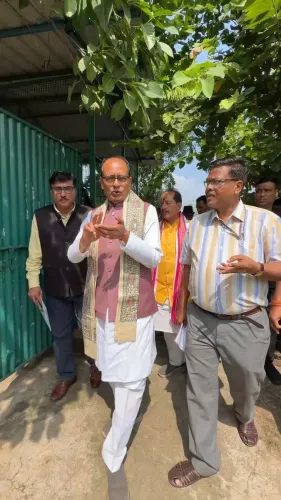
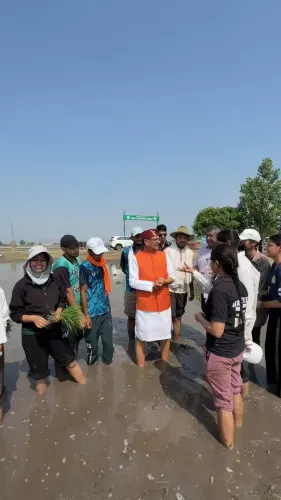
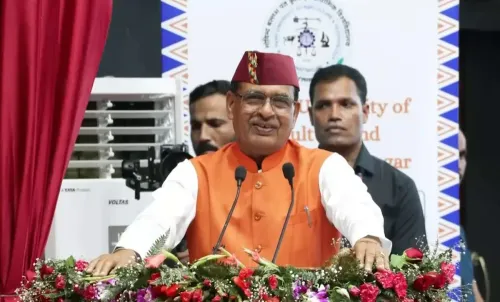
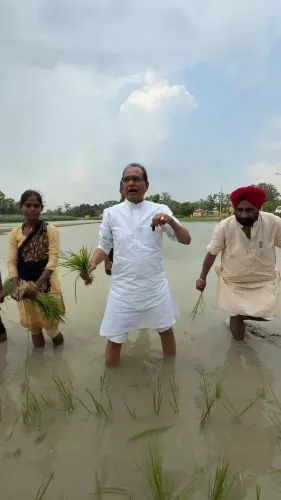
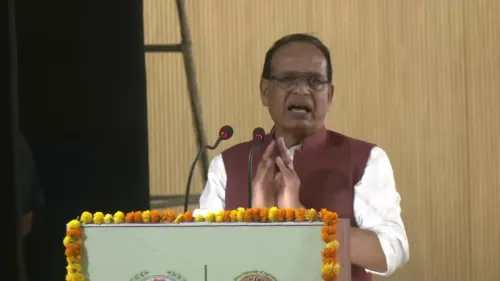
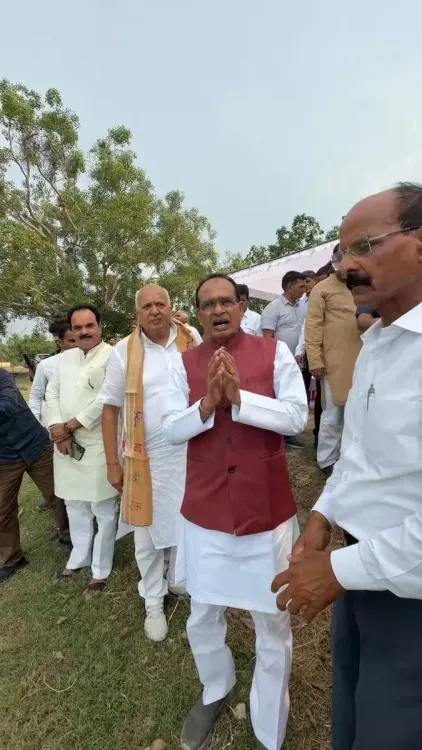
Union Agriculture Minister Shivraj Singh Chouhan on Thursday, 25 June 2026 visited Acharya Narendra Dev Agriculture and Technology University in Ayodhya, Uttar Pradesh, where he observed an integrated farming demonstration that combines fish rearing, duck farming, and multiple crops within a single campus.
Sharing his impressions on X, the minister described the model as 'ek prerak model' — an inspiring model — and urged farmers across the country to adopt such integrated approaches. 'In a single campus, fish farming, duck rearing, and crops such as turmeric, ginger, elephant foot yam, and drumstick have been successfully coordinated,' he noted, adding that this creates multiple income streams and makes better earnings possible even on small landholdings.
Context
Acharya Narendra Dev Agriculture and Technology University is a state agricultural university based in Ayodhya with a mandate covering education, research, and extension in farming technologies. The integrated farming plot the minister visited brings together aquaculture, poultry, horticulture, and spice crops in a compact, coordinated system — a format designed to be replicable by small and marginal farmers who typically operate on landholdings of less than two hectares.
Chouhan's visit comes as the Ministry of Agriculture continues to push diversification as the primary lever for raising farm incomes, a goal that has been central to national agricultural policy for over a decade.
Policy Backdrop
Integrated farming systems have been supported under two major central schemes. The Rashtriya Krishi Vikas Yojana (RKVY), launched in 2007, has channelled funds to diversified farming projects across states. The National Mission for Sustainable Agriculture, initiated in 2014, specifically promotes integrated systems to address climate risks and productivity gaps on small plots.
The combination of fish ponds with duck rearing is a well-documented synergy: duck droppings fertilise pond water, boosting fish growth, while the pond surface area is used productively — a model that has shown measurable income gains in pilot districts. Adding high-value crops such as turmeric, ginger, and drumstick to the same farm unit further diversifies cash flows across seasons.
Stakeholders and Impact
The primary beneficiaries of such demonstrations are small and marginal farmers, who constitute the majority of India's agricultural households. For this segment, dependence on a single crop exposes families to severe income shocks from price volatility or weather events; integrated models spread that risk across several outputs simultaneously.
Agricultural universities serve a critical extension role: by running live demonstration plots, they provide visiting farmers, students, and state extension workers with a tangible, locally adapted template rather than a textbook prescription. The Ayodhya university's model, endorsed publicly by the Union minister, is likely to receive increased footfall from farmer groups and state government delegations seeking to replicate it.
What's Next
The minister's public appeal for farmers to adopt integrated farming models signals that the Ministry may push for wider dissemination of such university-based demonstrations through its extension network. Expansion to other Krishi Vigyan Kendras (KVKs) and state agricultural universities could follow, potentially backed by RKVY or mission-mode funding.
Whether this visit translates into a formal policy directive or a scaled demonstration programme will be a key indicator of how seriously the Centre intends to mainstream integrated farming beyond showcase plots.
Point of View
A promise that has driven policy from RKVY to the National Mission for Sustainable Agriculture. By personally endorsing the Ayodhya model on social media, he lends ministerial weight to an approach that has long existed in policy documents but struggled to reach scale on the ground. The choice of Ayodhya is also notable: the city has been at the centre of the ruling party's political and developmental narrative, and pairing it with an agriculture story broadens that canvas. The real test will be whether this visit catalyses measurable extension activity or remains a high-visibility, low-follow-through event.
NationPress
24 Sept 2026
Frequently Asked Questions
What is integrated farming and why is the government promoting it?
Integrated farming combines multiple agricultural activities — such as fish rearing, poultry, and crop cultivation — on the same landholding to create several income streams simultaneously. The Indian government promotes it because it reduces dependence on a single crop, spreads climate and market risk, and is especially suited to small and marginal farmers who dominate the sector.
What did Shivraj Singh Chouhan see at Acharya Narendra Dev Agriculture and Technology University?
He observed a demonstration plot that integrates fish farming, duck rearing, and high-value crops including turmeric, ginger, elephant foot yam, and drumstick within a single campus, showcasing how diverse outputs can be produced from a compact landholding.
Where is Acharya Narendra Dev Agriculture and Technology University located?
The university is located in Ayodhya, Uttar Pradesh, and focuses on agricultural education, research, and extension activities.
Which government schemes support integrated farming in India?
The Rashtriya Krishi Vikas Yojana (RKVY), launched in 2007, and the National Mission for Sustainable Agriculture, initiated in 2014, are the two major central schemes that have funded and promoted integrated farming systems across Indian states.
How does combining fish farming and duck rearing benefit farmers?
Duck droppings act as a natural fertiliser for fish ponds, improving fish growth without additional inputs, while the same land area generates income from both poultry and aquaculture — a cost-efficient synergy that has shown measurable income gains in pilot programmes.