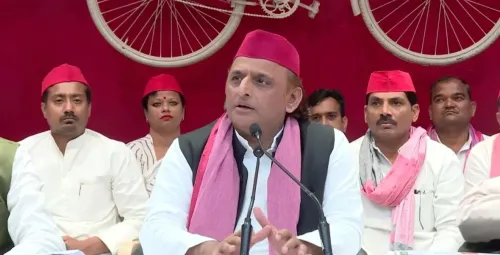
Akhilesh Yadav quizzes BJP on India's territory since 2014
Synopsis
Samajwadi Party president Akhilesh Yadav posted a four-option quiz on 9 August 2026 demanding the BJP government state whether India's territory has grown, shrunk, stayed the same or gone untracked since 2014, citing Galwan, Doklam, Aksai Chin, Pangong and Arunachal Pradesh.
Key Takeaways
Akhilesh Yadav posed a four-option multiple-choice question asking the BJP to declare whether India's territory grew, shrank, remained the same, or is unknown to the government since May 2014 .
The post specifically names Arunachal Pradesh, Ladakh-Aksai Chin, Pangong Lake, Galwan Valley and Doklam as the contested geographies underpinning the challenge.
The June 2020 Galwan Valley clashes killed 20 Indian soldiers and remain the most politically charged border incident of the BJP's tenure.
The 2017 Doklam standoff lasted 73 days before a mutual withdrawal, and Aksai Chin — administered by China — remains a long-standing territorial dispute.
The BJP government's official position is that no Indian territory has been ceded; the opposition has consistently demanded verifiable, granular answers on LAC alignment and patrol rights.
No response from the Ministry of External Affairs or Home Ministry has been issued to the post.
A four-option multiple-choice question — the kind usually reserved for competitive exams — has become the sharpest opposition salvo yet on India's border dispute with China. Samajwadi Party president Akhilesh Yadav posted the pointed quiz on Sunday, 9 August 2026, demanding that the BJP government answer, in its own words, whether India's territory has grown, shrunk, stayed the same, or simply gone untracked since May 2014.
Yadav's post, written in Hindi, frames the challenge as a pre-condition: 'अरुणाचल प्रदेश, लद्दाख-अक्साई चिन, पेंगोंग झील, गलवान या डोकलाम के बारे में बात करने से पहले' — 'Before speaking about Arunachal Pradesh, Ladakh-Aksai Chin, Pangong Lake, Galwan or Doklam' — the government must first pick one of four answers: (a) the country's area increased, (b) it decreased, (c) it remained the same, or (d) the government does not know what happened. Every option, by design, is an indictment.
The geography behind the question
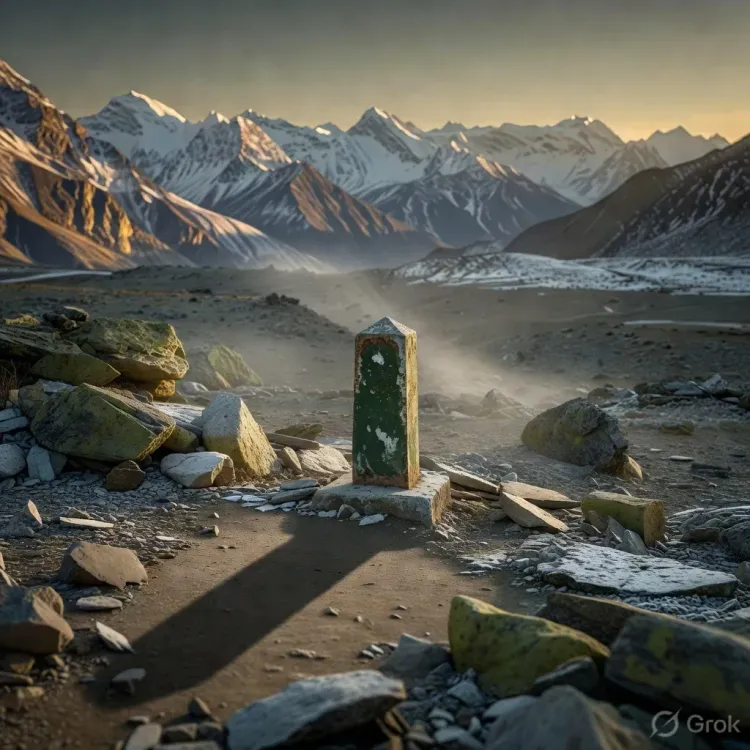
The five flashpoints Yadav names are not chosen at random. Aksai Chin, a high-altitude desert roughly the size of Switzerland, has been administered by China but claimed by India as part of Ladakh for decades. Galwan Valley became the site of the deadliest India-China border clash in over four decades when, in June 2020, 20 Indian soldiers were killed in hand-to-hand combat with People's Liberation Army troops along the Line of Actual Control (LAC). The incident triggered a prolonged disengagement process and a domestic political storm over how much ground had been contested. Doklam, the plateau near the India-Bhutan-China trijunction, saw a 73-day standoff in 2017 that ended in mutual withdrawal after intense diplomatic engagement. Arunachal Pradesh remains a recurring flashpoint, with China periodically renaming locations within the state and asserting territorial claims India firmly rejects.A recurring opposition pressure point
Yadav's quiz is the latest in a sustained pattern of opposition challenges to the BJP's public posture on the LAC. Since the 2020 Galwan clashes, opposition leaders have repeatedly pressed the government on whether any territory changed hands, citing satellite imagery analyses and on-ground reports. The government's consistent position has been that no Indian territory was ceded. The opposition's consistent counter has been to demand granular, verifiable answers — on buffer zones, patrol points, and the precise alignment of the LAC before and after the clashes. By framing his challenge as a multiple-choice question — option (d) being 'the government does not know' — Yadav forces an uncomfortable binary: either the government concedes territorial change, or it admits opacity on a matter of national security. Neither answer is comfortable ahead of any parliamentary session or bilateral diplomatic engagement. The Ministry of External Affairs and the Home Ministry have not publicly responded to the post. Whether this challenge reaches the floor of Parliament — where official maps and area statements carry legal and diplomatic weight — will determine how much political traction it gains.Point of View
Unlinked to a specific summit or parliamentary session by available evidence, suggests the border question has become a standing opposition instrument rather than a reactive one. Whether it moves beyond social media into formal parliamentary proceedings will be the real test of its political weight.
NationPress
24 Sept 2026
Frequently Asked Questions
What did Akhilesh Yadav post about India's borders?
Akhilesh Yadav posted a four-option quiz on 9 August 2026 asking the BJP government to state whether India's territory grew, shrank, stayed the same, or is unknown to the government since it came to power in 2014, referencing Galwan, Doklam, Aksai Chin, Pangong Lake and Arunachal Pradesh.
What happened at Galwan Valley in 2020?
In June 2020, Indian and Chinese troops clashed in Galwan Valley along the Line of Actual Control, resulting in the deaths of 20 Indian soldiers — the deadliest India-China border confrontation in over four decades. It triggered prolonged disengagement negotiations.
What is the Doklam standoff?
The Doklam standoff was a 73-day face-off in 2017 between Indian and Chinese troops at the plateau near the India-Bhutan-China trijunction. It ended with mutual withdrawal following diplomatic engagement.
What is Aksai Chin and why is it disputed?
Aksai Chin is a high-altitude desert region administered by China but claimed by India as part of Ladakh. It has been at the centre of the India-China territorial dispute since the 1962 war.
Has the BJP government said India lost territory to China?
No. The BJP government's official position has consistently been that no Indian territory was ceded to China. Opposition parties, including the Samajwadi Party, have repeatedly challenged this position by demanding specifics on LAC alignment and patrol rights.