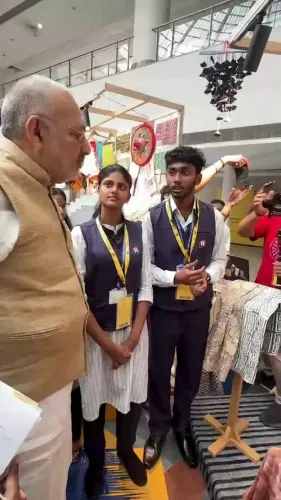
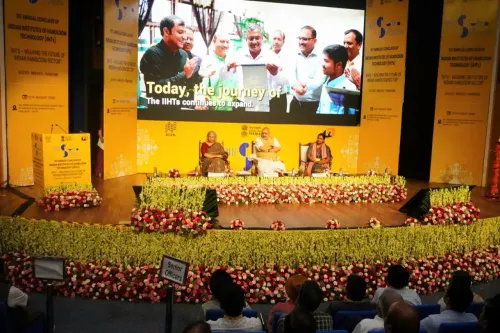
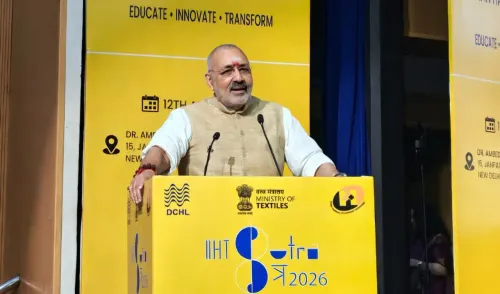
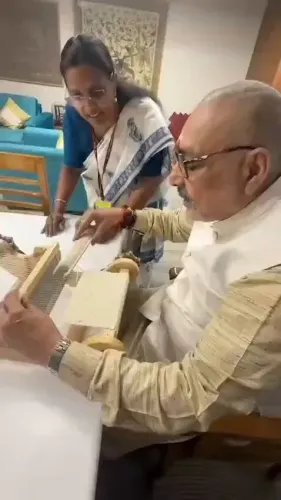
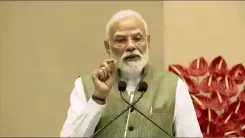
Giriraj Singh meets IIHT students on International Youth Day
Synopsis
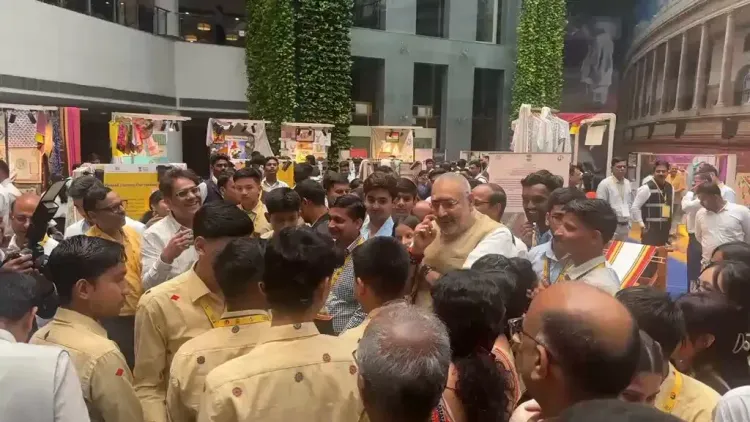
Union Textiles Minister Giriraj Singh met students from Indian Institutes of Handloom Technology on International Youth Day, calling their entrepreneurial spirit and tech enthusiasm vital to modernising and globalising India's handloom sector.
Key Takeaways
Giriraj Singh held a dialogue with IIHT students from across India on International Youth Day, 12 August 2026 .
He described the students as 'the future of the handloom sector,' citing their new ideas, innovation, and enthusiasm for technology.
The IIHTs are a Ministry of Textiles network dating to the 1950s-60s , offering technical diplomas in weaving, design, and textile technology.
The National Handloom Development Programme (2015) underpins current efforts to modernise production and build skills among younger entrants.
Singh's core message: 'Innovation alongside tradition is the identity of New India's handloom.'
On International Youth Day, 12 August 2026, Union Textiles Minister Giriraj Singh sat down with students drawn from across India's network of Indian Institutes of Handloom Technology (IIHTs) — young weavers and designers he called the future of the country's handloom sector. The message was direct: tradition alone will not carry Indian handloom to the world. Innovation will.
Posting on X in Hindi, Singh wrote: 'Parampara ke saath navachar hi naye Bharat ke Handloom ki pehchaan hai' — 'Innovation alongside tradition is the identity of New India's handloom.' He described the interaction as aatmiya samvaad — a heartfelt dialogue — and praised the students' 'new ideas, entrepreneurial spirit, and enthusiasm for technology' as the forces that will give Indian handloom a stronger, more modern presence on the global stage.
What the IIHTs actually train
The IIHTs are a Ministry of Textiles network established in the 1950s and 1960s, offering technical diplomas and degrees in handloom weaving, textile design, and production technology. They sit at a specific intersection: preserving craft knowledge while equipping graduates to operate in commercial and export markets. Students from 'various IIHTs' attending a ministerial event on Youth Day signals the ministry is using the occasion to publicly validate that pipeline.
Youth, skill, and the push to modernise handloom
The broader policy context stretches back to the National Handloom Development Programme, launched in 2015, which targeted modernisation of production, marketing support, and skill-building among weavers and younger entrants. Successive governments have layered youth-focused initiatives onto this base — connecting IIHTs to the wider Skill India framework to draw new talent into a sector that still employs millions of artisans across rural India.
Singh's framing on Youth Day reinforces that positioning: IIHT graduates are not just inheritors of a craft, they are potential entrepreneurs and technology adopters who could reposition handloom in premium domestic and export markets. The challenge — attracting and retaining skilled youth in a labour-intensive traditional sector — remains real and unresolved.
Watch for whether this interaction translates into curriculum updates at IIHTs — particularly around digital design tools or sustainability modules — or fresh allocations under handloom cluster development funds. Words on Youth Day carry weight only if the budget follows.
Point of View
Both of which have lagged behind the rhetoric in previous handloom policy cycles. For a sector that still employs millions in rural constituencies like Bihar, the political incentive to keep the spotlight on handloom youth is strong — but so is the risk of the message outrunning the money.
NationPress
12 Aug 2026
Frequently Asked Questions
What is International Youth Day and when is it observed?
International Youth Day is observed every year on 12 August . It was established by a UN General Assembly resolution in 1999 to highlight the importance of youth development and participation in public life.
What are the Indian Institutes of Handloom Technology (IIHTs)?
The IIHTs are a network of specialised institutes run by India's Ministry of Textiles , established in the 1950s and 1960s . They offer technical diplomas and degrees focused on handloom weaving, textile design, and production technology.
What is the National Handloom Development Programme?
The National Handloom Development Programme was launched in 2015 by the Ministry of Textiles to modernise handloom production, improve marketing support, and build skills among weavers and younger entrants to the sector.
Who is Giriraj Singh and what ministry does he head?
Giriraj Singh is a senior BJP leader and Lok Sabha MP from Begusarai, Bihar . He serves as India's Union Minister of Textiles .
Why is youth involvement important for India's handloom sector?
India's handloom sector employs millions of artisans but faces challenges in modernising production and reaching global markets. Bringing in younger, tech-savvy graduates from institutions like the IIHTs is seen as key to improving productivity, design innovation, and export competitiveness.