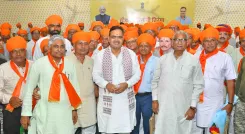
Amit Shah dares Opposition: 24-hour Lok Sabha debate, open offer
Synopsis
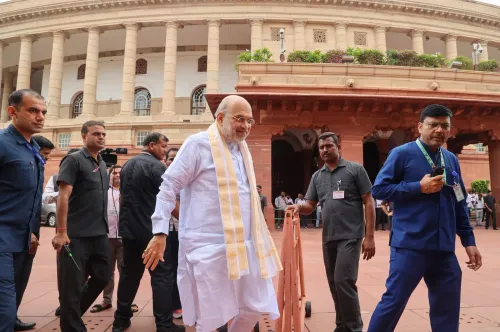
Home Minister Amit Shah has challenged the Opposition to formally write to the Lok Sabha Speaker requesting a debate, offering a 24-hour discussion window from 3 PM on August 12. Minister Pralhad Joshi amplified the dare, warning that the public will judge who is avoiding accountability.
Key Takeaways
Home Minister Amit Shah challenged the Opposition to submit a formal letter to the Lok Sabha Speaker requesting a discussion.
The government offered a 24-hour debate window — from 3 PM on August 12 to 3 PM on August 13, 2026 .
Shah pledged to personally answer 'each and every question' raised by the Opposition during the proposed session.
Union Minister Pralhad Joshi amplified the challenge on social media, widening its public reach beyond the parliamentary floor.
The procedural requirement of a formal letter to the Speaker places the onus squarely on opposition parties to act.
No opposition party had formally responded to the dare at the time of publication.
A direct challenge from the highest levels of the ruling establishment landed in Parliament's lap on Wednesday, August 12, 2026 — Union Consumer Affairs Minister Pralhad Joshi amplified a combative dare from Union Home Minister Amit Shah, putting the Opposition on notice: write to the Speaker, and the government will debate for a full 24 hours straight.
Shah's open challenge: 3 PM to 3 PM
Quoting Home Minister Amit Shah directly, Joshi posted: 'The Opposition should submit a letter to the Hon'ble Speaker of the Lok Sabha seeking a discussion. We are ready to hold the discussion from 3 PM today to 3 PM tomorrow.' The offer is precise, timed, and procedurally grounded — a formal letter to the Speaker of the Lok Sabha is the required trigger. Shah added that he would personally answer 'each and every question raised by the Opposition' the following day, before turning the verdict over to the public: 'Then, the people will decide who wants a discussion and who is running away.'
The procedural trap at the heart of the dare
The framing is a classic parliamentary pressure move. By anchoring the challenge to a formal procedural step — a written request to the Speaker — the government shifts the burden entirely onto the Opposition. If no letter arrives, the ruling side claims the Opposition preferred disruption over debate. If the letter does arrive and a discussion is scheduled, ministers get a structured floor to defend their record. Either outcome, from the government's vantage point, is a win.
Indian Parliament sessions have seen this playbook before. Extended debate formats — running across multiple sessions or overnight — have been proposed during contentious moments involving home affairs, offering ministers a high-visibility platform while calling the Opposition's bluff on their stated demand for accountability.
What happens next in the Lok Sabha
The immediate question is whether any opposition party formally writes to the Speaker before the 3 PM deadline implied in Shah's offer. A letter would set the clock ticking on a potentially marathon session. Silence, or continued floor disruptions, would hand the government its preferred narrative: that it was the Opposition, not the Treasury benches, that walked away from the debate.
Minister Joshi's decision to amplify Shah's statement on social media — rather than leaving it to a press briefing — signals that the government wants this challenge in the public domain, not just the parliamentary record.
Whether the Opposition picks up the gauntlet or lets it lie will define the next chapter of this session — and the government is betting the public is watching.
Point of View
The ruling side creates a binary: the Opposition either engages on the government's terms or hands it a ready-made talking point. Joshi's role here is that of amplifier-in-chief, ensuring the challenge reaches beyond Parliament's walls into the social media court of public opinion. The episode fits a broader pattern in which the BJP has used procedural correctness as a political weapon, daring rivals to match institutional form with their rhetorical fire.
NationPress
12 Aug 2026
Frequently Asked Questions
What did Amit Shah say about the Lok Sabha debate?
Home Minister Amit Shah challenged the Opposition to submit a formal letter to the Lok Sabha Speaker requesting a discussion, offering a 24-hour debate window from 3 PM on August 12 to 3 PM on August 13, 2026, and pledging to answer every question personally.
Why does the Opposition need to write to the Lok Sabha Speaker?
Under parliamentary procedure, a formal written request to the Speaker is required to schedule a specific discussion or debate in the Lok Sabha. Without it, the government can argue the Opposition preferred disruption over structured debate.
What is Pralhad Joshi's role in this parliament debate challenge?
Union Minister Pralhad Joshi amplified Home Minister Amit Shah's challenge by posting it on social media, extending its reach beyond the parliamentary record and framing it as a public accountability test for the Opposition.
Which topic was the 24-hour Lok Sabha debate proposed on?
The specific subject of the proposed debate has not been stated in the available information. The challenge was framed around a general offer for discussion, with the Opposition expected to specify the topic in their letter to the Speaker.
What happens if the Opposition does not write to the Lok Sabha Speaker?
If no formal letter is submitted, the government's position is that the Opposition chose disruption over debate — a narrative the ruling side can use to deflect criticism and portray itself as the party willing to face scrutiny.