Mahua Moitra slams govt in Jansatta interview on police brutality, Ram Mandir funds
Synopsis
TMC MP Mahua Moitra, in a Hindi interview shared on 12 August 2026, accused the government of refusing to face parliamentary opposition on police brutality and alleged financial irregularities at the Ayodhya Ram Mandir, framing both as evidence of deliberate political evasion.
Key Takeaways
Mahua Moitra , TMC Lok Sabha MP from Krishnanagar , shared a Hindi interview on 12 August 2026 targeting the central government.
She accused the government of being 'too scared' to face the opposition on police brutality and Ram Mandir financial allegations.
The Ram Mandir in Ayodhya was consecrated on 22 January 2024 following a 2019 Supreme Court verdict.
The interview was conducted in Hindi, extending the critique beyond English-language political commentary to a wider audience.
Opposition parties have a pattern of using media platforms when parliamentary debate on sensitive topics is blocked or deflected.
The next Lok Sabha session will be a key moment to watch for formal notices on these two issues.
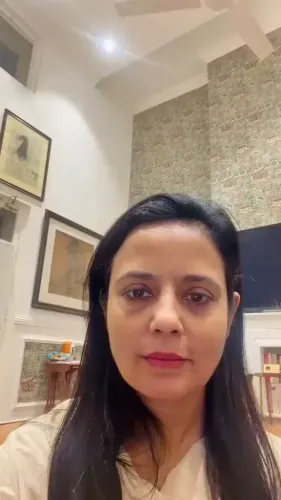
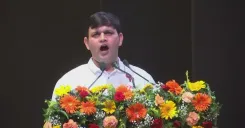
When an opposition MP sits down for a Hindi-language interview and accuses the government of being 'too scared' to face parliamentary scrutiny on both police brutality and alleged financial irregularities at the Ram Mandir, it is not a routine media appearance — it is a direct challenge thrown at the treasury benches. TMC MP Mahua Moitra, Lok Sabha member from Krishnanagar, West Bengal, made exactly that move on Wednesday, 12 August 2026, sharing a Hindi interview in which she argued the ruling dispensation is unwilling to confront the opposition on two politically charged fronts.
In her post, Moitra described the interview as covering 'how government is too scared to face Opposition on both police brutality and Ram Mandir loot' — framing two distinct grievances as symptoms of the same political evasion. The interview was conducted in Hindi, a deliberate choice that broadens the audience beyond English-speaking commentators and carries the argument directly to the Hindi heartland.Two charges, one accusation of avoidance
The twin allegations Moitra raises — police brutality and misuse of funds linked to the Ram Mandir — are substantively different in nature but are bound together by her central claim: that the government refuses to submit them to open parliamentary debate. The Ram Mandir in Ayodhya was consecrated on 22 January 2024 following a landmark 2019 Supreme Court order and a bhoomi pujan in 2020, making it one of the most politically significant projects of the current era. Any allegation of financial irregularity tied to it carries outsized resonance. The charge of police brutality, while unspecified in the post, follows a pattern of opposition notices in the Lok Sabha seeking discussion on law-enforcement conduct — notices that frequently go unanswered or are deflected by the chair during contentious sessions.Hindi interview as political strategy
Moitra's choice to give this interview in Hindi to a Hindi-language daily is itself a signal. Opposition politicians increasingly recognise that English-medium commentary, however sharp, has limited penetration in the states where electoral contests are decided. By taking these arguments into a Hindi forum, she is pitching the critique where it can do the most political work — and inviting a response from an audience that may not follow English-language parliamentary coverage. Indian opposition leaders regularly use media interviews to press accusations the government will not engage with on the floor of the House. The dynamic is familiar: a session ends without the desired discussion, and the argument moves to the press. What Moitra is doing fits that broader pattern — but the specific pairing of a religious-site financial allegation with a police-conduct charge gives this iteration a sharper edge.What the next session could bring
The real test of these allegations is whether they surface as formal notices or adjournment motions in the next Lok Sabha session. Opposition parties have repeatedly sought to force floor debates on Ayodhya-related finances and on policing; the government has consistently resisted. If Moitra's interview generates sufficient public pressure, it could translate into renewed procedural pressure inside Parliament — which is, ultimately, where these arguments need to land to carry institutional weight.Point of View
Not a routine media round. By choosing a Hindi-language platform, she is signalling that the opposition's battle is being taken to the electorate, not just the commentariat. The Ram Mandir's political weight means any financial allegation attached to it demands a government response; silence or deflection only feeds the opposition narrative. Whether this translates into floor action in the next session will determine if this is a genuine accountability push or a well-aimed media salvo.
NationPress
12 Aug 2026
Frequently Asked Questions
What did Mahua Moitra say in her Jansatta interview?
Mahua Moitra alleged in a Hindi interview that the government is 'too scared' to face the opposition in Parliament on two issues: police brutality and alleged financial irregularities related to the Ram Mandir in Ayodhya.
What is the Ram Mandir controversy Mahua Moitra is referring to?
Moitra used the phrase 'Ram Mandir loot' to allege financial misconduct linked to the Ayodhya temple, which was consecrated on 22 January 2024. The specific details of her allegations were outlined in the interview itself.
Why did Mahua Moitra give a Hindi interview?
Giving the interview in Hindi allows Moitra to reach a broader audience beyond English-speaking political observers, carrying the opposition's critique directly to voters in Hindi-speaking states.
Which party does Mahua Moitra belong to?
Mahua Moitra is a Lok Sabha MP from the All India Trinamool Congress (TMC), representing the Krishnanagar constituency in West Bengal.
Can the opposition force a parliamentary debate on Ram Mandir finances?
Opposition MPs can file adjournment motions or notices seeking discussion, but the Speaker has discretion over admissibility. Opposition parties have repeatedly attempted such debates on Ayodhya-related matters with limited success.