Pradhan Calls Census Bedrock of India's Welfare Planning

Synopsis
Union Education Minister Dharmendra Pradhan, posting on Mann Ki Baat day, emphasised that the census is the foundational dataset driving India's welfare schemes and national planning, urging every citizen to participate actively for more accurate, targeted governance.
Key Takeaways
Union Education Minister Dharmendra Pradhan posted on 27 September 2026 urging citizen participation in the census.
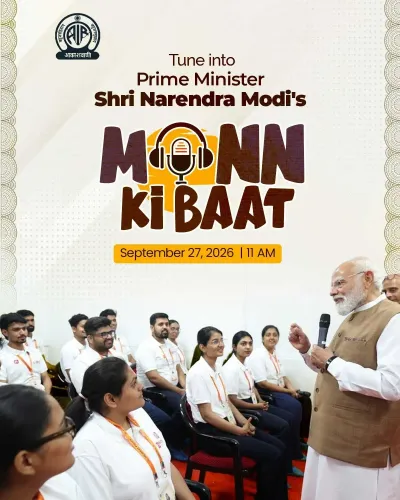
He called the census 'a vital foundation for the country's progress and planning for a better future.' The post was tied to Mann Ki Baat , PM Modi's monthly radio address, amplifying civic outreach.
India's last completed census was conducted in 2011 , and its data still underpins delimitation, fund devolution, and welfare targeting.
Pradhan framed participation as a direct contribution to the design and direction of public welfare schemes.
Every welfare scheme, every rupee of federal funds, every classroom built in a remote district traces back to one number: the census. Union Education Minister Dharmendra Pradhan drove that point home on Sunday, 27 September 2026, urging every Indian citizen to actively participate in the census exercise and help shape the country's planning future.
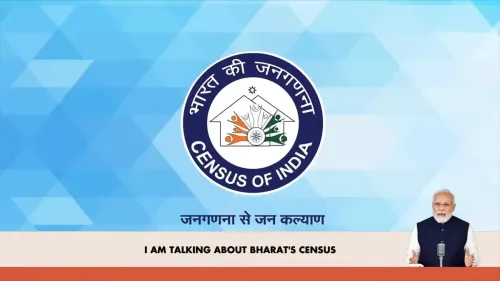
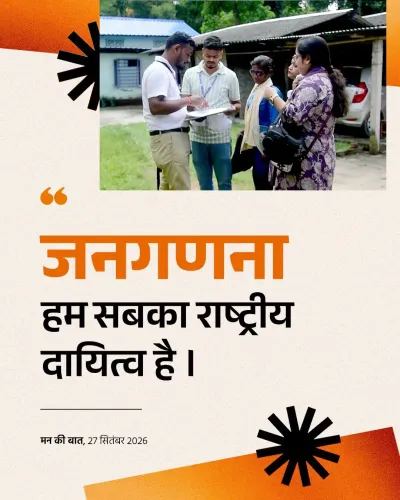
Posting in Hindi on the occasion of Mann Ki Baat — Prime Minister Narendra Modi's monthly radio address to the nation — Pradhan wrote: 'जनगणना देश की प्रगति और बेहतर भविष्य की योजना का महत्वपूर्ण आधार है।' ('The census is a vital foundation for the country's progress and planning for a better future.') He added that the participation of every citizen plays a key role in giving direction to public welfare schemes.
Why the census number matters so much
The stakes are not abstract. India's last full census was conducted in 2011, and that single dataset has been the baseline for delimitation of parliamentary constituencies, allocation of central funds to states, and the targeting of flagship programmes in education, health, and poverty alleviation ever since. A fresher, more accurate count means tighter targeting — the right school built in the right village, the right ration card issued to the right family.
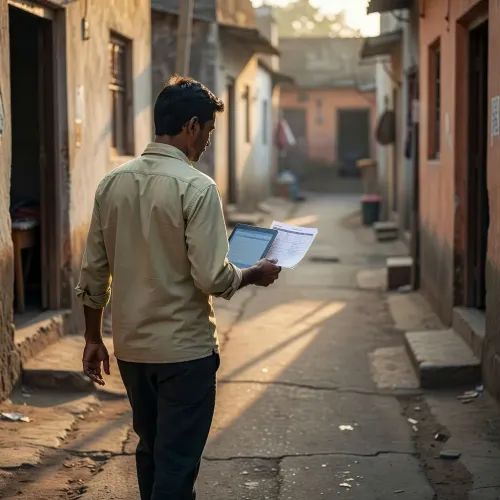
Successive governments have reinforced the same logic: better data equals better delivery. Pradhan's post, framed around citizen participation rather than any administrative announcement, underlines that the census only works when individuals engage honestly with enumerators. A household that goes uncounted is a household that falls through the cracks of every scheme designed to help it.
Mann Ki Baat as a mobilisation moment
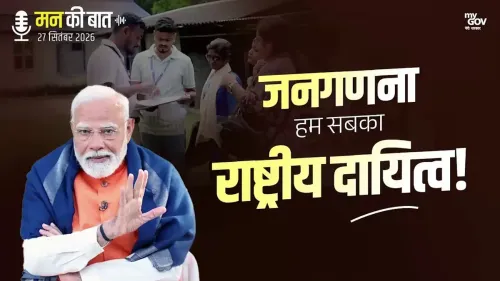
The #MannKiBaat hashtag in Pradhan's post is deliberate. Modi's monthly radio programme has historically been used to amplify civic campaigns — from sanitation drives to vaccination awareness — by lending the Prime Minister's direct voice to calls for public action. Senior ministers echoing the programme's themes on social media extend that reach further, creating a coordinated communication push around whatever civic message the episode carries.
Pradhan's framing — census as the foundation of jankallyan (public welfare) — fits squarely into that tradition: a governance message dressed in the language of collective responsibility rather than bureaucratic obligation.
When the next enumeration arrives with its enumerator at the door, the minister's message is simple — answer the questions, because the plans built on your answer will outlast the conversation by a decade.
Point of View
Rather than a state obligation, is a politically smart shift: it turns a bureaucratic exercise into a civic identity moment. The Mann Ki Baat hook also signals that the Modi government is beginning to build public appetite for a fresh enumeration, using trusted communication channels before any formal administrative push. If a new census round is imminent, this kind of ministerial priming is exactly how it starts.
NationPress
27 Sept 2026
Frequently Asked Questions
Why did Dharmendra Pradhan post about the census?
Pradhan posted on 27 September 2026 in connection with Mann Ki Baat, calling the census the foundation of national progress and urging every citizen to participate so that welfare schemes are designed on accurate data.
What is the Census of India and why does it matter?
The Census of India is a decennial exercise under the Census Act 1948 that collects population, demographic, and socio-economic data. It is the primary dataset used for delimitation of constituencies, allocation of central funds to states, and targeting of welfare programmes in education, health, and poverty relief.
When was the last Census of India conducted?
The last completed Census of India was conducted in 2011 . Its data has since been the baseline for national planning, federal fund devolution, and welfare scheme targeting across successive governments.
What is Mann Ki Baat and why was it mentioned?
Mann Ki Baat is Prime Minister Narendra Modi's monthly radio address to citizens, used to highlight governance themes and civic campaigns. Senior ministers often amplify its messages on social media to extend its reach, as Pradhan did with the census participation call.
How does citizen participation improve the census?
When every household engages honestly with enumerators, the resulting data more accurately reflects ground realities. Schemes built on that data — for schools, hospitals, ration distribution — can then be targeted more precisely, ensuring fewer people are missed by government programmes.