Pakistan poverty crisis: 40.5% below poverty line as debt crowds out welfare
Synopsis
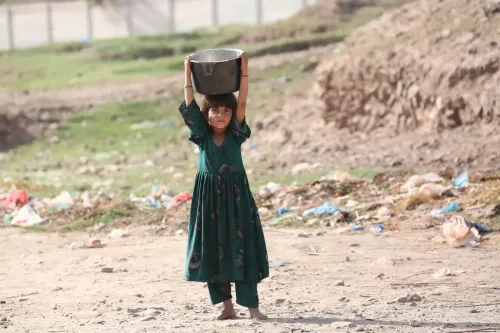
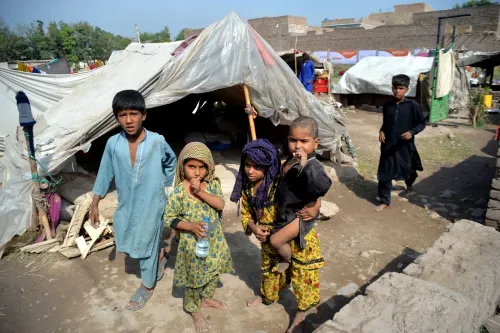
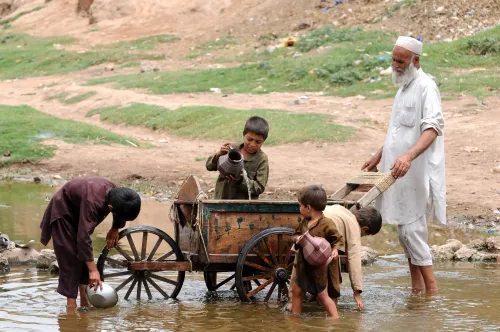
Pakistan's poverty rate has surged to 40.5% under the World Bank's $3.65-per-day line, erasing nearly two decades of gains — and the numbers reveal why: a state that spent PKR 4.947 trillion on debt interest and hiked defence allocations by 18% in a year, while rural poverty doubled urban levels and nearly 40% of children remain stunted.
Key Takeaways
40.5 percent of Pakistan's population lived below the $3.65-per-day poverty line in FY2024 , per World Bank data, with 2.6 million additional people falling below the line that year.
National poverty has risen to 28.9 percent from a low of 21.9 percent in 2018–19 , according to Pakistan's Economic Survey 2025–26 .
Rural poverty stands at 36.2 percent — more than double the urban rate of 17.4 percent ; Balochistan is worst-hit at 47 percent .
More than 85 percent of employment is informal; nearly 40 percent of children are reportedly stunted.
Interest payments on public debt totalled PKR 4.947 trillion in July–March FY2026 ; total public debt reached PKR 83.285 trillion by end- March 2026 .
Defence services and military pensions together absorb at least PKR 3.822 trillion in FY2026–27 , an 18 percent year-on-year rise in the defence services allocation alone.
Pakistan enters FY2026 still classified by the World Bank as a lower-middle-income country, with approximately 40.5 percent of its population living below the $3.65-per-day poverty line — reversing nearly two decades of gradual gains. According to an analysis, the country's Atlas-method GNI per capita stood at roughly $1,430 in 2024, placing it firmly in the lower half of the lower-middle-income bracket, even as an additional 2.6 million people were pushed below the poverty line in FY2024 alone.
Poverty Reversal: The Numbers
Pakistan's own Economic Survey 2025–26 paints a stark picture. National poverty has climbed back to 28.9 percent after having fallen to a low of 21.9 percent in 2018–19. Rural poverty now stands at 36.2 percent — more than double the urban rate of 17.4 percent — and inequality has widened, with the Gini coefficient rising from 28.4 to 32.7.
The crisis is sharpest in Balochistan, where 47 percent of the population lives below the poverty line and literacy stands at just 49 percent. Former senator Sana Ullah Baloch of the Balochistan National Party has cited that same figure to criticise what he describes as prolonged neglect of education, health, water, housing and livelihoods in the province. This comes amid a broader pattern in which economic activity across Pakistan has consistently failed to produce social inclusion.
The Employment Crisis: Informal and Insecure
Pakistan's Economic Survey reports a labour force of 83.14 million in 2024–25, of whom 5.90 million were unemployed. More troubling than the headline jobless figure, however, is the quality of available work. The World Bank estimates that more than 85 percent of employment in Pakistan is informal — a figure that reportedly rises above 95 percent among the poorest segments of the population.
Analysts argue that the core policy failure is not merely a shortage of jobs but the continued creation of low-productivity employment that keeps people working while keeping them poor. Without labour-intensive industrialisation, more competitive small and medium enterprises, agricultural modernisation, and greater female labour-force participation, economic growth will keep producing jobs that offer survival rather than advancement.
Inflation's Disproportionate Toll on the Poor
Inflation has been one of the most direct channels through which economic mismanagement has deepened poverty. The Economic Survey reports that average national CPI inflation rose to 6.2 percent during July–April FY2026, while year-on-year inflation reached 10.9 percent in April 2026. Rural food inflation, at 4.7 percent, outpaced the urban rate of 3.6 percent — meaning the households least equipped to absorb price shocks are facing the steepest ones.
Poor households spend a disproportionate share of income on food, electricity, fuel, rent and transport. Even when nominal wages rise, increases in essential prices erode real purchasing power and push vulnerable families below the poverty line.
Debt Servicing and Defence Squeeze Social Spending
Pakistan's fiscal structure severely limits the state's capacity to invest in poverty reduction. Total public debt reached PKR 83.285 trillion by end-March 2026, comprising PKR 57.566 trillion in domestic debt and PKR 25.720 trillion in external public debt. Interest expenditure alone amounted to PKR 4.947 trillion during July–March FY2026.
The government points to a narrower fiscal deficit — down to 0.7 percent of GDP during the same period — and a primary surplus of 3.2 percent as evidence that stabilisation is working. Critics argue, however, that stabilisation achieved by prioritising debt service says little about whether resource allocation is serving those who need it most.
Defence expenditure compounds the squeeze. For FY2026–27, Pakistan allocated PKR 3 trillion to defence services, up from revised expenditures of approximately PKR 2.584 trillion in FY2025–26 — an increase of roughly 18 percent in a single year. A separate allocation of PKR 822 billion covers military pensions, meaning defence services and military pensions together absorb at least PKR 3.822 trillion. Because military pensions sit outside the headline defence figure, the commonly cited budget understates the true fiscal weight of the military establishment.
Structural Failures and the Road Ahead
The World Bank has warned that Pakistan's poverty crisis is sustained by low-productivity employment, weak human capital, and inadequate access to water, sanitation, healthcare and education. Nearly 40 percent of children are reportedly stunted — a human capital deficit with generational consequences.
Despite remaining eligible for both concessional IDA assistance and IBRD financing, Pakistan has not used decades of external support to build a competitive export base, productive industries, effective public services or a resilient social-protection system. International financing has helped the country avoid repeated economic collapse, according to the analysis, but has not removed the underlying dependence on borrowing, imports and emergency stabilisation programmes.
Until the government treats human development as an essential component of national security, poverty in Pakistan risks remaining not merely an economic condition, but evidence of persistent institutional and political failure. The next test will be whether the country's fiscal choices in the coming budget cycle shift meaningfully toward health, education and employment — or repeat a pattern that has already cost two decades of hard-won progress.
Point of View
Yet frames investment in health, education and nutrition as unaffordable. The World Bank's own data shows that 85 percent of employment is informal and 40 percent of children are stunted; these are not external-shock statistics, they are the cumulative result of decades of deliberate allocation choices. The 'blend' status Pakistan holds with the World Bank — access to both concessional IDA and IBRD financing — was designed to help fragile economies graduate to self-sufficiency. Instead, it has become a permanent feature, reflecting not opportunity but entrenched structural weakness. Without a hard reordering of fiscal priorities toward human capital, the next round of international financing will simply defer the same crisis to the next cycle.
NationPress
24 Oct 2026
Frequently Asked Questions
What is Pakistan's current poverty rate according to the World Bank?
The World Bank's Macro Poverty Outlook found that about 40.5 percent of Pakistan's population was living below the $3.65-per-day (2017 PPP) poverty line in FY2024, with 2.6 million additional people pushed below that threshold in that year alone. This reverses nearly two decades of earlier poverty reduction.
Why is poverty rising in Pakistan despite international financial support?
According to the analysis, decades of World Bank concessional and near-market financing have not translated into sustained poverty reduction because Pakistan has failed to build a competitive export base, productive industries or effective public services. Instead, fiscal resources are heavily directed toward debt servicing — PKR 4.947 trillion in interest payments during July–March FY2026 — and a rising defence budget, leaving limited room for social investment.
How bad is poverty in Balochistan compared to the rest of Pakistan?
Balochistan is the worst-affected province, with 47 percent of its population below the poverty line and a literacy rate of just 49 percent. Former senator Sana Ullah Baloch of the Balochistan National Party has attributed this to prolonged neglect of education, health, water and housing in the province.
How much has Pakistan allocated to defence in FY2026–27?
Pakistan allocated PKR 3 trillion to defence services for FY2026–27, up roughly 18 percent from revised FY2025–26 expenditures of approximately PKR 2.584 trillion. When military pensions of PKR 822 billion are included, the combined defence-related fiscal outlay reaches at least PKR 3.822 trillion — a figure critics argue understates the true weight of military spending on the national budget.
What is the scale of informal employment in Pakistan?
The World Bank estimates that more than 85 percent of employment in Pakistan is informal, rising above 95 percent among the poorest segments of the population. Pakistan's labour force stood at 83.14 million in 2024–25, with 5.90 million officially unemployed — but analysts say the deeper problem is the quality, not just the quantity, of available jobs.