Balochistan poverty rate hits 47% — Pakistan's poorest region: Survey
Synopsis
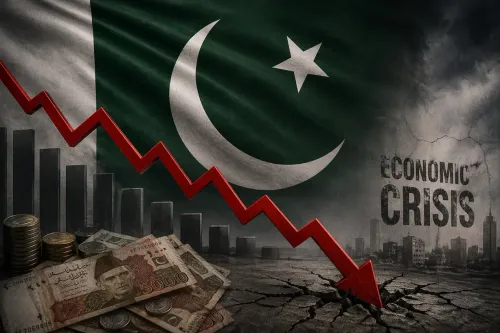
Pakistan's own Economic Survey 2025–26 confirms what many observers have long argued: Balochistan, with a 47% poverty rate, is the country's most economically distressed province — nearly 18 percentage points above the national average. With Reko Diq stalled indefinitely, border trade choked, and FDI near zero, the province's structural crisis is deepening even as Islamabad claims stabilisation.
Key Takeaways
Balochistan's poverty rate has risen to 47 per cent , making it Pakistan's poorest province , per the Pakistan Economic Survey 2025–26 .
Pakistan's national poverty rate stands at 28.9 per cent — nearly 18 percentage points lower than Balochistan's figure.
Restrictions on cross-border trade with Iran and Afghanistan have cut income for thousands of border-district families.
The Reko Diq mining project's financial close has been delayed indefinitely due to growing security concerns in the province.
FDI into Pakistan remains abysmally low, with investment pledges from friendly countries yet to materialise after three years of talks.
The Survey warns poverty could rise further without expanded employment, better public services, and restored economic activity.
The Pakistan Economic Survey 2025–26 has identified Balochistan as the country's poorest province, with the poverty rate climbing to 47 per cent — meaning nearly one in every two residents lives below the poverty line. The figure places Balochistan far above Pakistan's national poverty average of 28.9 per cent, underlining a deepening regional divide that analysts say shows no sign of reversing.
Scale of the Crisis
According to the Survey, Balochistan's poverty crisis is driven by a combination of weak governance, limited employment opportunities, low industrial development, and severe restrictions on cross-border trade with Iran and Afghanistan. The province has long depended on informal border commerce, but tighter controls and the closure of multiple crossing routes have, according to the Survey, 'reportedly reduced income opportunities for many households' in border districts.
Thousands of families in these frontier zones had traditionally sustained themselves through small-scale trade. The curtailment of those routes has stripped away a critical livelihood buffer for some of Pakistan's most economically marginalised communities.
Reko Diq Setback Compounds Outlook
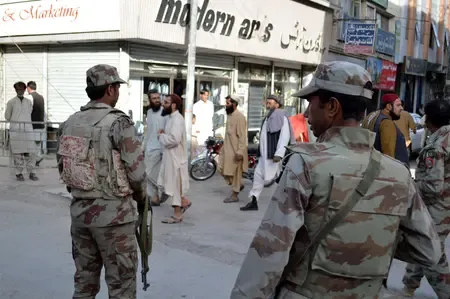
The province's economic prospects have suffered a further blow with the indefinite delay of the financial close for the Reko Diq copper and gold mining project, widely touted as a transformative investment for Balochistan. According to a report in the Karachi-based Business Recorder, growing security concerns in the province are the primary reason behind the delay — a setback that critics argue illustrates how instability undermines even headline investment commitments.
Foreign direct investment (FDI) into Pakistan more broadly has remained abysmally low, and other external inflows — barring debt — have similarly failed to materialise, despite three years of talks with friendly countries, the report noted.
National Poverty Backdrop
Pakistan's overall poverty rate, as estimated by the Survey, stands at 28.9 per cent. While that figure itself reflects significant hardship, Balochistan's rate of 47 per cent is nearly 18 percentage points higher, making the province an outlier even within a struggling national economy. The Survey warns that without urgent measures — including expanded employment schemes, improved public service delivery, and targeted support for economic activity — poverty levels in Balochistan could continue to rise.
Geopolitical Headwinds Weigh on Pakistan
Pakistan's broader economic situation has been deteriorating in 2026, according to media reports, as geopolitical pressures re-emerge. The combination of weak FDI, stalled investment pledges, and security-driven project delays paints a challenging picture for a country already navigating an IMF-backed stabilisation programme. For Balochistan, which sits at the confluence of these pressures, the consequences are disproportionately severe.
What the Survey Warns
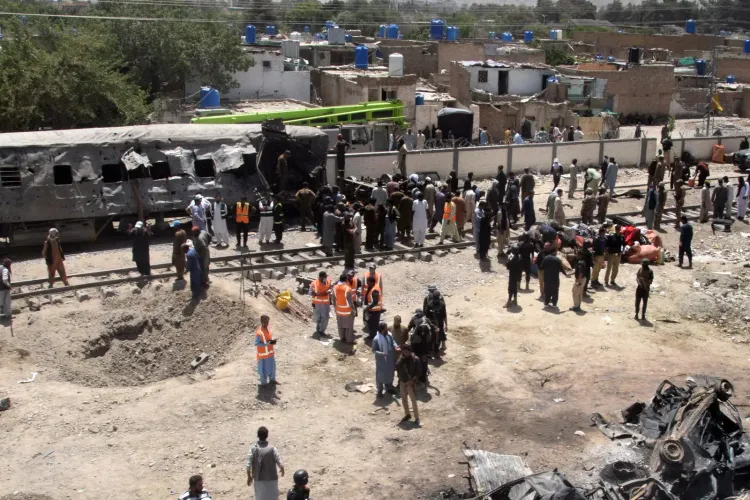
The Pakistan Economic Survey 2025–26 explicitly flags that recent incidents have highlighted the social impact of economic hardship in the province. Without a structural shift in governance, trade policy, and industrial investment, the Survey's own projections suggest the poverty gap between Balochistan and the rest of Pakistan will widen further in the near term.
Point of View
Including the Reko Diq copper-gold complex, yet its residents are poorer than almost anywhere else in South Asia. The indefinite delay of Reko Diq's financial close due to security concerns is the sharpest possible illustration of the vicious cycle: instability deters investment, poverty fuels instability. Islamabad's pattern of announcing transformative projects for Balochistan while failing to address the governance and security conditions that make those projects viable has repeated itself for decades. Until that cycle is broken, survey figures like these will keep getting worse.
NationPress
23 Sept 2026
Frequently Asked Questions
What is Balochistan's poverty rate according to the latest Pakistan Economic Survey?
The Pakistan Economic Survey 2025–26 puts Balochistan's poverty rate at 47 per cent, meaning nearly one in every two residents lives below the poverty line. This is the highest provincial poverty rate in Pakistan and nearly 18 percentage points above the national average of 28.9 per cent.
Why is Balochistan Pakistan's poorest province?
The Survey attributes Balochistan's poverty to weak governance, limited employment, low industrial development, and restrictions on cross-border trade with Iran and Afghanistan. The closure of border crossing routes has particularly hit families in frontier districts who depended on small-scale trade for their livelihoods.
What is the Reko Diq project and why has it been delayed?
Reko Diq is a large copper and gold mining project in Balochistan that was expected to be a major economic game-changer for the province. According to the Business Recorder, growing security concerns in Balochistan have delayed its financial close indefinitely, casting doubt on its near-term economic impact.
What is Pakistan's overall poverty rate compared to Balochistan?
Pakistan's national poverty rate is estimated at 28.9 per cent by the Pakistan Economic Survey 2025–26. Balochistan's rate of 47 per cent is significantly higher, highlighting a stark regional disparity within the country.
What does the Survey recommend to address Balochistan's poverty?
The Pakistan Economic Survey 2025–26 warns that without measures to expand employment, improve public service delivery, and support economic activity, poverty in Balochistan could continue to rise. It does not detail a specific government action plan but flags the urgency of structural intervention.