Is Pakistan Ignoring the Plight of Balochistan?
Synopsis
Balochistan confronts a grave crisis as violent conflicts escalate, highlighting long-standing issues of political exclusion and resource exploitation. With military operations failing to address grievances, the region's future remains precarious.
Key Takeaways
Balochistan is Pakistan's largest yet poorest province.
Recent violence has resulted in numerous casualties among security forces and civilians.
Long-standing grievances of the Baloch people include political marginalization and resource exploitation.
The Balochistan Liberation Army claims responsibility for recent attacks.
Military operations have not resolved the underlying issues.
New Delhi, Feb 2 (NationPress) Balochistan, recognized as Pakistan's largest yet most impoverished province, is currently facing a surge in violent conflicts. Reports indicate that Balochi separatists have initiated attacks amidst some of the most vigorous military counter-operations seen in years.
This escalation stems from the deep-rooted grievances of the Baloch populace regarding their political marginalization, exploitation of resources, and ongoing geopolitical tensions.
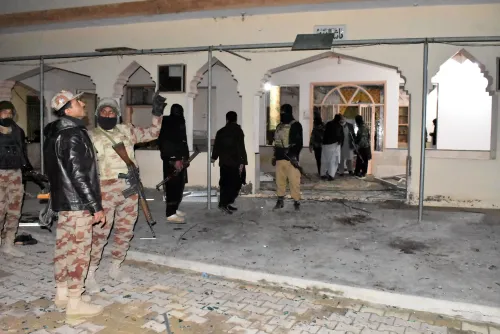
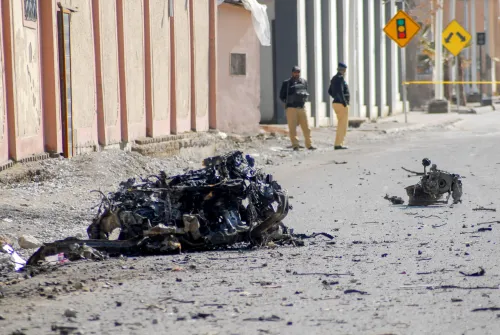
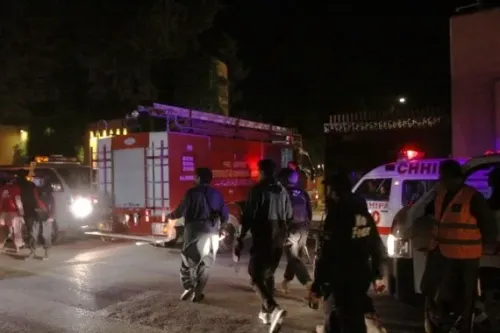
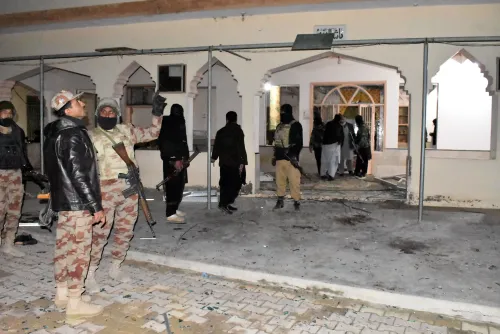
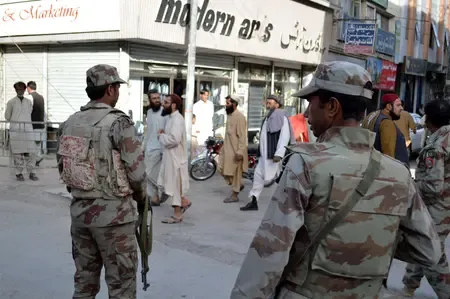
Recent incidents have resulted in the deaths of at least 15 security personnel and 18 civilians, as armed groups executed coordinated assaults across the province over the past weekend, as reported by Al Jazeera.
Last month's wave of violence coincided with increasing political instability in Pakistan, characterized by economic turmoil and governance disputes nationwide.
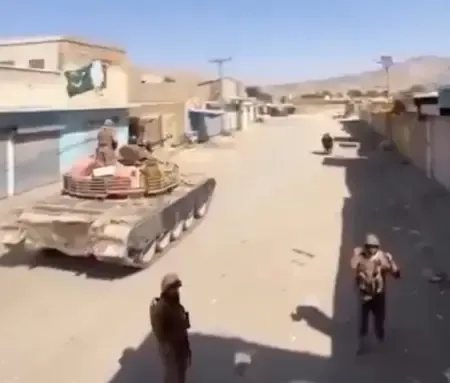
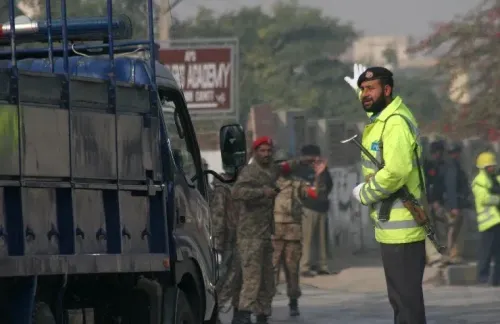
In response, Pakistan's security forces conducted multiple operations within this southwestern province, which shares borders with Afghanistan and Iran, resulting in the deaths of at least 41 individuals.
Balochistan has experienced a notable rise in militant activities, with attacks in Quetta and surrounding districts claiming nearly 200 lives, including 31 civilians, marking one of the most deadly periods in recent years.
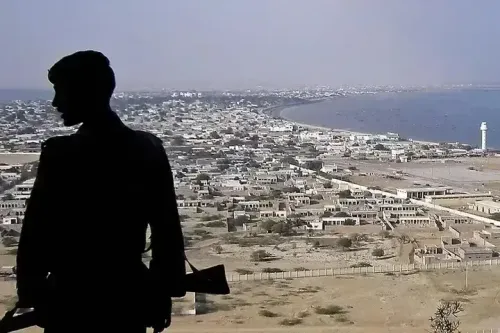
The Balochistan Liberation Army (BLA) and its allied separatist factions have taken responsibility for these assaults, targeting police stations, military convoys, and government facilities. The emergence of the BLA and similar groups in the early 2000s signified a new era of resistance, coinciding with the development of the Gwadar port and the initiation of the China-Pakistan Economic Corridor (CPEC).
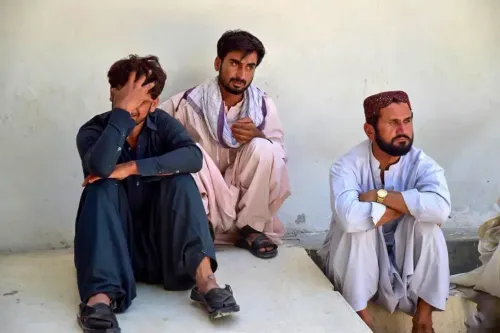
Local communities live in constant fear, with schools and businesses closed in affected regions, leading thousands of families to flee conflict zones in search of safety in Quetta and Karachi.
In Islamabad, a comprehensive counter-operation has been launched, deploying paramilitary units and enhancing aerial surveillance. The residents of Balochistan have long voiced concerns about political exclusion and economic exploitation. Despite being rich in resources such as gas, coal, copper, and gold, the province remains underdeveloped.
Locals argue that the wealth generated from these resources primarily benefits Islamabad and foreign investors instead of the Baloch communities. The province's strategic significance is heightened by the CPEC, which traverses Gwadar port.
For militants, the CPEC represents a symbol of exploitation, whereas Islamabad perceives it as crucial for economic advancement. This clash of viewpoints has exacerbated the violence. Rather than addressing underlying grievances, Pakistan’s military actions have exacerbated resentment, perpetuating a cycle where insurgent activities provoke state crackdowns, further alienating local populations.
Historical evidence indicates that Balochistan’s rich history spans thousands of years, with archaeological sites like Mehrgarh, dated back to 7000 BCE, underscoring its significance as one of the early cradles of human civilization.
In the 19th century, Balochistan fell under British dominion and became a strategic frontier within the British Indian Empire. Following Pakistan's independence in 1947, Balochistan's integration into the new state was contested by local leaders, igniting the first of several insurgencies. Since then, the region has experienced five major uprisings, beginning in 1948, then in 1958–59, subsequently in 1962–63, 1973–77, and from 2004 to the present. Each uprising has been fueled by demands for autonomy, resource control, and cultural recognition.
The discovery of natural gas in Sui, located in the Dera Bugti district of Balochistan in 1952, intensified existing tensions, as revenues flowed to Islamabad while Balochistan languished in poverty.
The current escalation in Balochistan is not an isolated incident; it represents the latest chapter in a decades-long struggle for autonomy, dignity, and control over resources.
Although Islamabad frames the conflict as a security concern, the underlying issues stem from political exclusion and economic injustice. Unless these fundamental grievances are addressed, military operations may temporarily reduce violence but will not establish lasting peace.
Point of View
It is imperative to recognize the complexity of the situation in Balochistan. The ongoing violence highlights systemic issues of political exclusion and economic inequity that have persisted for decades. A balanced approach is necessary, focusing on dialogue and addressing the legitimate grievances of the Baloch people while ensuring national integrity.
NationPress
19 Sept 2026
Frequently Asked Questions
What are the main causes of violence in Balochistan?
The violence in Balochistan is primarily driven by political marginalization, economic exploitation, and a struggle for autonomy among the Baloch people.
Who is involved in the Balochistan conflict?
The conflict involves Balochi separatist groups, particularly the Balochistan Liberation Army (BLA), and Pakistan's military forces.
How has the situation in Balochistan evolved over the years?
Balochistan has experienced multiple uprisings since its integration into Pakistan in 1947, with significant tensions arising over resource control and political representation.