Is Pakistan's Balochistan a Global Investment Opportunity or a Permanent Security Threat?
Synopsis
A recent report reveals the paradox of Balochistan, where Pakistan presents it as a promising investment opportunity while simultaneously treating it as a security threat. Explore the complex dynamics between local grievances and international interests.
Key Takeaways
Balochistan is crucial for Pakistan's economic recovery.
The region faces severe political and social unrest.
Military actions have exacerbated local grievances.
Balochistan is rich in natural resources.
International perceptions conflict with local realities.
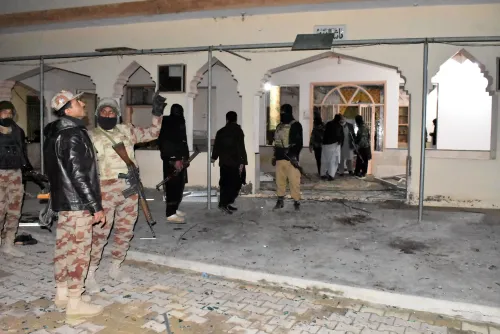
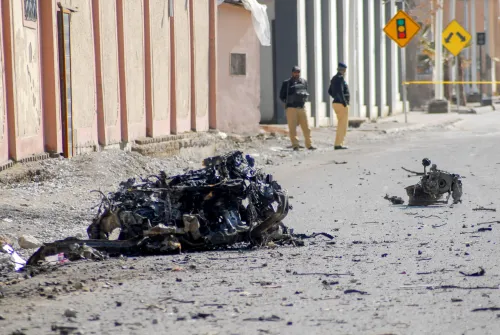
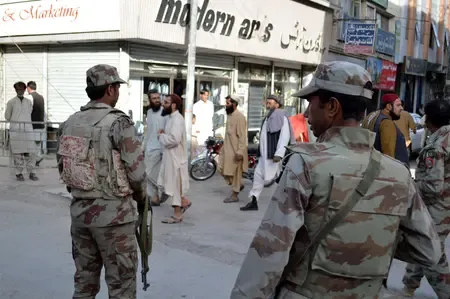
Quetta, Feb 11 (NationPress) The recent coordinated assaults by the Baloch Liberation Army (BLA) have shed light on the precarious situation in Pakistan's Balochistan province, according to a report. Islamabad’s focus on viewing Balochistan merely as a security concern is increasingly seen as myopic. Peaceful protests, including marches led by families of the missing and student demonstrations, have resulted in arrests, media censorship, and harassment. The refusal of the State to acknowledge that the insurgency stems from authentic political and social grievances — such as resource control, political autonomy, identity respect, and accountability for human rights abuses — only reinforces the notion that armed resistance is the sole viable option. This approach risks turning a political issue into a lasting state of exception, as noted in a report by EU Reporter.
In recent years, Pakistan has shifted from governance to military oversight, framing the political turmoil as a security dilemma. The minimization of military casualties, ongoing allegations of enforced disappearances, and the criminalization of the Baloch people are not mere collateral damage but part of a systematic strategy of domination. By neglecting the political and social origins of the insurgency, Pakistan exacerbates alienation and legitimizes division in the eyes of Balochistan's populace.
If this pattern continues, Balochistan may follow a familiar historical trajectory: evolving from an 'internal security issue' into violent separation — a new Bangladesh, driven by Islamabad's own decisions, warns Dimitra Staikou.
The report emphasizes that this instability persists despite Balochistan's vast mineral resources and its strategic significance for both Chinese and American investment goals.
Instead of engaging in genuine political discourse with local communities, Pakistan has intensified repression and external accusations, claiming that unrest is the result of foreign interference, thus portraying Balochistan as a frontier for investment while managing it as an enemy territory internally.
According to the EU Reporter, security measures, extensive troop deployments, and allegations of extrajudicial killings and enforced disappearances have created a cycle of violence in Balochistan. Each operation, branded as 'restoring order,' reinforces perceptions of occupation and encourages recruitment into armed separatist factions like the BLA.
This enduring conflict has now taken on a significant economic and geopolitical dimension. Balochistan is at the center of China’s investments in Pakistan through the China–Pakistan Economic Corridor (CPEC) and is critical to Islamabad’s recent efforts to draw U.S. capital into the mining sector. The province's extensive reserves of copper, gold, coal, and gas are pivotal to Pakistan’s economic recovery narrative. Yet, the state struggles to ensure even basic security for heavily protected infrastructure projects. Ongoing attacks indicate that militarization has failed to establish lasting stability, the EU Reporter asserts.
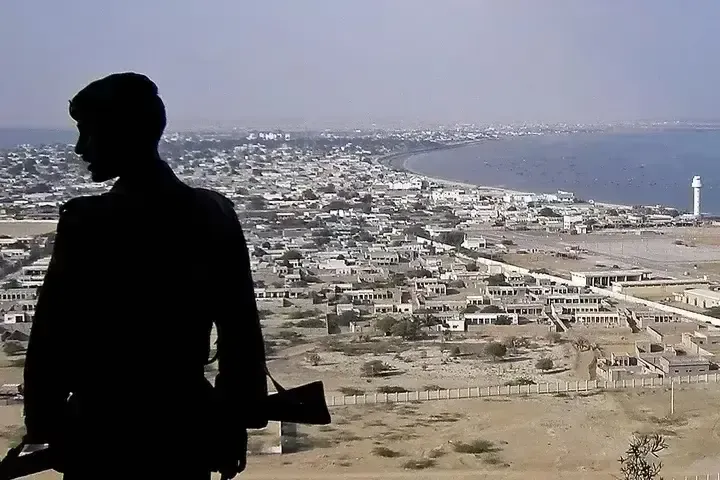
Pakistan promotes Balochistan as a 'land of opportunity' while simultaneously perceiving it as a persistent internal security threat. Balochistan governs Pakistan’s access to the Arabian Sea, shares borders with Iran and Afghanistan, and serves as a land route connecting China with the Indian Ocean. The geostrategic importance of Balochistan leads Pakistan to promise stability and development on the international stage while treating the region with repression, minimizing casualties, and fostering collective suspicion towards local populations, the report concluded.
Point of View
The situation in Balochistan underscores the need for a balanced approach to regional governance. While investment opportunities are essential, addressing the underlying political and social issues is crucial for long-term stability and harmony in the region. It's imperative for Pakistan to engage with its citizens constructively.
NationPress
19 Sept 2026
Frequently Asked Questions
What is the current situation in Balochistan?
Balochistan is facing instability due to ongoing conflicts with the Baloch Liberation Army, which highlights the region's vulnerability despite its rich natural resources.
How does Pakistan view Balochistan?
Pakistan presents Balochistan as an investment opportunity internationally while managing it as a security threat domestically.
What are the key resources in Balochistan?
Balochistan is rich in minerals, including copper, gold, coal, and gas, making it strategically important for both Chinese and American investments.
What is the impact of military actions in Balochistan?
Military operations in Balochistan have led to a cycle of violence, reinforcing perceptions of occupation and driving recruitment into separatist groups.
What is the significance of CPEC in Balochistan?
The China-Pakistan Economic Corridor (CPEC) is crucial for China's investments in Pakistan, with Balochistan serving as a key connectivity route.