Do Recent Attacks in Balochistan Highlight Unresolved Political Tensions with Pakistan?
Synopsis
The recent attacks in Balochistan are a stark reminder of the unresolved political tensions in Pakistan. Despite its rich resources, the region continues to suffer from neglect and underdevelopment. This article explores the underlying political issues fueling violence and unrest in Balochistan.
Key Takeaways
Balochistan's violence is rooted in political conflict.
The province remains severely underdeveloped despite rich resources.
Militant narratives are shifting towards demands for autonomy and justice.
Government responses have primarily focused on security rather than engagement.
Local perceptions of development projects are largely negative.
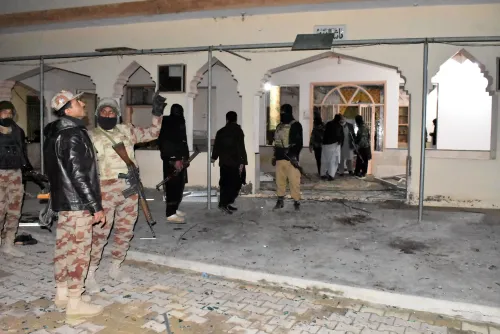
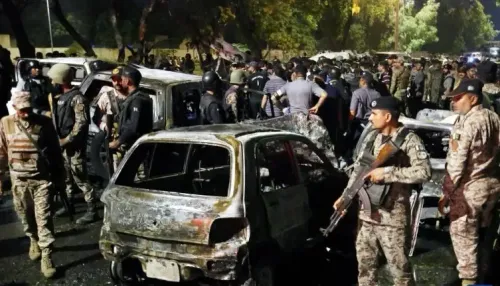
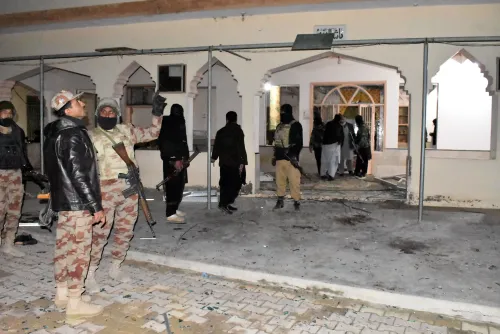
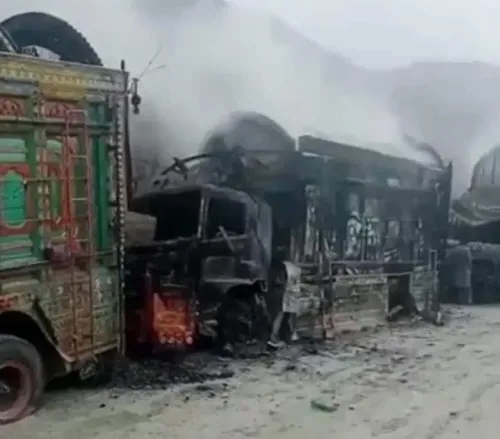
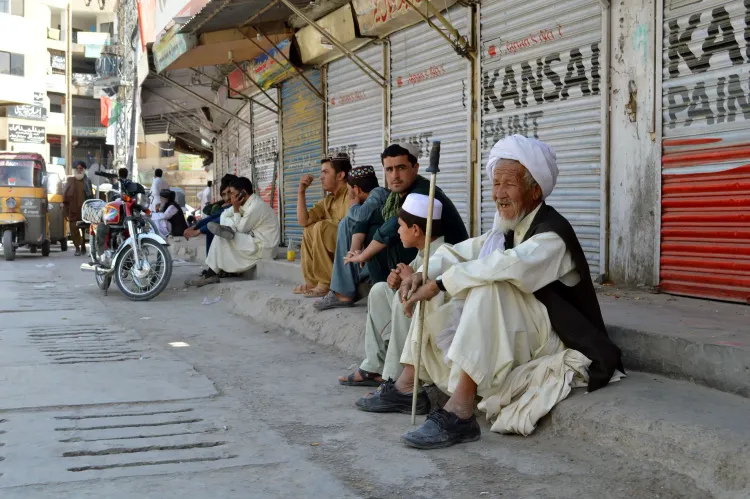
Quetta, Feb 5 (NationPress) The latest incidents of violence in Balochistan, Pakistan, are not merely random acts of aggression but rather manifestations of a long-standing, unresolved political struggle that has persisted for decades between this province and the central government. Despite being endowed with vast natural resources such as natural gas, copper, gold, coal, fisheries, and a strategically significant coastline, Balochistan remains Pakistan's most underdeveloped province in terms of human development, as highlighted by a recent report.
Balochistan has historically fueled industries and urban development across Pakistan. Nevertheless, many residents still grapple with a lack of reliable electricity, clean drinking water, quality education, and basic healthcare services. High levels of unemployment, particularly among educated youth, have left the population feeling deprived of opportunities, agency, and a sense of national belonging. Repeated resource extraction and military operations, coupled with the absence of announcements for significant projects, have been documented in Tarkeen-E-Watan, an online publication for overseas Pakistanis.
According to Alamdar Hussain Malik in Tarkeen-E-Watan, “The recent violence in Balochistan should not be viewed as isolated incidents or mere security failures triggered by transient unrest. They represent the latest manifestations of a deep-rooted political conflict that has been brewing for decades between the province and the Pakistani government. Since the formation of Pakistan, Balochistan has experienced numerous cycles of insurgency, all stemming from unmet political promises, disputed autonomy, and perceived denials of constitutional rights.”
Malik further states that militant organizations in the region are increasingly leveraging their actions to demand political concessions, economic equity, and structural reforms, indicating a shift from mere armed resistance to a more pronounced political agenda. “While violence against civilians and the state is indefensible and must be unequivocally condemned, reducing these incidents to mere law-and-order issues disregards the significant political divides that characterize Balochistan as Pakistan's most sensitive and volatile fault line,” he added.
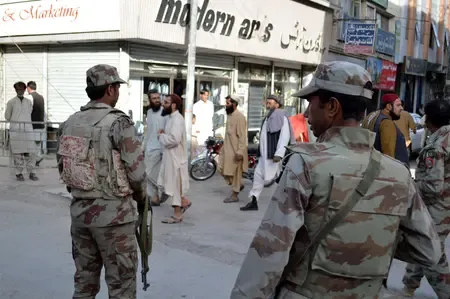
Successive administrations in Pakistan have predominantly framed Balochistan as a security predicament rather than a political issue. Each major incident is followed by escalated military actions, heightened deployments, and stricter administrative measures.
Malik emphasizes, “While the state has a clear obligation to uphold law and order, history shows that coercive measures without political dialogue have consistently failed to achieve lasting peace. Instead, this approach has solidified a narrative of control rather than inclusivity, eroded trust in governmental institutions, and pushed political grievances outside of constitutional and democratic avenues.”
He notes, “What sets the current wave of unrest apart is the clarity and consistency in the militants' messaging. Their narrative has shifted from ambiguous slogans to concrete demands for greater provincial autonomy, transparent resource management, equitable revenue distribution, meaningful political representation, and economic inclusion.”
This evolution illustrates that the challenges in Balochistan stem not just from militancy but also from governance failures, federal imbalances, and the systematic marginalization of a province within Pakistan's political framework.
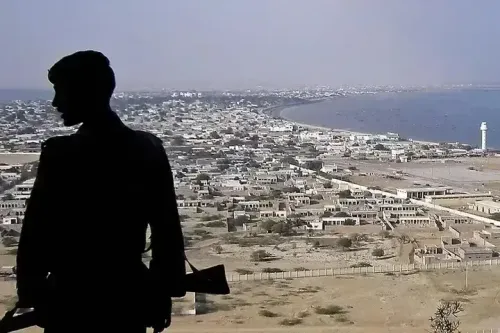
Local authorities frequently highlight major projects like the China-Pakistan Economic Corridor (CPEC), Gwadar Port, and mineral development initiatives as markers of progress and national unification. However, many local inhabitants perceive these projects as vehicles for land appropriation, environmental harm, demographic concerns, and exclusion from decision-making processes, as noted in the article in Tarkeen-E-Watan.
Development initiatives lacking community consultation are viewed as intrusions rather than opportunities. Infrastructure projects that do not create local jobs breed resentment instead of fostering growth, and investments made without local political participation turn national aspirations into local grievances.
Point of View
It is imperative to recognize the intricate political landscape of Balochistan. The province's struggles are not simply about security; they are deeply rooted in governance failures and the pursuit of autonomy. It is essential for national discourse to address these issues and seek meaningful engagement with the people of Balochistan to foster a more inclusive future.
NationPress
1 Oct 2026
Frequently Asked Questions
What are the key issues facing Balochistan?
Balochistan faces significant challenges such as underdevelopment, lack of basic services, high unemployment, and political marginalization.
How do recent attacks reflect the political situation in Balochistan?
The attacks are manifestations of a long-standing political struggle, highlighting deep-rooted grievances regarding autonomy and resource management.
What role does the government play in Balochistan's issues?
The government has often treated Balochistan as a security problem rather than addressing the political and economic grievances of its people.
What demands are being made by militant groups in Balochistan?
Militant groups are increasingly demanding political concessions, economic justice, and structural reforms to address their grievances.
How do local residents view developmental projects like CPEC?
Many local residents perceive projects like CPEC as land grabs and sources of environmental degradation rather than genuine development efforts.