Is the Balochistan Conflict a Result of Enduring Trust Deficits and Pakistani Repression?
Synopsis
Balochistan's enduring conflict stems from a multifaceted history and significant trust issues between its people and the Pakistani state. This article explores the underlying causes, recent violence, and the urgent need for a political solution rather than a purely military approach.
Key Takeaways
Balochistan's violence is multi-dimensional, rooted in history and distrust.
Insurgents exploit the province's geography, complicating state defense.
Local grievances revolve around resource exploitation and marginalization.
Political exclusion leads to cyclical violence and unrest.
A political approach is essential for lasting peace in Balochistan.
Washington, Feb 7 (NationPress) The ongoing violence in Balochistan is far more than just a law-and-order dilemma; it is a complex interplay of historical, geographical, and a persistent trust deficit between the populace and the state, according to a recent report.
“Balochistan seldom garners sustained international focus unless violence flares up. When it does, it is often summarized in narrow terms: Pakistan's largest yet poorest province, a mineral-rich area beset by insurgency, and a security challenge needing containment,” stated an opinion piece in the US-based Eurasia Review.
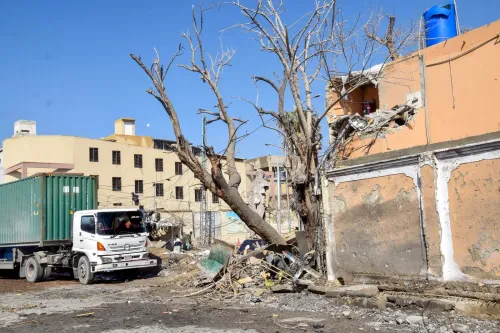
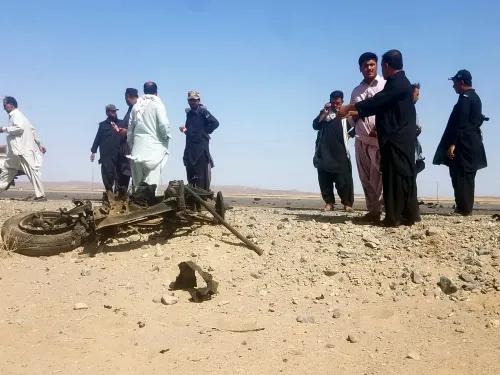
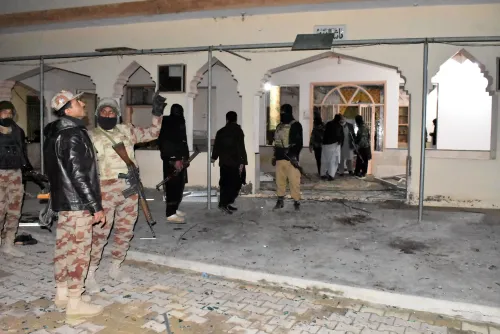
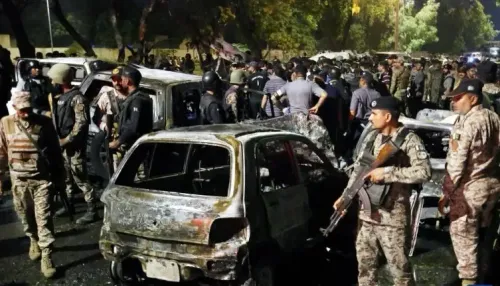
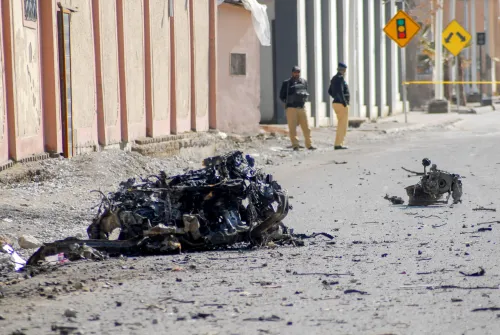
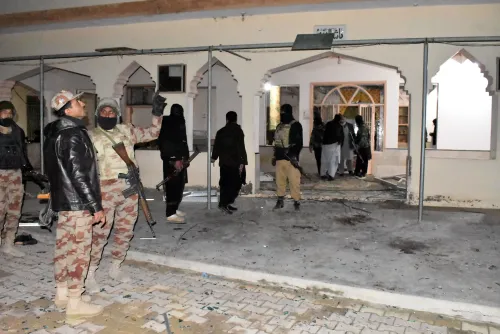
These remarks follow the latest series of coordinated attacks throughout the province.
Spanning 347,000 square kilometers, the province makes up 44 percent of Pakistan, yet is home to less than 15 million residents who inhabit its deserts, mountain ranges, and remote valleys nestled between Afghanistan and Iran, as described in the article.
“The province governs crucial regional trade routes due to its 760-kilometer Arabian Sea coastline starting at Gwadar port. The arid terrain hides Pakistan’s most vital mineral resources, including copper, gold, coal, and natural gas,” it noted, adding, “However, these assets have become both a blessing and a curse.”
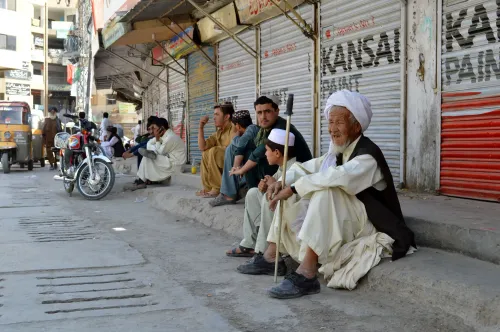
The locals express deep-seated distrust towards Islamabad, accusing the government of siphoning resources without equitable sharing, which has left them in stagnation and poverty.
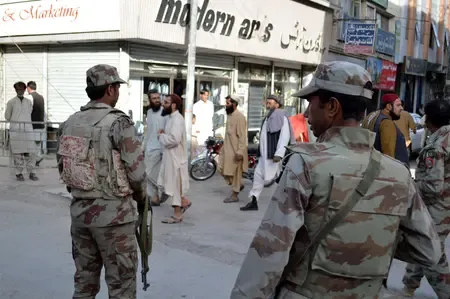
Additionally, its geography favors insurgents, making it nearly impossible for security forces to defend such a vast, rugged area with minimal local support.
Recently, the Balochistan Liberation Army (BLA) executed simultaneous attacks on police stations, banks, and other facilities in multiple locations, dubbing the operation 'Herof 2.0'.
Exploring the tumultuous relationship between Balochistan and the state, the report highlighted that prior to Pakistan's independence, the region consisted of a variety of princely states and directly administered territories.
The accession to Pakistan in March 1948 was perceived by many Baloch nationalists as coerced, igniting the first rebellion. Follow-up uprisings occurred in 1958, the 1960s, the 1970s, and once again from the early 2000s onwards.
“Each uprising followed a familiar pattern: political exclusion and economic grievances, armed resistance, a forceful state response, and a temporary lull that left core issues unresolved,” the article pointed out.
The grievances remain unchanged. Natural gas discovered in the 1950s powered industries nationwide long before Baloch districts were granted access. Presently, significant projects like Reko Diq and the China-Pakistan Economic Corridor are viewed locally as extraction without consent. The benefits of development are seen as flowing outward, while local communities remain sidelined.
Where accountability mechanisms lack transparency, mistrust escalates. This leads to a vicious cycle: militant violence undermines the legitimacy of insurgents, yet state repression alienates communities, creating a scenario where neither side possesses clear legitimacy.
While infrastructure and job creation are essential for the region, locals insist their primary grievance is the lack of control over their own affairs. Decisions affecting Quetta and surrounding districts are often perceived as being made in Islamabad, corporate boardrooms, or foreign capitals, it opined.
“The conflict in Balochistan is neither inevitable nor unsolvable. However, as long as it is primarily framed as a counterterrorism issue rather than a political one, the cycle of violence will continue—flaring, subsiding, and returning, each time at an escalating cost to both the province and the Pakistani state,” the report concluded.
Point of View
It is clear that the issues in Balochistan cannot be overlooked. The ongoing conflict demands attention not just as a counterterrorism issue but as a pressing political matter that affects the fabric of Pakistani society. Our commitment must remain with the nation, advocating for informed dialogue and solutions.
NationPress
29 Sept 2026
Frequently Asked Questions
What are the main causes of the conflict in Balochistan?
The conflict is primarily driven by historical grievances, economic exclusion, and a profound mistrust between the Baloch population and the Pakistani state.
How has geography impacted the insurgency in Balochistan?
The rugged and vast terrain of Balochistan offers strategic advantages to insurgents, complicating defense efforts by state security forces.
What is the significance of the Balochistan Liberation Army?
The Balochistan Liberation Army is a significant insurgent group that has conducted coordinated attacks, highlighting the ongoing volatility in the region.
Why do locals distrust the Pakistani government?
Many Baloch people feel that their natural resources are exploited by the government without equitable benefits, perpetuating poverty and discontent.
What is the potential for resolving the conflict?
Experts suggest that addressing the political grievances and fostering local governance could pave the way for a resolution in Balochistan.