Has Pakistan's Reliance on Military Deployment Failed to Resolve the 77-Year Balochistan Crisis?
Synopsis
The long-standing conflict between Pakistan and Balochistan over legitimacy remains unresolved, rooted in military actions and resource exploitation. This report questions whether Pakistan's military dependency will ever resolve the deep-seated issues fueling the crisis.
Key Takeaways
Balochistan is rich in resources but remains underdeveloped.
Historical grievances fuel ongoing conflict.
Military responses have failed to resolve core issues.
Local representation and participation are essential for peace.
Geography complicates military operations and governance.
Quetta, Feb 15 (NationPress) The enduring conflict between Pakistan and Balochistan concerning the province's legitimacy remains unresolved, often suppressed through years of military action, political maneuvering, and what many Baloch perceive as a colonial-style extraction of resources, according to a recent analysis published in Modern Diplomacy.
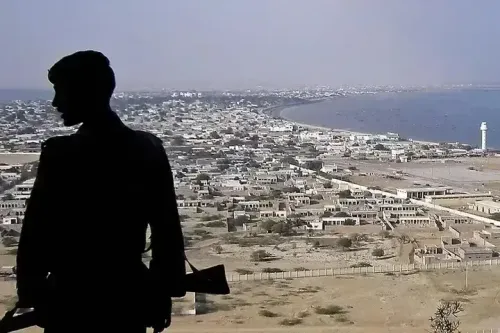
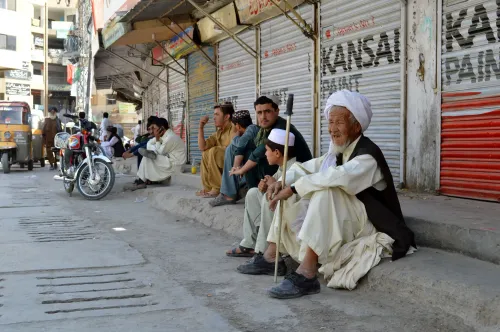
Spanning Pakistan's southwestern border, Balochistan constitutes nearly 44% of the nation's total land area while hosting only around 6% of its population. It is both the most deprived province and one of the richest in resources, possessing vast reserves of natural gas, copper, gold, and strategically important ports.
This glaring disparity lies at the heart of the persistent conflict. Critics assert that Islamabad exploits Balochistan’s natural resources while local communities remain marginalized. Natural gas extracted from the region powers other parts of Pakistan, yet many Baloch communities reportedly still lack reliable electricity, the report highlighted.
Strains between Balochistan and the state of Pakistan date back to the time of independence. In 1947, as British India was divided, Balochistan functioned as a princely state under the Khan of Kalat, who proclaimed independence on August 15, 1947, coinciding with the emergence of India and Pakistan as independent nations. Pakistan did not acknowledge this declaration and officially annexed Balochistan in 1948.
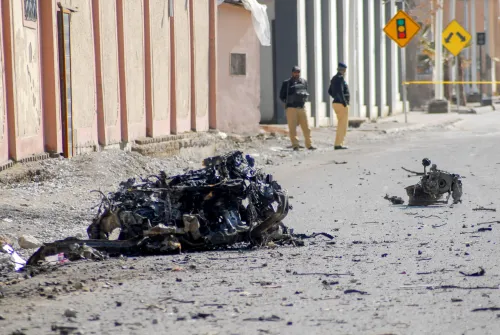
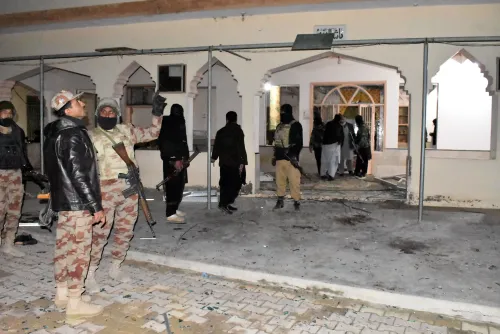
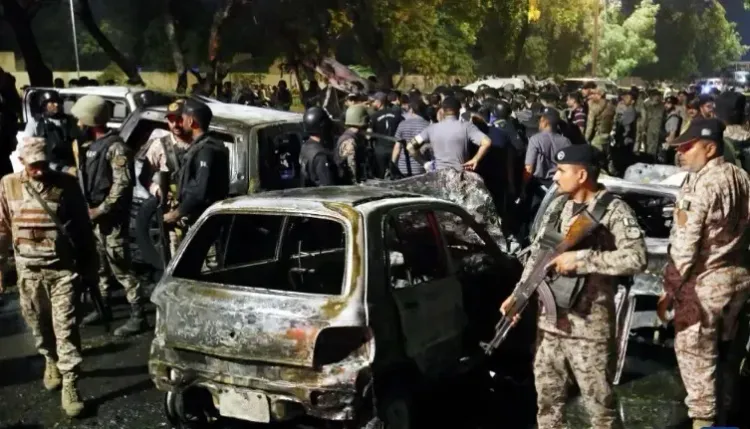
Violence has erupted sporadically since that time. On January 31 of the current year, coordinated assaults across approximately a dozen cities in Balochistan resulted in over 30 civilian deaths and 18 law enforcement casualties. The Baloch Liberation Army (BLA) showcased what observers deemed sophisticated coordination across the largest province of Pakistan. In response, security forces claimed to have eliminated more than 150 militants.
The day following the assaults, Chief Minister Sarfraz Bugti remarked, "The solution lies with the military rather than political dialogue." Balochistan has experienced intermittent insurgencies since 1948, marking the current unrest as the fifth significant rebellion in 77 years. Each uprising has been met with force, labeled as “suppressed,” only to be followed by another, often more significant, wave of resistance.
Previous insurgencies occurred in the 1950s, 1960s, and 1970s. The report indicates that each cycle has followed a similar pattern: grievances mount, protests escalate, the state responds with force, violence intensifies, military operations restore some order, and the fundamental issues remain unaddressed. "The pattern is clear. The lesson, apparently, is not," it noted.
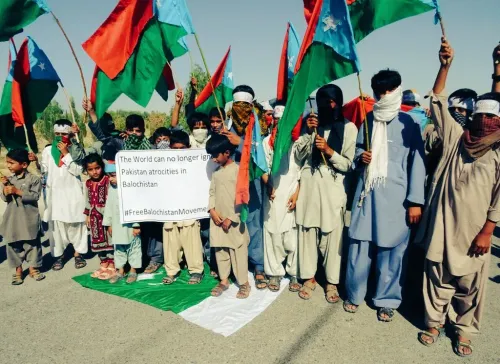
The current insurgency differs in its composition, characterized as younger, more middle-class, and increasingly including women in leadership roles. Armed factions now frame their struggle as a "national liberation" movement against colonial-style exploitation.
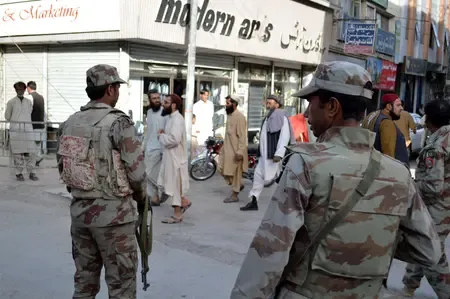
The report emphasizes that Pakistan is amplifying security deployments instead of addressing issues of revenue-sharing or local engagement. The province is now heavily militarized, yet significant attacks persist.
Abdul Basit from Singapore’s S. Rajaratnam School of International Studies highlighted the geographic challenge, acknowledging that Balochistan’s rugged landscape spans an area larger than Germany, with sparse populations and mountainous regions that offer refuge to armed groups.
"Can you deploy security in a province this large, with such terrain, to ensure complete eradication of violence?" he questioned. "Especially when the state refuses to examine local faultlines?" He suggested that while geography complicates suppression, neglecting the root causes makes resolution even harder to attain.
Saher Baloch, a scholar based in Berlin, argued that local knowledge of the terrain grants insurgents an advantage. "Fighters understand the landscape better than security forces. They need only strike occasionally to reveal weaknesses. Where the state rules through fear rather than trust, intelligence diminishes. People do not cooperate, which is why even high-security zones can be breached," she expressed.
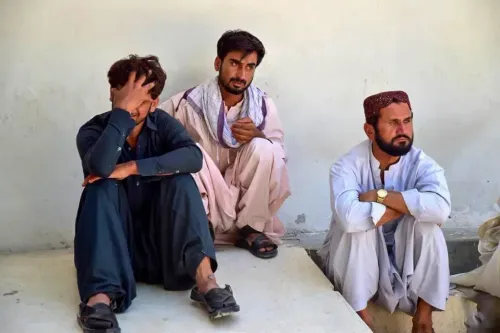
The issue of enforced disappearances remains a particularly contentious topic. Activists assert that thousands have been abducted, with some later found dead bearing signs of torture.
The government denies any involvement. Regardless of accountability, the report suggests the impact is radicalizing communities. Families of the disappeared, along with broader social networks, increasingly view the state with suspicion.
Rafiullah Kakar, a doctoral candidate from Cambridge specializing in Balochistan, argued that Pakistan must "fundamentally shift" from a "coercive and militarized" approach.
"The starting point must be substantial confidence-building measures for political reconciliation and dialogue," he stated.
Kakar proposed measures including addressing enforced disappearances, ensuring credible political representation, establishing a Truth and Reconciliation Commission, and creating mechanisms to address "longstanding political, economic, and governance-related grievances."
Acknowledging abuses, creating accountability structures, enabling affected communities to participate in governance, and implementing benefit-sharing frameworks for resource extraction are frequently cited components of effective conflict resolution, the report notes.
The document draws comparisons with conflicts in Northern Ireland, Indonesia’s Aceh province, Sri Lanka, and Colombia, asserting that while military action may temporarily suppress violence, lasting peace necessitates political settlements that tackle underlying grievances.
"The pattern across these examples is clear: military operations can temporarily suppress violence, but sustainable stability requires political settlements addressing root grievances. Where resource-rich regions feel exploited by central governments, benefit-sharing mechanisms are crucial. Where communities experience state violence, accountability and truth-telling are essential. Where populations feel excluded from governance, genuine representation is vital," the report concludes.
The crucial question posed is whether Pakistan will embrace approaches that have proven effective elsewhere or continue with strategies that have failed to yield lasting peace.
Reflecting on 77 years of ongoing unrest, the report asserts that a repeated reliance on force indicates a deeper issue in how the conflict is perceived.
"The Chief Minister’s assertion that ‘the solution lies with the military’ reflects a specific framing of the problem. If Balochistan is predominantly a security threat, then security responses are logical. However, if it is fundamentally a political conflict regarding resource distribution, governance, representation, and historical grievances, then security responses, even if executed well, can only manage symptoms, not resolve causes," it emphasized.
Following the January 31 attacks, the BLA characterized its actions as resistance against colonial exploitation and a quest for national liberation.
The report highlights that irrespective of whether this characterization is accepted, the fact that segments of the population find it compelling enough to support or refrain from opposing armed movements signals a legitimacy challenge for the state.
"Legitimacy cannot be imposed solely through force. It must be earned through governance that is responsive to people's needs and respectful of their voices," the report concluded, adding that nearly eight decades of conflict indicate that current methods have not established that legitimacy.
While recognizing that completely abandoning security operations is neither practical nor advisable amid ongoing violence, the report concludes that Pakistan faces a strategic choice: to continue regarding Balochistan primarily as a security issue with intermittent political engagement, or to reconceptualize it fundamentally as a political challenge necessitating consistent political solutions alongside calibrated security measures.
Though the distinction may seem subtle, the report argues the implications are significant. Based on the response to the latest wave of attacks, it suggests that Pakistan appears inclined to follow the path it has trodden for decades. Whether the potential for a sixth rebellion will prompt a change in perspective remains uncertain.
Point of View
Our stance remains with the nation, advocating for a comprehensive dialogue that addresses the underlying grievances of Balochistan. It is vital to recognize that military solutions alone cannot forge lasting peace; we must pursue avenues that foster genuine representation and local engagement.
NationPress
24 Sept 2026
Frequently Asked Questions
What are the main causes of the Balochistan crisis?
The primary causes include longstanding grievances related to resource extraction, lack of political representation, and military suppression of dissent.
How has the Pakistani government responded to the insurgencies in Balochistan?
The government has predominantly relied on military force to suppress insurgencies, which has led to further resentment and escalation of conflict.
What solutions have been proposed to address the issues in Balochistan?
Proposals include establishing a Truth and Reconciliation Commission, addressing enforced disappearances, and ensuring local political representation.
What role does geography play in the Balochistan conflict?
The rugged terrain of Balochistan complicates military operations, offering refuge to armed groups and challenging effective governance.
Why is legitimacy important in resolving the Balochistan crisis?
Legitimacy is crucial because it fosters trust between the state and the local population, which is essential for sustainable peace.