Balochistan today mirrors pre-1971 East Pakistan, analysts warn
Synopsis
Analysts are drawing an uncomfortable parallel: Balochistan today looks a lot like East Pakistan before 1971. Resource-rich but Pakistan's poorest province, excluded from CPEC negotiations, and subject to documented enforced disappearances — the structural conditions that preceded Bangladesh's creation are, critics argue, being replicated in slow motion on Pakistan's western frontier.
Key Takeaways
Analysts and regional commentators are comparing Pakistan's treatment of Balochistan to its pre- 1971 handling of East Pakistan , citing resource extraction and political exclusion.
Chagai district , home to the Reko Diq and Saindak mines, reportedly holds the world's largest untapped copper deposit yet is Pakistan's poorest area on average .
Canada-based Barrick Mining reportedly earned $3 billion in 2024 and projects $60 billion in future revenues from Chagai; Barrick states 77% of Reko Diq employees are from Balochistan.
The CPEC project, initially valued at $60 billion , is widely criticised by local Baloch communities as benefiting Islamabad and Beijing rather than residents.
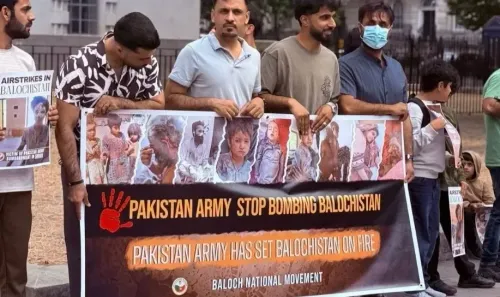
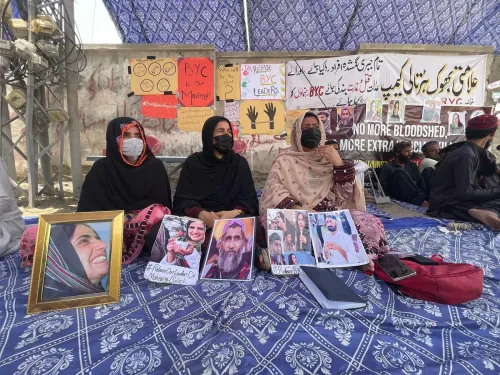
Human rights reports document arrests and enforced disappearances in Balochistan, deepening perceptions of second-class status within Pakistan.
In 1971 , Islamabad's refusal to accept election results and its use of military force against dissent in East Pakistan led to the creation of Bangladesh .
Pakistan's treatment of Balochistan is drawing pointed comparisons to its handling of East Pakistan before the 1971 crisis that gave birth to Bangladesh — with analysts and regional commentators identifying a recurring pattern of resource extraction, political exclusion, and coercive governance directed at peripheral populations.
A Familiar Pattern of Centre-Periphery Exploitation
Historians and economists have long documented how West Pakistan's political and military establishment systematically extracted wealth from East Pakistan while returning disproportionately little. As one study noted, East Pakistan 'contributed disproportionately to Pakistan's export earnings while receiving a smaller share of public investment' — a structural imbalance that ultimately fuelled mass political alienation and armed resistance.
Analysts argue that Balochistan today fits the same template. Despite being Pakistan's richest province by natural resources — holding vast reserves of minerals, natural gas, and commanding a strategically vital coastline — it remains the country's poorest province by most development indicators.
Mineral Wealth, Local Poverty
The contradiction is sharpest in Chagai district, home to the Saindak and Reko Diq mines. With estimated ore reserves of nearly six billion tons, Chagai reportedly holds the world's largest untapped copper deposit. Yet, according to a recent analysis published in Bangladesh's Prothom Alo newspaper, Chagai is the poorest area on average in all of Pakistan — a district where mineral abundance has not translated into local prosperity.
Canada-based Barrick Mining reportedly recorded earnings of three billion dollars in 2024 and is now projecting approximately 60 billion dollars in future revenues from the Chagai project — of which 54 billion dollars is expected to come from gold alone, with the remainder from copper, according to the same report.
Barrick, however, contests the narrative of exclusion. The company states on its website that as of March 2025, 77 per cent of employees at Reko Diq Mining Company were from Balochistan province, that 353 households have been provided with reliable clean water, that 80 per cent of children under ten years of age in the area have been given access to education, and that $6.8 million has been invested in community development initiatives.
CPEC and the Question of Local Benefit
A 2019 policy review and subsequent reporting highlighted that large-scale projects — including mineral extraction contracts, gas pipeline construction, and investments under the China-Pakistan Economic Corridor (CPEC) — have frequently been negotiated without meaningful participation from local Baloch communities. Critics argue that the resulting benefits flow primarily to federal actors, private contractors, and foreign investors.
The CPEC project, launched in 2015 as part of China's Belt and Road Initiative with an initially projected investment of 60 billion dollars, has been a particular flashpoint. Local residents, according to the Prothom Alo analysis, claim that the corridor — including the development of Gwadar port — has primarily benefited Islamabad and Beijing, not the Baloch people. The article noted that Baloch opposition extends beyond Islamabad to encompass China and the United States, with many in the region reportedly unwilling to seek external mediation in what they frame as a national struggle.
Enforced Disappearances and Political Suppression
Beyond economic grievances, separate media reporting and human rights analyses have documented a pattern of arrests, enforced disappearances, and restrictions on political activity in Balochistan. Critics argue these measures have deepened the perception among many Baloch that they are treated as 'second-class citizens' within the Pakistani state — a phrase that echoes the language used by Bengali nationalists in pre-1971 East Pakistan.
In East Pakistan, the political marginalisation of Bengali leaders culminated in Islamabad's refusal to honour the results of the 1970 general election. The subsequent deployment of overwhelming military force against political dissent transformed what had been a constitutional crisis into a humanitarian catastrophe and, ultimately, the creation of an independent Bangladesh. Historians note that the military's institutional preference for coercion over accommodation was decisive in that outcome.
What Comes Next
Whether Balochistan's trajectory leads to a comparable rupture remains a subject of active debate among South Asia scholars. What is increasingly difficult to dispute, analysts say, is that the structural conditions — resource extraction without local equity, political exclusion, and the use of state force against dissent — bear a recognisable resemblance to those that preceded 1971. How Islamabad responds to Baloch grievances in the coming years may determine whether history repeats itself.
Point of View
Demographics, and international context differ significantly from Bengal in 1971. What the comparison does illuminate is Islamabad's institutional reflex: extract, exclude, suppress, and only negotiate under extreme duress. The CPEC dimension adds a layer absent in 1971 — a powerful external patron with its own strategic interests in keeping Balochistan quiet. That makes international accountability even harder to achieve, and the Baloch grievance correspondingly more difficult to resolve through conventional political channels.
NationPress
27 Oct 2026
Frequently Asked Questions
Why is Balochistan being compared to pre-1971 East Pakistan?
Analysts draw the comparison because both regions share a pattern of economic marginalisation — contributing disproportionate resources to Pakistan's centre while receiving limited public investment in return — combined with political exclusion and documented state coercion against dissent. In 1971, this pattern culminated in the creation of Bangladesh; critics argue Balochistan is on a similar trajectory.
What is the Reko Diq project and why is it controversial?
Reko Diq is a massive gold and copper mining project in Balochistan's Chagai district, operated by Canada-based Barrick Mining, which projected approximately $60 billion in future revenues from the site as of 2024. Critics argue that Baloch communities have little representation in the project's governance and see minimal economic benefit, even as Chagai remains Pakistan's poorest area. Barrick disputes this, stating that 77 per cent of its Reko Diq employees are from Balochistan province.
What is CPEC and how does it relate to Baloch grievances?
The China-Pakistan Economic Corridor (CPEC), launched in 2015 under China's Belt and Road Initiative with an initial projected investment of $60 billion, runs through Balochistan and includes development of Gwadar port. Local Baloch communities and critics allege that CPEC negotiations excluded local participation and that economic benefits flow to Islamabad and Beijing rather than to residents.
What happened in East Pakistan in 1971?
After Islamabad refused to accept the results of the 1970 general election — which Bengali nationalists won — it deployed military force against political dissent in East Pakistan. The resulting crisis, marked by large-scale violence, became a humanitarian catastrophe and led to the creation of independent Bangladesh in 1971.
What human rights concerns have been raised about Balochistan?
Separate media reporting and human rights analyses have documented a pattern of arrests, enforced disappearances, and restrictions on political activity in Balochistan. These measures have, according to critics, deepened the sense among many Baloch that they are treated as second-class citizens within the Pakistani state.