Centre refutes E20 petrol export reports: No offer made to Bhutan
Synopsis
The Centre has flatly denied that any Indian Oil Marketing Company made an E20 petrol export offer to Bhutan — calling reports of a Bhutanese rejection 'without basis.' The episode reveals how quickly unverified bilateral energy narratives can gain traction, and why India is keen to control the story around its flagship ethanol-blending programme.
Key Takeaways
The Centre on 5 July rejected media claims that Bhutan declined an Indian E20 petrol export offer.
The ministry stated that no Oil Marketing Company (OMC) made any such proposal to Bhutan.
Reports had cited Bhutanese concerns over hygroscopic ethanol , ageing storage tanks, and risk of phase separation in mountainous terrain.
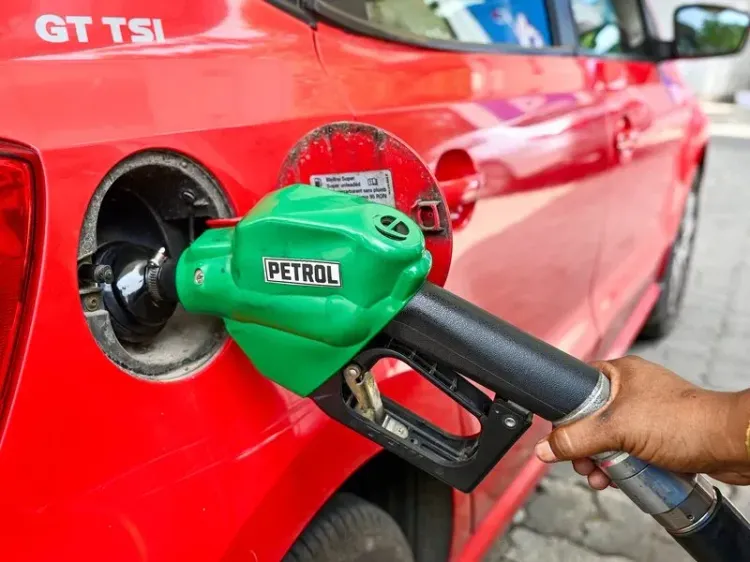
India's E20 programme blends 20% ethanol with petrol and is now available nationwide as part of the government's biofuel strategy.
The government described reports of a Bhutanese rejection as 'without basis.'
The Centre on Sunday, 5 July categorically rejected media reports claiming that Bhutan had declined an Indian proposal to import E20 petrol, stating that no such offer was ever made by Indian Oil Marketing Companies (OMCs) and that no proposal to export the blended fuel to the neighbouring country exists.
What the Government Said
'Claims that Bhutan declined an offer to import E20 petrol from India are incorrect,' the ministry said in its clarification. 'No such offer has been made by the Oil Marketing Companies (OMCs), and there is no proposal for export of E20 petrol to Bhutan,' it added.
What the Media Reports Claimed
The reports, citing Bhutanese officials, alleged that Bhutan had requested Indian OMCs to continue supplying conventional petrol rather than the higher ethanol-blended variant, pointing to technical and infrastructure-related challenges. Specifically, the concerns reportedly centred on the hygroscopic nature of ethanol — its tendency to absorb atmospheric moisture more readily than standard petrol.
Officials were reported to have flagged that ageing underground fuel storage tanks in Bhutan's mountainous terrain could be vulnerable to water seepage, raising the risk of phase separation — a process in which ethanol and petrol separate due to water contamination. Such an outcome, the reports said, could compromise fuel quality and potentially damage vehicle engines incompatible with higher ethanol blends.
India's E20 Programme: The Broader Context
India's E20 petrol programme — which blends 20 per cent ethanol with conventional petrol — is a cornerstone of the government's strategy to reduce dependence on crude oil imports, cut vehicular emissions, and boost domestic biofuel production. The fuel is now available across the country as part of a nationwide rollout of cleaner energy alternatives.
Notably, the E20 initiative is part of India's broader commitment to achieving 20 per cent ethanol blending in petrol by 2025, a target that has seen significant acceleration in recent years. The programme has domestic policy implications and any export dimension — had it existed — would have carried diplomatic weight given India-Bhutan energy ties.
Centre's Position
The government was unambiguous in its denial, reiterating that the media reports suggesting Bhutan had rejected an Indian export offer were 'without basis.' No OMC, according to the ministry, had initiated or tabled any such proposal. The clarification effectively closes, at least officially, any suggestion of a bilateral disagreement over fuel supply between the two neighbours.
As India continues its domestic E20 rollout, the episode underscores the sensitivity around cross-border energy supply narratives — and the government's intent to manage them proactively.
Point of View
Even hypothetically, risks feeding a broader scepticism about ethanol-blended fuel compatibility. The reported Bhutanese concerns about phase separation and ageing infrastructure are technically legitimate and widely documented in fuel science literature, which makes the denial's framing — 'no offer was made' rather than 'the concerns are unfounded' — a careful sidestep. The real question mainstream coverage has missed: if no offer was made, what triggered the reports in the first place, and were there informal-level discussions that fell short of a formal proposal?
NationPress
5 Oct 2026
Frequently Asked Questions
Did Bhutan reject an Indian offer to import E20 petrol?
According to the Indian government, no such offer was made. The Centre on 5 July clarified that no Oil Marketing Company had proposed exporting E20 petrol to Bhutan, calling reports of a rejection 'without basis.'
What is E20 petrol and why does India promote it?
E20 petrol is a blend of 20 per cent ethanol and 80 per cent conventional petrol. India promotes it to reduce crude oil import dependence, lower vehicular emissions, and support domestic biofuel production — with a nationwide rollout already under way.
What concerns were cited in the media reports about E20 and Bhutan?
Reports citing Bhutanese officials said the country's ageing underground storage tanks in mountainous terrain were vulnerable to water seepage due to ethanol's hygroscopic nature, raising the risk of phase separation that could damage vehicle engines. The Centre denied any offer existed that would have prompted such concerns.
Who are India's Oil Marketing Companies (OMCs) involved in fuel supply to Bhutan?
India's OMCs — which include entities that manage domestic fuel distribution and cross-border supply — were named in the media reports as the entities that had allegedly made the E20 offer. The Centre stated none of them had done so.
What is phase separation in ethanol-blended fuel?
Phase separation occurs when ethanol in a blended fuel absorbs enough moisture to separate from petrol, potentially degrading fuel quality and harming engines not designed for higher ethanol concentrations. It is a recognised technical concern in humid or water-prone storage environments.