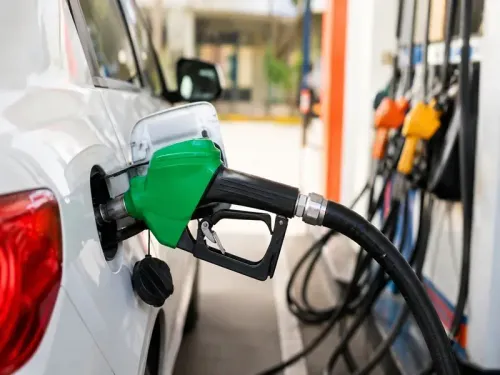
Does Ethanol Mixing in Petrol Affect Cars? Gadkari Responds
Synopsis
In a significant revelation, Union Minister Nitin Gadkari announced that ethanol-blended petrol has saved India over Rs 1.40 lakh crore in foreign exchange. The minister assures that extensive testing shows no adverse effects on vehicles, paving the way for a greener future with E20 fuel.
Key Takeaways
Ethanol-blended petrol has saved India significant foreign exchange.
Extensive testing shows no negative impact on vehicles.
E20 petrol is a step towards a greener future.
Farmers benefit financially from supplying materials for ethanol.
Vehicles are clearly marked for fuel compatibility.
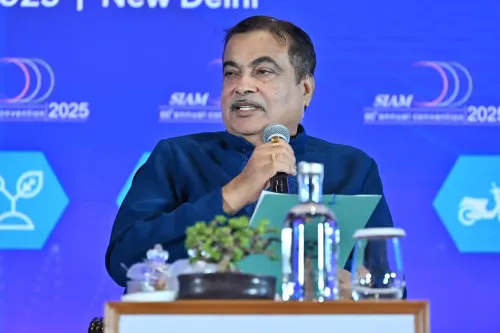
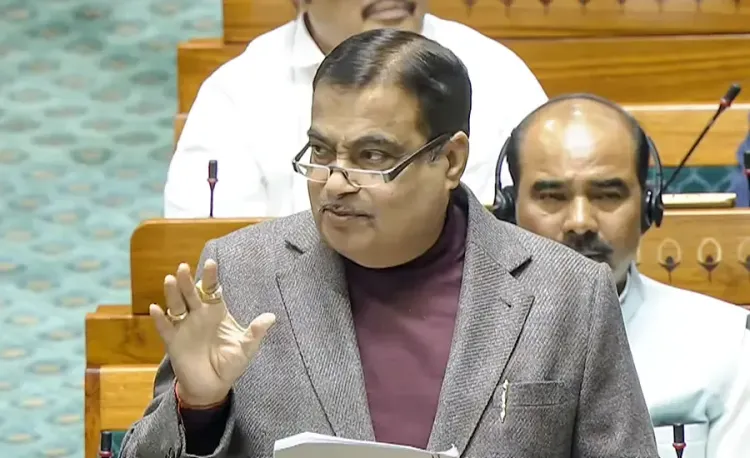
New Delhi, Dec 11 (NationPress) The adoption of ethanol-blended petrol has resulted in savings exceeding Rs 1.40 lakh crore in foreign exchange for the nation, while also offering support to farmers, as stated by Union Road Transport and Highways Minister Nitin Gadkari during a Lok Sabha session on Thursday.
He noted that extensive evaluations have indicated that there are no adverse effects on vehicles utilizing ethanol-enhanced fuel, effectively addressing concerns from various lawmakers.
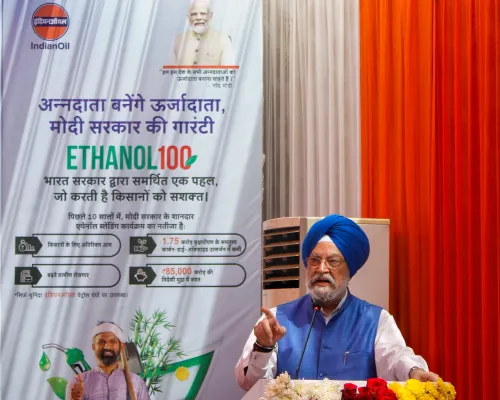
According to Gadkari, the launch of E20 petrol is a significant advancement toward achieving a cleaner and more sustainable future. He emphasized that ethanol-blended petrol contributes to reducing pollution levels and lessening the nation’s reliance on expensive fuel imports.
Additionally, he revealed that farmers have benefited by receiving around Rs 40,000 crore for the supply of raw materials such as sugarcane and maize used in the ethanol production process.
In response to inquiries regarding vehicle compatibility with E10 and E20 fuel standards, Gadkari provided insights into government policies.
He clarified that car manufacturers are accountable for indicating whether a particular model can work with E20 fuel, and this must be clearly marked on the vehicle via a prominent sticker.
Furthermore, he specified that vehicles sold prior to April 1, 2023, are suitable for E10 fuel, while those sold afterward are constructed with materials that meet E20 standards.
Gadkari added that safety regulations for E20 fuel have been established in accordance with BIS specifications and Automotive Industry Standards, with testing confirming no issues in drivability, startup capability, or compatibility of metal and plastic components.
He also informed the House that there is no requirement to phase out or alter older vehicles that do not comply with E20 standards.
He noted that a study conducted by ARAI, IOCL, and SIAM has confirmed that regular maintenance can manage the typical wear and tear resulting from the use of ethanol-blended fuel, negating the need for any special retrofitting programs.
"The EBP Programme has also led to a reduction of approximately 790 lakh metric tonnes of net CO2 emissions and the substitution of over 260 lakh metric tonnes of crude oil," he stated.
Point of View
Promoting a smoother transition towards greener alternatives.
NationPress
21 Sept 2026
Frequently Asked Questions
What is ethanol-blended petrol?
Ethanol-blended petrol is a mixture of gasoline and ethanol, a renewable fuel derived from plants. It aims to reduce dependence on fossil fuels and lower emissions.
How much has India saved through ethanol blending?
India has saved over Rs 1.40 lakh crore in foreign exchange by adopting ethanol-blended petrol.
Are older vehicles compatible with E20 fuel?
Vehicles sold before April 1, 2023, are compatible with E10 fuel, while newer models are designed for E20 standards.
What benefits does ethanol provide farmers?
Farmers have received around Rs 40,000 crore for supplying raw materials such as sugarcane and maize for ethanol production.
Is E20 fuel safe for vehicles?
Yes, the safety norms for E20 fuel have been established through BIS specifications and Automotive Industry Standards, confirming no drivability or compatibility issues.