Ethanol Blending Programme scientifically validated, says Petroleum Ministry
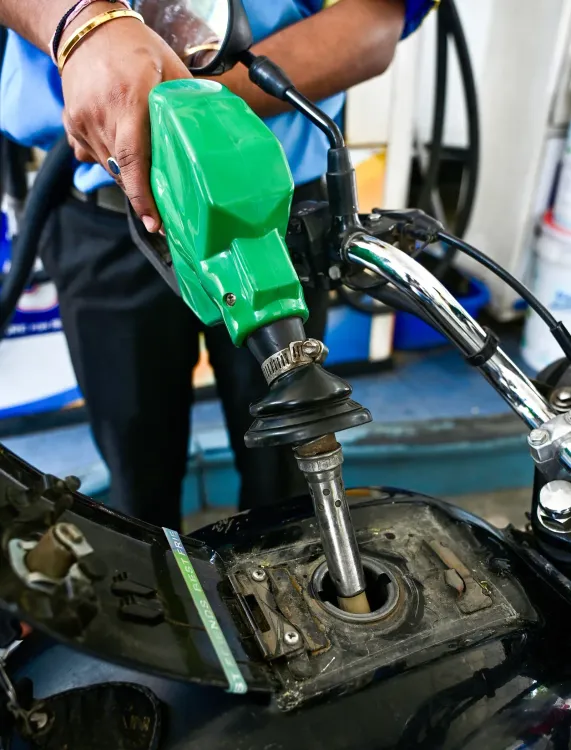
Synopsis
The Petroleum Ministry has fired back at a surge of viral misinformation targeting India's Ethanol Blending Programme — from fake videos of sugarcane juice being poured into petrol tanks to ant-attraction claims — calling them baseless. With E20 fuel now standard since 2023 and ₹1.4 lakh crore in forex savings on the books, the government is defending one of its flagship energy transition policies against an organised disinformation wave.
Key Takeaways
The Ministry of Petroleum and Natural Gas on 23 June reaffirmed that the Ethanol Blending Programme (EBP) is scientifically validated and continuously monitored.
E20 petrol (20% ethanol blend) has been rolled out across India from 2023 , following phased implementation since the programme's launch in 2003 .
No widespread engine failures or vehicle breakdowns attributable to ethanol blending have been reported since E20's introduction.
BPCL clarified that fuel-grade ethanol eliminates residual sugars through distillation and contains insect-repellent denaturants — debunking viral ant-attraction videos.
The EBP has saved India more than ₹1.4 lakh crore in foreign exchange through reduced crude oil imports.
Ethanol blending is practised globally, with Brazil running an even higher standard blend of E27 .
The Ministry of Petroleum and Natural Gas on Tuesday, 23 June firmly reaffirmed that India's Ethanol Blending Programme (EBP) for petrol is scientifically validated, rigorously tested, and under continuous government oversight — pushing back against a wave of misinformation circulating on social media platforms.
Government Responds to Viral Misinformation
The Ministry stated that it had noted 'misleading and unsubstantiated claims being circulated on social media regarding Ethanol Blended Petrol (EBP), which appear to be aimed at confusing and misleading the public.' Officials specifically flagged the recirculation of old images and videos designed to sensationalise the issue and generate unwarranted public concern.
Among the viral claims addressed: videos falsely depicting sugarcane juice being mixed directly with petrol, and footage of ants near a vehicle fuel tank purportedly linked to E20 fuel. The Ministry categorically rejected both as baseless. Bharat Petroleum Corporation Limited (BPCL) separately clarified that fuel-grade ethanol undergoes fermentation and distillation processes that eliminate residual sugars, and that fuel ethanol contains denaturants that are repellent to insects — not attractive to them.
What the Ethanol Blending Programme Is
Launched in 2003, the EBP was designed with three core objectives: reducing India's dependence on crude oil imports, strengthening energy security, and advancing environmental sustainability. The programme has been rolled out in phases, with 20 per cent ethanol blending (E20) introduced from 2023 onwards following extensive technical evaluation and consultations with automobile manufacturers and fuel testing agencies.
The Ministry noted that ethanol is derived from a range of agricultural feedstocks — including sugarcane juice, molasses, broken rice, and maize — but stressed that the final fuel-grade ethanol bears vastly different properties from its raw inputs, having undergone fermentation, distillation, and other industrial processes before conforming to stringent quality specifications.
No Engine Failures Reported Since E20 Launch
Since the introduction of E20 petrol, the government said no widespread instances of engine failure or vehicle breakdown attributable to ethanol blending have been reported. The Ministry also addressed concerns around the hygroscopic nature of ethanol — its tendency to absorb moisture — clarifying that modern vehicles are equipped with design features and safeguards to prevent water from entering fuel tanks, making this a non-issue under normal operating conditions.
Claims that E20 fuel could affect vehicle insurance validity were also found to be incorrect, according to clarifications issued by the relevant stakeholders.
Global Precedents and Economic Impact
The Ministry pointed to international adoption as evidence of the programme's soundness. 'Ethanol blending is a globally accepted practice and is successfully implemented in several countries, including the US, Brazil, and Japan. Brazil has long adopted higher ethanol blending levels, with E27 serving as the standard petrol blend,' the statement noted.
Domestically, the EBP has delivered measurable economic returns. The programme has helped save India more than ₹1.4 lakh crore in foreign exchange through reduced crude oil imports. It has also created sustained demand for agricultural feedstocks, supporting farmers' incomes and strengthening the rural economy, while contributing to lower carbon emissions and India's broader shift toward cleaner mobility.
What Happens Next
The government indicated that monitoring of the programme will continue in close coordination with oil marketing companies, automobile manufacturers, and fuel testing agencies. As disinformation campaigns around E20 persist online, authorities appear poised to issue further clarifications as needed. The broader policy trajectory — toward even higher blending levels beyond E20 — remains on track, subject to ongoing technical review.
Point of View
One of India's most consequential energy transition bets, is now facing a coordinated perception problem online. The programme's economics are hard to dispute: ₹1.4 lakh crore in forex savings is a real number. But the Ministry's defensive posture also reflects a broader challenge: technical policies that touch everyday consumers — fuel, food, farming — are uniquely vulnerable to viral distortion. What the statement does not address is whether public communication around E20's rollout was proactive enough to pre-empt these narratives. Launching a significant fuel transition with limited mass-media education creates an information vacuum that misinformation is quick to fill.
NationPress
22 Sept 2026
Frequently Asked Questions
What is India's Ethanol Blending Programme?
India's Ethanol Blending Programme (EBP) is a government initiative launched in 2003 to mix ethanol with petrol in order to reduce crude oil imports, improve energy security, and cut carbon emissions. The programme reached its current milestone of 20 per cent ethanol blending (E20) from 2023 onwards.
Is E20 petrol safe for car engines?
According to the Ministry of Petroleum and Natural Gas, no widespread engine failures or vehicle breakdowns attributable to E20 fuel have been reported since its introduction. The rollout was preceded by extensive technical evaluation and consultation with automobile manufacturers.
Why are viral videos about ethanol-blended petrol being called fake?
The Ministry flagged videos falsely showing sugarcane juice being poured into petrol tanks as baseless, noting that fuel-grade ethanol is produced through industrial fermentation and distillation that eliminates raw feedstock properties. Similarly, claims linking E20 fuel to ant attraction were debunked by BPCL, which clarified that fuel ethanol contains insect-repellent denaturants.
Does ethanol blending affect vehicle insurance?
No. Claims suggesting that using E20 fuel could void vehicle insurance were examined by the relevant stakeholders and found to be incorrect, according to the government statement issued on 23 June.
How much has the Ethanol Blending Programme saved India?
The programme has helped India save more than ₹1.4 lakh crore in foreign exchange by reducing crude oil imports. It has also supported farmers' incomes by creating sustained demand for agricultural feedstocks such as sugarcane, broken rice, and maize used in ethanol production.