India not importing ethanol from US for fuel blending, Commerce Ministry clarifies

Synopsis
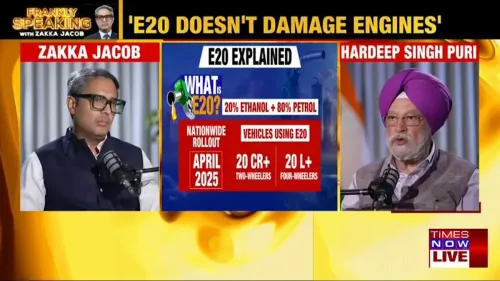
India's Commerce Ministry has flatly denied that any ethanol is being imported — or will be imported — from the US for fuel blending, calling the reports 'baseless.' The denial lands amid live India-US trade negotiations, and the government's own numbers tell the story: the domestic EBP Programme has saved ₹1.90 lakh crore in forex and generated ₹1.6 lakh crore in farmer earnings since 2014-15 — stakes too high to trade away.
Key Takeaways
The Commerce Ministry on 6 August called media reports of US ethanol imports for fuel blending 'baseless and factually incorrect.' Ethanol under the Ethanol Blended with Petrol (EBP) Programme is sourced entirely from domestic producers — no US imports, no commitments made in trade talks.
The EBP Programme has saved over ₹1.90 lakh crore in foreign exchange and substituted 310 lakh metric tonnes of crude oil since 2014-15 .
Farmers have earned an additional ₹1.6 lakh crore through ethanol supply; carbon emissions cut by over 930 lakh metric tonnes .
India imports approximately 88.5% of its crude oil, underpinning the strategic priority of domestic ethanol blending.
India's Commerce Ministry on Thursday, 6 August categorically rejected media reports claiming that India is importing or plans to import large volumes of ethanol from the United States for fuel blending, calling such reports 'baseless and factually incorrect.' The ministry's statement directly addresses speculation that had linked ongoing India-US trade discussions to a potential shift in the country's biofuel sourcing policy.
What the Government Said
According to a ministry statement, ethanol used for fuel blending under the Ethanol Blended with Petrol (EBP) Programme is sourced entirely from domestic producers. 'There is no import of ethanol for fuel blending from the US,' the statement said, adding that no concessions or commitments relating to such imports have been made in any bilateral trade negotiations. The ministry described any suggestion of a policy change permitting large-scale fuel ethanol imports from the US as 'misleading.'
The EBP Programme: Scale and Impact
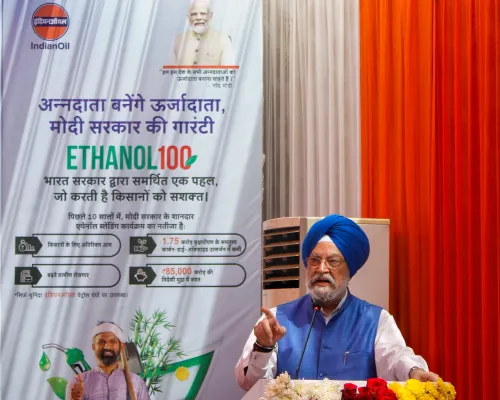
The government used the clarification to underscore the programme's strategic importance. From 2014-15 through May 2026, the EBP Programme has saved India over ₹1.90 lakh crore in foreign exchange by substituting 310 lakh metric tonnes of imported crude oil. Farmers have earned an additional ₹1.6 lakh crore through ethanol supply, while carbon emissions have been cut by over 930 lakh metric tonnes, according to the ministry.
Why Domestic Sourcing Matters
India imports approximately 88.5 per cent of the crude oil it consumes, making it acutely vulnerable to global price volatility and supply disruptions. The EBP Programme, which draws ethanol from domestically grown sugarcane, maize, and rice, is designed to reduce that exposure while simultaneously supporting agricultural incomes. Opening fuel ethanol procurement to US imports would undercut both objectives — a point the ministry's statement implicitly reinforces.
Context: India-US Trade Talks
The denial comes as India and the US are engaged in broader bilateral trade negotiations. Critics and market observers had speculated that ethanol could feature as a concession in those talks, given Washington's large surplus in corn-based ethanol production. The ministry's statement appears intended to shut down that line of speculation before it influences market or policy expectations. Notably, this is not the first time the government has had to correct the record on trade-talk narratives — similar clarifications have accompanied discussions on dairy, agriculture, and digital trade in recent years.
What Happens Next
India's fuel blending programme and ethanol procurement will continue to be governed by domestic policy requirements, the ministry confirmed. With the government targeting higher blending ratios in coming years, the emphasis on domestic supply chains is expected to intensify rather than ease.
Point of View
Point-by-point denial suggests the media reports had enough traction to require a formal rebuttal — a signal of how sensitive the India-US trade negotiation space has become. The real subtext is strategic: with India importing 88.5% of its crude and the EBP Programme having delivered verifiable forex savings of ₹1.90 lakh crore, any move to open fuel ethanol procurement to US imports would expose a politically costly contradiction. What mainstream coverage missed is that this denial also doubles as a pre-emptive firewall — the government is signalling to domestic sugar and maize lobbies, and to its own negotiating team, that fuel ethanol is off the table before Washington can formally put it on.
NationPress
20 Sept 2026
Frequently Asked Questions
Is India importing ethanol from the US for fuel blending?
No. The Commerce Ministry has categorically stated that India is not importing, and does not intend to import, ethanol from the US for fuel blending. All ethanol used under the EBP Programme is sourced entirely from domestic producers.
What is the Ethanol Blended with Petrol (EBP) Programme?
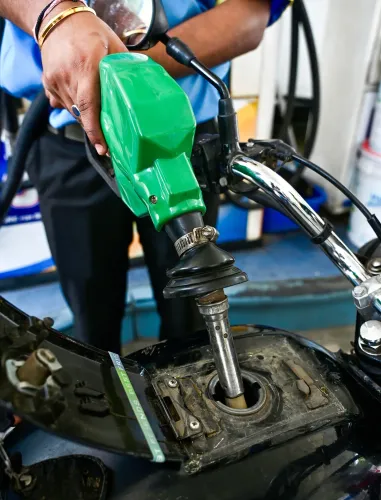
The EBP Programme is India's policy framework for blending domestically produced ethanol with petrol to reduce crude oil imports, support farmers, and cut carbon emissions. Since 2014-15, it has saved over ₹1.90 lakh crore in foreign exchange and generated ₹1.6 lakh crore in additional farmer earnings.
Were any ethanol-related concessions made in India-US trade talks?
No, according to the Commerce Ministry. The ministry explicitly stated that no concessions or commitments relating to the import of ethanol for fuel blending from the US have been made in India-US trade discussions.
Why does India prioritise domestic ethanol over imports?
India imports approximately 88.5% of its crude oil, making it highly vulnerable to global price shocks. Domestic ethanol — sourced from sugarcane, maize, and rice — reduces that dependence, supports agricultural incomes, and cuts carbon emissions, making it a strategic priority that imports would undermine.
What prompted the Commerce Ministry's clarification?
Media reports had suggested India was importing or planning to import large quantities of US ethanol for fuel blending, and that this could be linked to ongoing India-US trade negotiations. The ministry issued the statement to counter what it called 'baseless and factually incorrect' claims.