Shekhawat: Ethanol Blending Saves India ₹1.90 Lakh Crore in Forex
Synopsis
Union Minister Gajendra Singh Shekhawat says India's ethanol blending programme has displaced 310 lakh metric tonnes of crude imports and saved over ₹1.90 lakh crore in foreign exchange, with E20 blending shielding the country from global oil price volatility.
Key Takeaways
310 lakh metric tonnes of crude oil imports have been replaced by domestically produced ethanol under India's blending programme.
The programme has generated foreign exchange savings of more than ₹1.90 lakh crore , easing pressure on India's current account.
E20 — a 20 percent ethanol-petrol blend — is the current target, with the deadline advanced from 2030 to 2025 under government policy.
The National Policy on Biofuels, 2018 expanded feedstock options and set the progressive blending targets that underpin the programme's scale.
Sugarcane farmers, grain producers, and distilleries form the rural supply chain that benefits from assured ethanol procurement.
India imports roughly 85 percent of its crude oil needs, making ethanol blending a direct hedge against global price shocks.
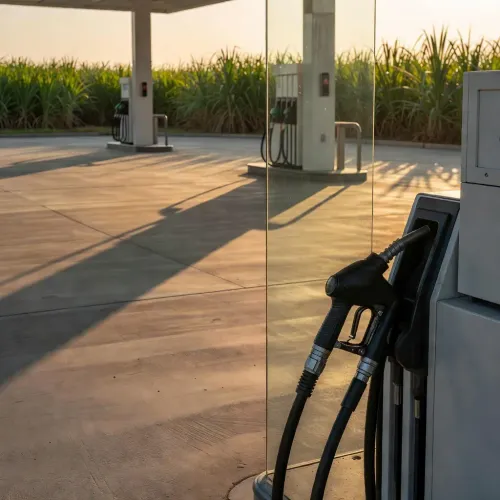
India's decade-long bet on homegrown fuel is paying off in hard currency. Union Culture and Tourism Minister Gajendra Singh Shekhawat on Thursday, July 30, 2026 highlighted that ethanol blending has displaced 310 lakh metric tonnes of crude oil imports, saving the country more than ₹1.90 lakh crore in foreign exchange — a figure that underscores just how consequential the programme has become for India's energy balance sheet.
Posting in Hindi, Shekhawat wrote: 'इथेनॉल ब्लेंडिंग ने भारत की ऊर्जा सुरक्षा को नई मजबूती दी है' ('Ethanol blending has given new strength to India's energy security'). He specifically called out E20 — the 20 percent ethanol-petrol blend — as the shield insulating India from the whiplash of global crude price swings.
From 2018 Policy to ₹1.90 Lakh Crore in Savings
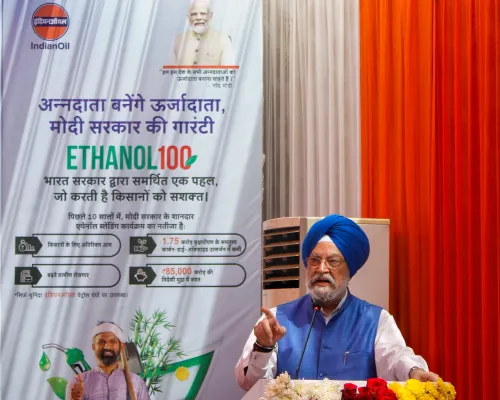
The numbers Shekhawat cited trace back to a policy architecture built over years. The National Policy on Biofuels, 2018 was the turning point — it expanded the feedstock basket beyond sugarcane molasses to include damaged grain, starch-rich materials, and cellulosic waste, and set an ambitious 20 percent blending target originally pegged for 2030, then advanced to 2025. That acceleration compressed the timeline and pushed oil marketing companies and ethanol producers to scale up in tandem.
The arithmetic of import substitution is straightforward but the scale is striking. Every litre of domestically produced ethanol blended into petrol is a litre of crude India does not have to buy on global spot markets — markets that have repeatedly delivered price shocks over the past decade. At 310 lakh metric tonnes of crude displacement, the programme has moved well beyond a pilot into a structural feature of India's fuel supply chain.
E20 as a Buffer Against Global Oil Volatility
Shekhawat's framing of E20 as a buffer against 'global fuel price shocks' is the political economy argument the government has leaned on most heavily. India imports roughly 85 percent of its crude oil needs, making the rupee acutely sensitive to Brent price movements. A higher domestic blending ratio directly compresses that exposure — fewer barrels to buy means fewer dollars to spend at whatever price the market dictates on any given day.
The programme carries a rural dividend too. Ethanol procurement provides an assured revenue stream for sugarcane farmers and distilleries, particularly in cane-belt states. The feedstock diversification under the 2018 policy also brought grain-surplus states into the supply chain, widening the political and economic coalition behind the programme.
What the E20 Milestone Means for Atma Nirbhar Bharat
Shekhawat's post lands at a moment when the government is watching two things closely: official quarterly blending percentage reports that will confirm whether the 20 percent target has been sustained consistently, and the pace of capacity additions in dedicated ethanol distilleries needed to push beyond E20. Vehicle manufacturers have already aligned new model lines to E20-compatible engines, making the fuel transition increasingly irreversible at the consumer end.
The forex saving of over ₹1.90 lakh crore is not just a budget line — it is a proxy for how much pressure has been taken off the current account. In a country where crude import bills have historically been among the largest single drains on foreign exchange reserves, that number carries real macroeconomic weight. India's atma nirbharta (self-reliance) in energy is no longer a slogan — it is being measured, quarter by quarter, in barrels not bought.
Point of View
Not just aspiration. If quarterly blending data confirms consistent E20 achievement, this programme becomes a flagship proof-point for the 'Atma Nirbhar Bharat' narrative heading into future electoral cycles.
NationPress
13 Sept 2026
Frequently Asked Questions
What is India's Ethanol Blending Programme?
India's Ethanol Blending Programme mixes domestically produced ethanol — derived from sugarcane, molasses, damaged grain, and other feedstocks — with petrol to reduce dependence on imported crude oil. The National Policy on Biofuels, 2018 significantly expanded the programme and set a target of 20 percent blending (E20) .
How much foreign exchange has India saved through ethanol blending?
According to Union Minister Gajendra Singh Shekhawat , India has saved more than ₹1.90 lakh crore in foreign exchange through the ethanol blending programme, which has also displaced 310 lakh metric tonnes of crude oil imports.
What is E20 fuel and when will India achieve it?
E20 refers to petrol blended with 20 percent ethanol . India originally targeted E20 by 2030 , but the government advanced the deadline to 2025 to accelerate energy self-reliance and reduce crude import bills.
Who benefits from India's ethanol blending policy?
The programme benefits sugarcane farmers and grain producers through assured ethanol procurement, oil marketing companies through a diversified fuel supply, and the broader economy through reduced crude import expenditure and lower foreign exchange outgo.
Why is ethanol blending important for India's energy security?
India imports roughly 85 percent of its crude oil, making it highly vulnerable to global price volatility. Blending domestically produced ethanol into petrol directly reduces the volume of crude that must be purchased on international markets, cushioning the economy from oil price shocks.