Ramaphosa at BRICS: India, South Africa must turn talks into investments
Synopsis
Speaking at the BRICS Summit sidelines in New Delhi, South African President Cyril Ramaphosa pushed for a results-first reset in India-South Africa ties — spotlighting a $100 billion South African infrastructure pipeline, a shared green-energy agenda, and a direct call for Indian private capital to move from boardrooms to project sites.
Key Takeaways
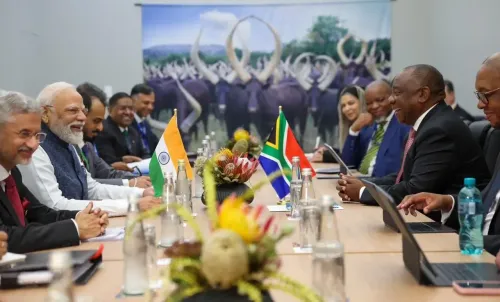
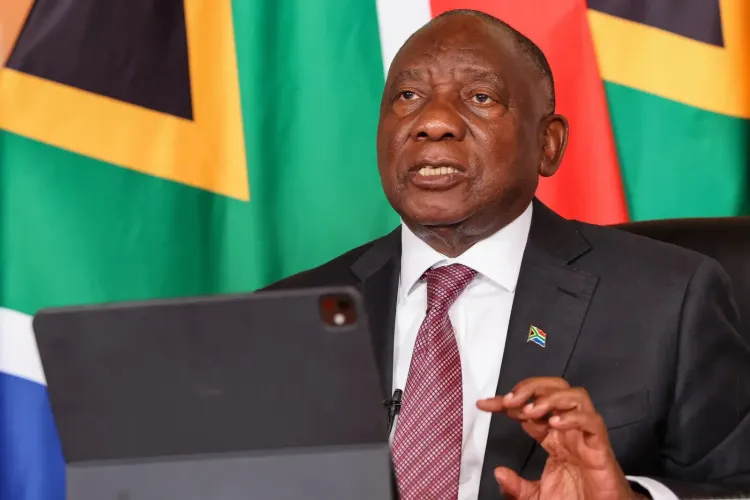
South African President Cyril Ramaphosa addressed the South Africa-India Roundtable in New Delhi on 13 September 2026 on the sidelines of the BRICS Summit .
Ramaphosa called for a ‘new era’ in bilateral economic relations, urging businesses to convert policy talks into commercially viable projects and long-term investments .
Key sectors identified: renewable energy , green hydrogen , critical minerals , infrastructure , agriculture , and digital innovation .
South Africa has identified 195 strategic integrated projects worth more than $100 billion , open to Indian investment.
Indian firm Atain 's Cape Town site is set to grow its South African workforce from 1,500 to over 2,000 young people.
Ramaphosa stressed that partnership strength is measured by impact achieved , not agreements signed.
South African President Cyril Ramaphosa on 13 September 2026 called for a transformative shift in India-South Africa economic relations, urging businesses and policymakers to move beyond agreements and convert policy discussions into commercially viable projects and long-term investments. Speaking at the South Africa-India Roundtable in New Delhi, held on the sidelines of the BRICS Summit, Ramaphosa declared that both nations stand at the threshold of a new era of economic cooperation.
Key Areas of Cooperation
Ramaphosa identified renewable energy, green hydrogen, critical minerals, infrastructure, agriculture, and digital innovation as the core sectors where bilateral collaboration holds the greatest promise. He argued that South Africa's rich mineral resources, combined with India's expanding manufacturing capabilities, could jointly power the production of electric vehicles, batteries, and a range of industrial goods — positioning both economies as strategic partners in the global green transition.
“We are ready for a new era in economic relations between our two countries,” Ramaphosa said, stressing the need for greater private-sector participation in deepening bilateral economic ties.
South Africa's $100 Billion Infrastructure Push
Ramaphosa extended a direct invitation to Indian companies to participate in South Africa's large-scale infrastructure development drive. He said South Africa has earmarked 195 strategic integrated projects with a combined value of more than $100 billion, spanning transport networks, renewable energy, water infrastructure, and hospitals. The scale of this pipeline represents a significant opening for Indian firms with expertise in construction, engineering, and energy.
Digital Economy and Workforce Development
On the digital front, Ramaphosa pointed to the new Cape Town site of Indian business services company Atain as a concrete example of growing bilateral cooperation in the digital economy. The facility is expected to expand its South African workforce from 1,500 to more than 2,000 young people, reflecting both countries' shared interest in youth employment and technology-driven growth.
He also called for stronger collaboration between universities, research institutions, skills development organisations, and the private sector, saying deeper institutional partnerships would build long-term capabilities and open new opportunities for the youth of both nations.
Broader BRICS Context and What It Means
“The strength of the partnership between our countries is not measured by the agreements we sign but by the impact we achieve,” Ramaphosa said, in remarks that set a results-first tone for the bilateral agenda. This comes amid a wider BRICS gathering in New Delhi where global leaders are exploring multilateral frameworks for trade, development finance, and energy transition — giving the India-South Africa dialogue an added geopolitical backdrop.
Notably, India and South Africa have historically shared strong ties rooted in the Mahatma Gandhi connection, non-alignment, and South-South cooperation. The current push marks an effort to translate that legacy into modern economic outcomes, particularly as both nations navigate post-pandemic recovery and the energy transition. All eyes will now be on whether the roundtable's ambitions translate into signed investment commitments before the BRICS Summit concludes.
Point of View
But Indian firms have been cautious about African project risk — currency volatility, regulatory uncertainty, and political instability have derailed previous commitments. The Atain example is a positive data point, but a single digital-services expansion is far from the manufacturing and energy-sector scale both leaders are invoking. The real test will come in the weeks after New Delhi: whether Indian capital actually moves, or whether this roundtable joins the long record of bilateral enthusiasm that stopped at the communiqué.
NationPress
13 Sept 2026
Frequently Asked Questions
What did Cyril Ramaphosa say at the South Africa-India Roundtable in New Delhi?
Ramaphosa called for a new era in India-South Africa economic relations, urging businesses from both countries to move beyond policy discussions and commit to commercially viable projects and long-term investments. He highlighted renewable energy, green hydrogen, critical minerals, infrastructure, agriculture, and digital innovation as priority cooperation areas.
What is South Africa's $100 billion infrastructure pipeline?
South Africa has identified 195 strategic integrated projects with a combined value of more than $100 billion, covering transport networks, renewable energy, water infrastructure, and hospitals. Ramaphosa invited Indian companies to participate in these projects at the New Delhi roundtable on 13 September 2026.
Why was the South Africa-India Roundtable held in New Delhi?
The roundtable was held on the sidelines of the BRICS Summit in New Delhi, providing businesses and policymakers from both countries a platform to explore new avenues for bilateral investment, trade, and industrial cooperation alongside the broader multilateral gathering.
How do India and South Africa's economies complement each other?
According to Ramaphosa, South Africa's mineral resources and India's manufacturing capabilities can jointly drive production of electric vehicles, batteries, and other industrial goods. India's digital services sector is also expanding into South Africa, as seen with the Atain Cape Town facility.
What is the Atain example Ramaphosa referred to?
Atain is an Indian business services company that has opened a new site in Cape Town, South Africa. Ramaphosa cited it as evidence of growing digital economy cooperation, noting the facility is expected to grow its South African workforce from 1,500 to more than 2,000 young people.