India-South Africa MSME cooperation: Key areas discussed in New Delhi
Synopsis
India and South Africa held a ministerial-level meeting on MSME cooperation in New Delhi, covering finance access, digitalisation, and skilling — while India separately chaired the second BRICS SME Working Group under PartNIR. The convergence of bilateral and multilateral MSME diplomacy in a single week signals a deliberate push to build small-business alliances across the Global South.
Key Takeaways
India and South Africa held a bilateral MSME cooperation meeting on 2 June in New Delhi .
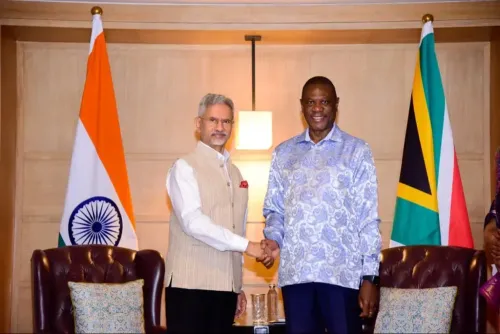
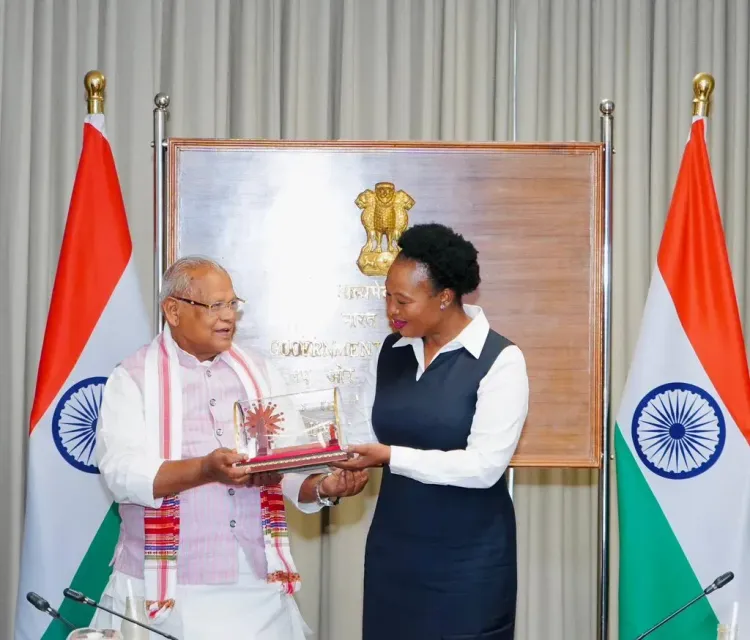
MSME Minister Jitan Ram Manjhi and South African Minister Stella Tembisa Ndabeni led their respective delegations.
Key areas discussed: access to finance, enterprise formalisation, digitalisation, entrepreneurship, and skilling.
India also hosted the second BRICS SME Working Group Meeting under the PartNIR framework, with all BRICS member countries participating.
Both forums stressed bridging the technology divide and integrating MSMEs into regional and global value chains.
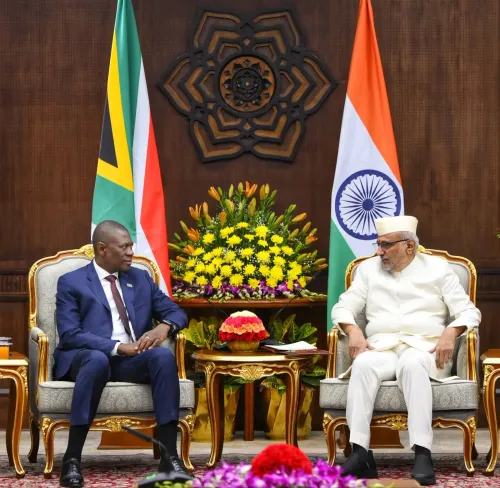
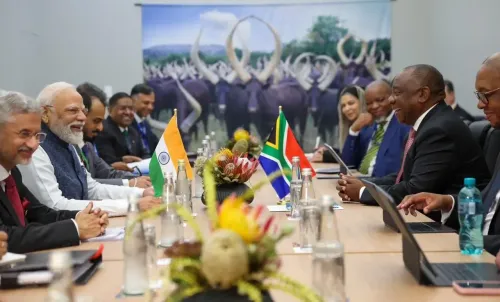
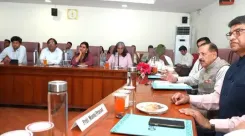
India and South Africa on 2 June explored avenues to deepen cooperation in the MSME sector at a bilateral meeting held in New Delhi, with both sides acknowledging the sector's pivotal role in driving economic growth, employment generation, and inclusive development. The meeting was hosted at the Ministry of Micro, Small and Medium Enterprises (MSME).
Key Developments
The bilateral dialogue was led on the Indian side by MSME Minister Jitan Ram Manjhi, while South Africa was represented by a delegation headed by Minister of Small Business Development Stella Tembisa Ndabeni. According to an official statement, discussions spanned several potential areas of collaboration, including enhancing access to finance, promoting enterprise formalisation, accelerating digitalisation, and strengthening entrepreneurship and skilling within MSME development frameworks.
What Both Sides Agreed On
The meeting reflected a shared commitment to deepening bilateral engagement and fostering a supportive ecosystem for the growth and competitiveness of MSMEs in both nations, according to the official statement. Both ministers underscored the need for enabling policies that allow small businesses to scale, formalise, and integrate into broader value chains.
The BRICS Dimension
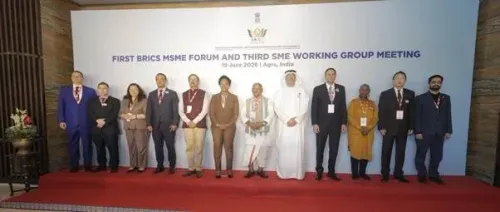
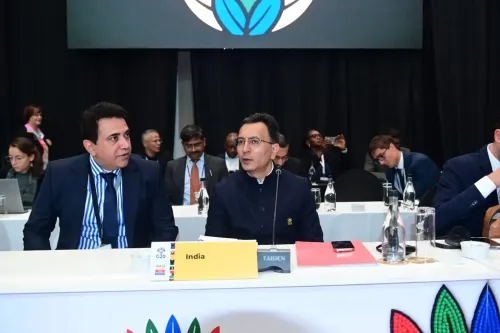
Separately, the Ministry of MSME also convened the second 'SME Working Group Meeting' under the BRICS Partnership on the New Industrial Revolution (PartNIR) in New Delhi. The meeting drew active participation from BRICS member countries and served as a platform to share experiences and best practices on MSME development. Deliberations highlighted the need for a multi-pronged approach to bridge the technology divide — through greater digital inclusion, stronger innovation capabilities, and improved technology readiness — to support MSME integration into regional and global value chains. The meeting also reiterated the importance of deeper collaboration among BRICS economies in technology access, innovation ecosystems, and skills development.
Why It Matters
MSMEs form the backbone of both the Indian and South African economies, contributing significantly to employment and output. India's MSME sector alone accounts for a substantial share of the country's exports and workforce. This bilateral engagement, set against the backdrop of the BRICS PartNIR framework, signals a structured effort to move beyond dialogue toward actionable policy exchange. Notably, both countries face similar developmental challenges — including informality, limited access to credit, and lagging technology adoption — making this partnership particularly relevant. The deliberations are expected to inform future bilateral agreements and joint programmes targeting MSME competitiveness.
What Comes Next
The policy exchanges from both the bilateral meeting and the BRICS SME Working Group are expected to feed into a broader roadmap for MSME collaboration. Industry observers will watch for formal agreements or memoranda of understanding that translate these discussions into on-ground programmes for small business development in both countries.
Point of View
Suggesting a deliberate strategy to build small-business diplomacy as a foreign policy instrument. Yet bilateral MSME dialogues have a mixed record of producing binding outcomes; the real question is whether this engagement moves beyond shared statements to concrete credit-linkage or technology-transfer programmes. India's own MSME formalisation drive remains incomplete, which limits its credibility as a model exporter of best practices. If the two sides can agree on a joint pilot — say, a digital-finance corridor for small exporters — this meeting will have mattered; otherwise, it risks being one more entry in a long ledger of well-intentioned communiqués.
NationPress
15 Sept 2026
Frequently Asked Questions
What did India and South Africa discuss at the MSME meeting on 2 June?
The two countries discussed potential cooperation in areas including access to finance, enterprise formalisation, digitalisation, entrepreneurship, and skilling within the MSME sector. The meeting was held in New Delhi and was led by MSME Minister Jitan Ram Manjhi and South African Minister Stella Tembisa Ndabeni.
Who represented India and South Africa at the bilateral MSME talks?
India was represented by MSME Minister Jitan Ram Manjhi , while South Africa's delegation was led by Minister of Small Business Development Stella Tembisa Ndabeni .
What is the BRICS PartNIR SME Working Group?
The BRICS Partnership on the New Industrial Revolution (PartNIR) SME Working Group is a multilateral forum where BRICS member countries share experiences and best practices on small and medium enterprise development. India hosted its second meeting in New Delhi, focusing on technology access, digital inclusion, and MSME integration into global value chains.
Why does MSME cooperation between India and South Africa matter?
MSMEs are central to employment and economic output in both countries, and both face common challenges — informality, limited credit access, and technology gaps. A structured bilateral partnership could help both nations develop joint solutions and scale successful models across the Global South.
What are the next steps following these MSME discussions?
The policy exchanges from both the bilateral meeting and the BRICS SME Working Group are expected to shape a broader cooperation roadmap. Observers are watching for formal agreements or memoranda of understanding that would translate the discussions into actionable programmes.