VP Radhakrishnan, South Africa's Mashatile hold talks on trade, defence, Global South
Synopsis
India and South Africa signalled a push to move their partnership beyond symbolism — with Vice President Radhakrishnan and Deputy President Mashatile meeting in New Delhi on 2 June to align on trade, defence, and Global South strategy, while EAM Jaishankar separately pressed for deeper economic and digital cooperation. With both nations sharing seats in BRICS, G20, NAM, and IBSA, this visit is a reminder of how much institutional overlap underpins the relationship.
Key Takeaways
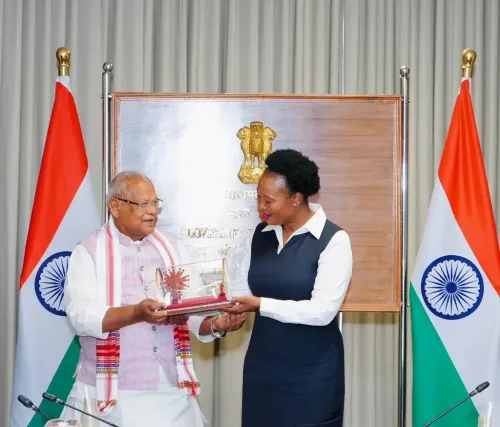
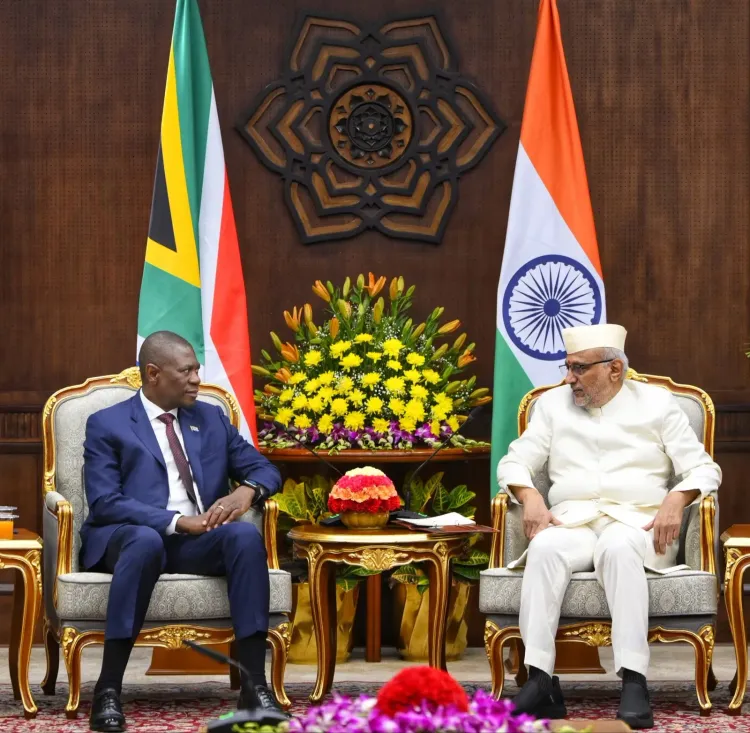
Vice President C P Radhakrishnan met South African Deputy President Shipokosa Paulus Mashatile at Uprashtrapati Bhavan, New Delhi on 2 June .
Talks covered trade, investment, defence cooperation, skills development , and people-to-people ties.
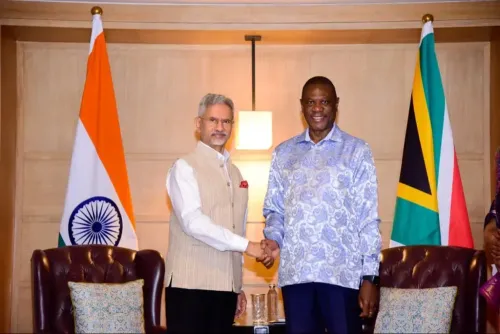
EAM S Jaishankar also met Mashatile separately, discussing MSMEs, digital infrastructure, and multilateral coordination.
Both nations share membership in BRICS, G20, NAM, IBSA , and IORA , reinforcing strategic alignment.
Mashatile, on a six-day visit beginning 29 May , was set to travel to Hyderabad after his Delhi engagements.
Vice President C P Radhakrishnan on Tuesday, 2 June held wide-ranging talks with South African Deputy President Shipokosa Paulus Mashatile at Uprashtrapati Bhavan, New Delhi, covering trade, investment, defence cooperation, skills development, and people-to-people ties. The two leaders also discussed advancing the shared priorities of the Global South and deepening cooperation in multilateral forums.
Key Discussions at Uprashtrapati Bhavan
The Vice President's Office confirmed that Mashatile was accompanied by a high-level delegation comprising senior ministers and officials of the South African government. According to the official readout, both sides held 'productive discussions on further strengthening the India–South Africa bilateral relations,' with particular attention to economic and strategic linkages.
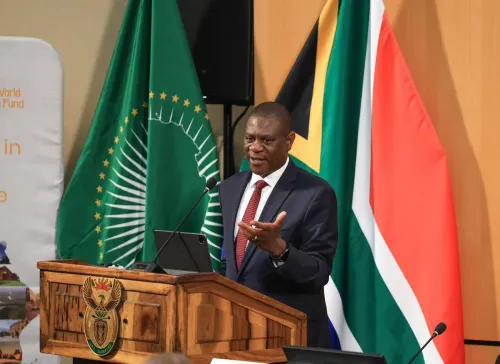
Mashatile, in posts on X following the meeting, underlined the depth of the bilateral bond. 'The close relations between the Parliament of South Africa and the Parliament of India are a testament to our bond. The ability to learn from one another strengthens our governance and enriches our democratic institutions,' he wrote. In a separate post, he added, 'Together, our nations must continue to leverage on shared values to promote peace, equality, and fairness in global institutions.'
Jaishankar–Mashatile Meeting on Economic Ties
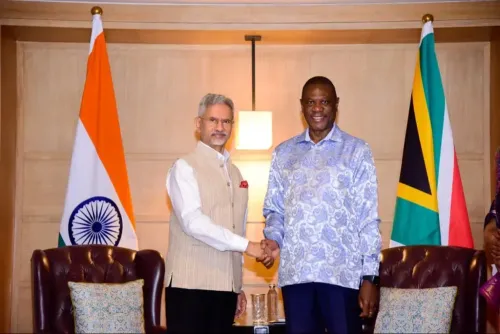
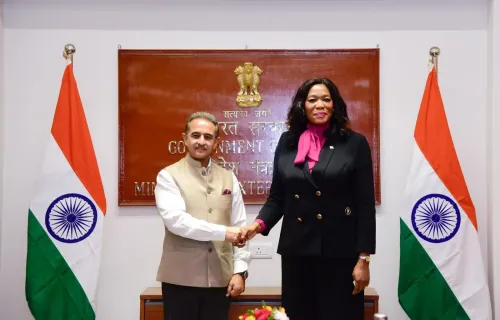
Earlier on the same day, Mashatile met External Affairs Minister S Jaishankar in New Delhi. Jaishankar said he was 'pleased to meet with Deputy President Shipokosa Paulus Mashatile' and noted discussions on 'opportunities in trade, investments, MSMEs, digital and infrastructure domains.' He also confirmed that both sides 'agreed that India and South Africa must work closely in international forums.'
Mashatile, responding on social media, said both delegations agreed that 'South Africa and India should expend its relation to other facets of relationships, especially economic relations.' He further stated a shared commitment to 'fulfilling the objectives of the Declaration and the Strategic Partnership,' with emphasis on addressing poverty, unemployment, and inequality.
Shared Multilateral Platforms and Strategic Context
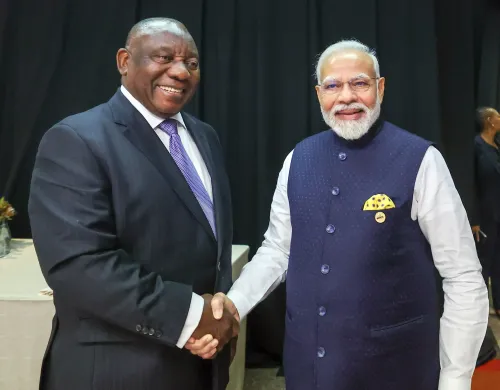
The South African Presidency noted in an official statement that the bilateral relationship is 'based on shared history, cultural ties, and a shared vision of the world through its principled approach on non-alignment.' Both nations hold membership in several multilateral formations that align with Global South development goals, including the Non-Aligned Movement (NAM), BRICS, IBSA, G20, and the Indian Ocean Rim Association (IORA).
This convergence across forums gives the India–South Africa partnership a structural weight beyond bilateral trade, positioning it as a pillar of South-South cooperation at a time when both nations seek greater agency in reshaping global governance.
What Comes Next
Mashatile, who arrived in New Delhi on 29 May for a six-day visit to India, was scheduled to travel to Hyderabad after concluding his engagements in the capital. The visit is expected to yield follow-up action on trade and investment frameworks, with both sides signalling intent to move beyond declarations toward concrete sectoral outcomes.
Point of View
G20, IBSA, and NAM are now trying to convert that multilateral alignment into bilateral economic outcomes. The focus on MSMEs, digital infrastructure, and skills development suggests both sides recognise that the relationship has historically over-indexed on declarations and under-delivered on commerce. The real test will be whether the 'Strategic Partnership' framework produces measurable trade growth, particularly as South Africa navigates its own economic pressures and India seeks new markets for its digital and manufacturing exports. Without a concrete follow-up mechanism, this visit risks being another high-profile exchange that does not move the trade needle.
NationPress
24 Sept 2026
Frequently Asked Questions
What did Vice President Radhakrishnan and South Africa's Deputy President Mashatile discuss?
The two leaders discussed strengthening India–South Africa bilateral relations, with a focus on trade, investment, defence cooperation, skills development, and people-to-people ties. They also exchanged views on advancing Global South priorities and enhancing cooperation in multilateral forums.
When did South African Deputy President Mashatile visit India?
Mashatile arrived in New Delhi on 29 May for a six-day visit to India. His engagements in the capital on 2 June included meetings with Vice President Radhakrishnan and External Affairs Minister S Jaishankar, after which he was scheduled to travel to Hyderabad.
What did EAM Jaishankar and Mashatile agree on?
Jaishankar and Mashatile discussed opportunities in trade, investments, MSMEs, digital, and infrastructure domains. Both sides agreed that India and South Africa must work closely in international forums and committed to deepening the bilateral Strategic Partnership.
Which multilateral forums do India and South Africa both belong to?
India and South Africa share membership in the Non-Aligned Movement (NAM), BRICS, IBSA, G20, and the Indian Ocean Rim Association (IORA). This shared multilateral presence forms the structural backbone of their Global South cooperation agenda.
Why does the India–South Africa partnership matter for the Global South?
Both nations are among the most influential voices in Global South forums and share a principled commitment to non-alignment and South-South cooperation. Their combined weight in BRICS and G20 gives them leverage to shape global governance debates on trade, climate finance, and development.