India-South Africa critical minerals, pharma ties to deepen at BRICS 2026
Synopsis
On the sidelines of the BRICS 2026 Trade Ministers' Meeting in Jaipur, India and South Africa moved to formalise cooperation on critical minerals and pharmaceuticals — and revived long-pending India-SACU trade agreement talks. With India-Africa trade already at $98 billion and Indian investment on the continent exceeding $75 billion, the bilateral signals a strategic pivot toward securing mineral supply chains for India's clean energy and manufacturing ambitions.
Key Takeaways
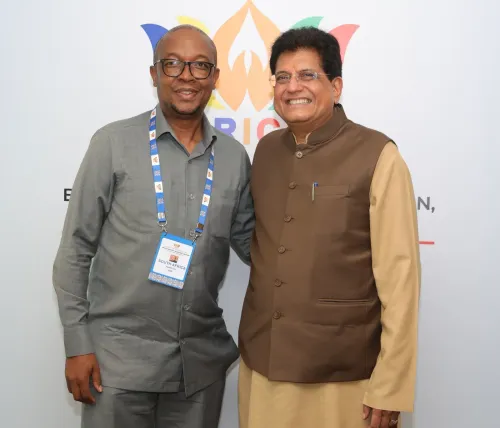
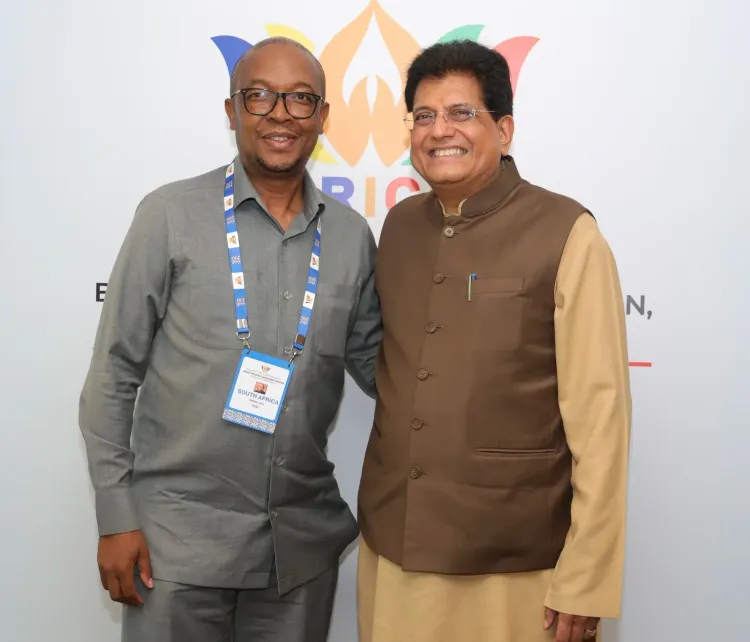
Piyush Goyal met South Africa's Parks Tau on 6 August 2026 on the sidelines of the BRICS 2026 Trade Ministers' Meeting in Jaipur .
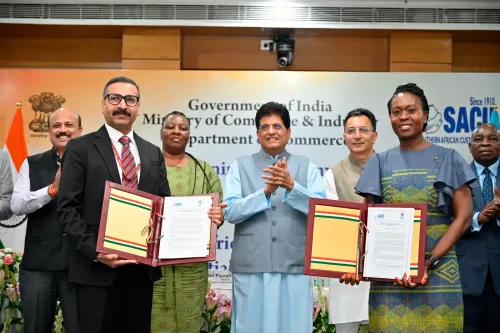
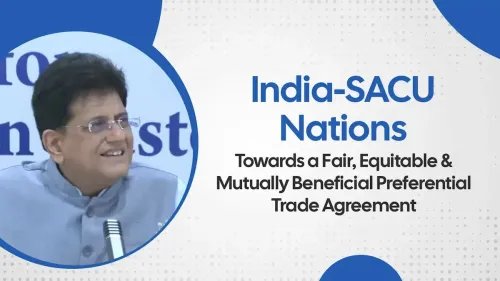
Both sides agreed to advance negotiations on the India–SACU Preferential Trade Agreement (PTA) , including signing Terms of Reference.
Key cooperation areas identified: critical minerals , pharmaceuticals , and manufacturing .
India-Africa trade grew from $7 billion in 2001 to over $98 billion in 2023; cumulative Indian investment on the continent exceeds $75 billion .
India and Africa together represent a combined economic potential of nearly $7 trillion , according to the IAEF .
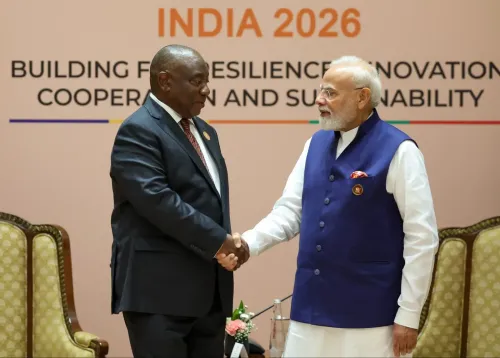
Commerce and Industry Minister Piyush Goyal on Thursday, 6 August 2026, held bilateral talks with South African Trade, Industry and Competition Minister Parks Tau on the sidelines of the BRICS 2026 Trade Ministers' Meeting in Jaipur, with both sides agreeing to deepen cooperation in critical minerals, pharmaceuticals, and manufacturing. The meeting, held under India's BRICS 2026 Presidency, also advanced discussions on the long-pending India–Southern African Customs Union (SACU) Preferential Trade Agreement (PTA).
Key Developments from the Bilateral
Goyal confirmed that the two sides discussed signing the Terms of Reference (ToRs) for the India–SACU PTA and pushed for early conclusion of negotiations. 'We discussed the signing of Terms of Reference (ToRs) for India-SACU PTA and early conclusion of negotiations, strengthening the India-South Africa trade engagement and explored opportunities for cooperation in the critical minerals, pharmaceuticals and manufacturing sectors,' Goyal posted on social media platform X.
The bilateral assumes particular weight as India actively works to secure resilient supply chains for critical minerals — raw materials essential for clean energy technologies, advanced manufacturing, and strategic industries.
Why Critical Minerals Are Central
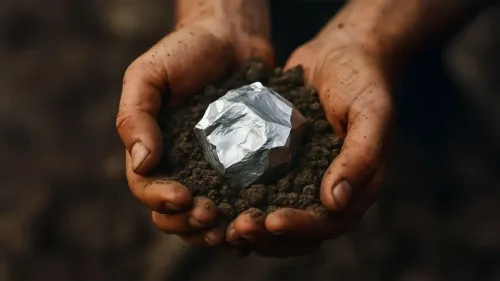
South Africa holds some of the world's largest reserves of platinum-group metals, manganese, and chromium — materials increasingly vital to electric vehicle batteries, green hydrogen production, and semiconductor supply chains. India, which imports a significant share of its critical mineral requirements, has been pursuing bilateral and multilateral frameworks to reduce dependence on single-source suppliers. This engagement with Pretoria fits into a broader strategic diversification push.
The BRICS Trade Ministers' Meeting
India hosted the BRICS 2026 Trade Ministers' Meeting in Jaipur as part of its year-long BRICS presidency. The gathering brought together trade ministers from BRICS nations to strengthen economic cooperation, foster innovation, build resilient value chains, and promote sustainable industrial growth. The choice of Jaipur — a hub for gems, jewellery, and textiles — underscored India's intent to project its manufacturing and trade credentials to the bloc.
India-Africa Trade: The Larger Picture
The bilateral exchange sits within a rapidly expanding India-Africa economic relationship. Trade between India and Africa surged from $7 billion in 2001 to more than $98 billion in 2023, according to figures compiled by the India Africa Entrepreneurship Forum (IAEF). Cumulative Indian investment on the continent now exceeds $75 billion, concentrated in telecommunications, pharmaceuticals, infrastructure, and agriculture.
The IAEF estimates that India and Africa together represent a combined economic potential of close to $7 trillion, with growing opportunities spanning healthcare, artificial intelligence, fintech, climate technologies, manufacturing, logistics, and digital infrastructure. Notably, this is the third consecutive year that India has elevated Africa-focused trade diplomacy at a multilateral forum.
What Comes Next
Both sides indicated they would work toward concluding the India–SACU PTA negotiations at the earliest opportunity. A formalised trade agreement with SACU — which includes South Africa, Botswana, Lesotho, Eswatini, and Namibia — would give Indian exporters preferential access to a significant southern African market while opening a structured channel for mineral imports critical to India's energy transition goals.
Point of View
EVs, green hydrogen — runs directly through minerals that South Africa controls in abundance. The India-SACU PTA has been in negotiation for years; the renewed push to sign Terms of Reference suggests New Delhi is now treating it as a strategic priority rather than a routine trade file. What mainstream coverage underplays is the competitive dimension: China has a substantial head start in African mineral partnerships. India's $75 billion investment presence is real, but it is concentrated in services sectors. Closing the PTA and locking in mineral offtake agreements would be a meaningful structural move — if the negotiations actually conclude this time.
NationPress
20 Sept 2026
Frequently Asked Questions
What did India and South Africa agree on at the BRICS 2026 meeting?
India and South Africa agreed to deepen cooperation in critical minerals, pharmaceuticals, and manufacturing, and to advance negotiations on the India-SACU Preferential Trade Agreement. The talks took place on 6 August 2026 in Jaipur on the sidelines of the BRICS 2026 Trade Ministers' Meeting.
What is the India-SACU Preferential Trade Agreement?
The India-SACU PTA is a proposed preferential trade deal between India and the Southern African Customs Union, which includes South Africa, Botswana, Lesotho, Eswatini, and Namibia. The agreement would give Indian exporters preferential market access to southern Africa while creating a structured framework for imports, including critical minerals.
Why are critical minerals important to India?
Critical minerals — such as platinum-group metals, manganese, and lithium — are essential inputs for clean energy technologies, electric vehicles, and advanced manufacturing. India imports a significant share of these materials and is actively working to diversify its supply chains to reduce dependence on any single supplier.
How large is India-Africa trade today?
Trade between India and Africa grew from $7 billion in 2001 to more than $98 billion in 2023, according to the India Africa Entrepreneurship Forum (IAEF). Cumulative Indian investment on the continent now exceeds $75 billion, focused on telecommunications, pharmaceuticals, infrastructure, and agriculture.
What is the significance of India hosting the BRICS 2026 Trade Ministers' Meeting?
India holds the BRICS 2026 Presidency and hosted the Trade Ministers' Meeting in Jaipur to advance the bloc's agenda on trade cooperation, resilient value chains, and sustainable industrial growth. The meeting provided a platform for India to pursue bilateral deals, including the South Africa engagement on critical minerals.