India-SACU sign Terms of Reference for Preferential Trade Agreement
Synopsis
India has taken its first formal step toward a trade pact with the Southern African Customs Union — the world's oldest customs union — by signing Terms of Reference for a Preferential Trade Agreement. It is India's first such ToR signing with any African regional bloc, covering eight chapters including market access, rules of origin, and dispute settlement, with pharmaceuticals, textiles, and engineering goods at the core.
Key Takeaways
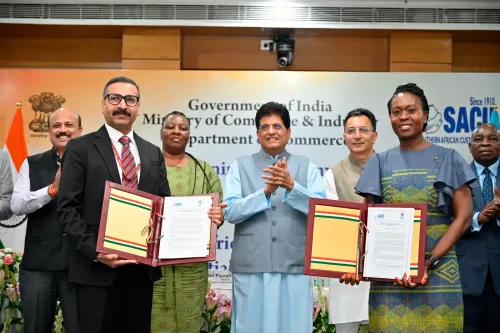
India and SACU signed the Terms of Reference for a Preferential Trade Agreement on 12 August in New Delhi .
This is India's first ToR signing with any African regional bloc , according to Commerce Secretary Rajesh Agrawal .
SACU is recognised as the oldest customs union in the world , comprising South Africa, Botswana, Lesotho, Namibia, and Eswatini.
The PTA negotiations will cover 8 chapters , including market access, rules of origin, trade remedies, and dispute settlement.
Key sectors identified include pharmaceuticals , engineering goods , automobiles , textiles , and agri-processing .
Commerce Minister Piyush Goyal stressed that actual tariff changes will only follow a final agreement, calling for its early conclusion.
India and the Southern African Customs Union (SACU) on 12 August signed the Terms of Reference (ToR) for negotiations towards a Preferential Trade Agreement (PTA), marking the first such signing between India and any African regional bloc. The milestone, announced in New Delhi, sets the formal framework for talks aimed at deepening trade and economic ties between the two sides.
What the Terms of Reference Cover
The PTA negotiations are envisaged to span eight chapters: trade in goods and market access; rules of origin and origin procedures; customs procedures and trade facilitation; trade remedies including a bilateral safeguard mechanism; sanitary and phytosanitary measures; technical barriers to trade; dispute settlement; and legal and horizontal provisions.
Commerce Secretary Rajesh Agrawal noted that this is India's first ToR signing with the African region and underscored SACU's significance as the oldest customs union in the world. The agreement is designed to formalise and expand an already active commercial relationship, with both sides identifying significant complementarities in engineering goods and machinery, automobiles, pharmaceuticals, textiles, and agriculture and agri-processing.
What the Commerce Minister Said
Commerce and Industry Minister Piyush Goyal called for a balanced, fair, and equitable agreement, arguing the partnership could help diversify markets and generate opportunities on both sides. He said India could play a pivotal role in supplying affordable medicines and supporting IT talent development in the SACU region, while also helping integrate SACU countries into global supply chains.
Goyal invoked the historical depth of the relationship, noting that 'India's relationship with Southern Africa did not begin with commerce. It began with conscience.' He recalled Mahatma Gandhi's legacy and India's solidarity with Southern African peoples during the anti-apartheid struggle.
On the scope of Wednesday's signing, Goyal was candid: 'What we sign today does not by itself lower a single tariff or clear a single container. Only a final agreement will do that,' he said, calling for an early conclusion of the PTA.
Why This Agreement Matters
SACU — comprising South Africa, Botswana, Lesotho, Namibia, and Eswatini — is among Africa's most economically integrated blocs and a gateway to the broader southern African market. For India, the PTA fits into a wider push to diversify export destinations and reduce dependence on traditional Western markets, particularly as global supply chains are being restructured.
Notably, the ToR signing comes amid India's accelerating trade diplomacy across Africa, a continent where China has significantly expanded its economic footprint. Securing preferential access for Indian pharmaceuticals, textiles, and machinery could give Indian exporters a structural edge.
Signing Ceremony and Next Steps
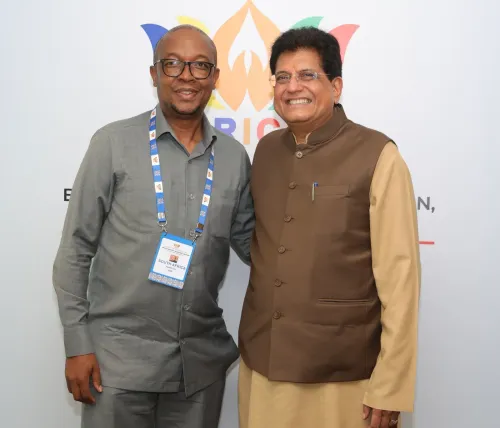
The ceremony was attended by Minister of State for Commerce and Industry Jitin Prasada, senior Indian government officials, and the SACU delegation. The ToR signing initiates formal negotiations; actual tariff reductions and market access commitments will only come into force upon conclusion and ratification of a final PTA.
Both sides are expected to begin substantive negotiations in the coming months, with the timeline for a final agreement yet to be announced.
Point of View
Not a single tariff moves until a final PTA is concluded. India has a mixed record on completing trade negotiations it initiates: talks with the EU have dragged for over a decade, and the RCEP exit remains a live debate. The real test is whether this momentum translates into a concluded agreement within a reasonable timeframe, or whether it becomes another framework that signals intent without delivering market access. With China deepening its African footprint, India's window to secure structural trade advantages in southern Africa is narrowing — and a ToR is only the starting gun.
NationPress
27 Sept 2026
Frequently Asked Questions
What is the India-SACU Preferential Trade Agreement?
The India-SACU Preferential Trade Agreement (PTA) is a proposed trade pact between India and the Southern African Customs Union — comprising South Africa, Botswana, Lesotho, Namibia, and Eswatini — aimed at providing preferential market access across key sectors. On 12 August, both sides signed the Terms of Reference to formally begin negotiations.
What does the Terms of Reference signing mean?
The Terms of Reference (ToR) signing establishes the framework and scope for PTA negotiations — it does not lower any tariffs or grant market access by itself. As Commerce Minister Piyush Goyal noted, only a final concluded agreement will have that effect.
Which sectors are at the centre of India-SACU trade talks?
The negotiations focus on sectors with strong complementarities: engineering goods and machinery, automobiles, pharmaceuticals, textiles, and agriculture and agri-processing. India is also expected to offer support in affordable medicines and IT talent development in the SACU region.
Why is this agreement significant for India?
This is India's first Terms of Reference signing with any African regional bloc, marking a new frontier in its trade diplomacy. It positions India to secure preferential access in a strategically important market at a time when global supply chains are being restructured and competition from China in Africa is intensifying.
What are the next steps after the ToR signing?
Formal negotiations on the eight agreed chapters will now begin, though a timeline for concluding the PTA has not been announced. Actual tariff reductions and market access commitments will only take effect once a final agreement is signed and ratified by both sides.