UPI hits 241 billion transactions, now world's largest fast-payment system: IMF

Synopsis
UPI has logged 241.62 billion transactions in a single financial year — making it the world's largest retail fast-payment system by volume, per the IMF. Now, a decade in, India is nudging merchants toward paying for the service for the first time, a shift that could redefine how public digital payment infrastructure is financed globally.
Key Takeaways
UPI is the world's largest retail fast-payment system by transaction volume, according to an IMF report.
Annual transaction volume reached 241.62 billion in FY2026 , up from just 17.8 million in 2016-17 ; value surged from ₹7,000 crore to ₹3.14 lakh crore .
India is reportedly moving to introduce merchant fees to ensure the long-term sustainability of the network.
UPI is now operational in 11 countries , including Singapore , UAE , France , and Greece .
Countries including Indonesia and Malaysia already operate tiered pricing for similar fast-payment systems.
India's Unified Payments Interface (UPI), operated by the National Payments Corporation of India (NPCI), has emerged as the world's largest retail fast-payment system by transaction volume, according to an International Monetary Fund (IMF) report. A decade after its launch, UPI is not only reshaping domestic commerce but is also expanding its footprint across 11 countries, cementing India's standing as a global digital payments leader.
A Decade of Explosive Growth
The scale of UPI's rise is staggering. According to government data, annual transaction volume surged to 241.62 billion in the financial year ending March 2026, up from a mere 17.8 million in 2016-17. Transaction value over the same period leapt from ₹7,000 crore to ₹3.14 lakh crore — a transformation that has drawn comparisons to no other payment network in the world. The system has helped bring large sections of India's population into the formal economy, making electronic payments integral to everyday commerce.
Merchant Fees on the Horizon
As UPI enters its second decade, the Indian government is reportedly asking certain merchants to begin paying for the service — a shift from the zero-fee model that fuelled its mass adoption. The rationale is sustainability: running the network carries real costs for banks and payment companies. According to reports, a predictable revenue stream would give financial institutions greater incentive to invest in cybersecurity, fraud detection, and dispute resolution, while also funding the next phase of UPI's evolution — including credit line integration and expanded cross-border transfers.
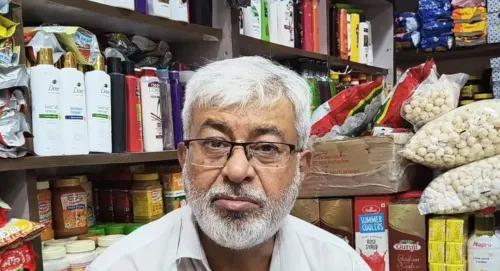
Rohit Arora, co-founder and CEO of fintech firm Biz2Credit, was quoted as saying that 'some cost recovery from merchants was inevitable after so many years of free use.' Industry observers note that comparable systems in Asia have already adopted tiered pricing. Indonesia operates a rate structure that varies by merchant category and transaction size, while Malaysia's DuitNow applies merchant charges that differ by bank or payment provider, with waivers available in select cases.
UPI Goes Global: 11 Countries and Counting
The UPI network is now live in 11 countries, including Singapore, the United Arab Emirates, France, Mauritius, Nepal, Bhutan, Qatar, Sri Lanka, Cambodia, Greece, and Uzbekistan. Indian tourists, business travellers, and students can make direct person-to-merchant (P2M) payments from their Indian bank accounts, eliminating foreign exchange markup friction and reducing dependence on international cards or cash.
An expert cited in reports noted that 'several Asian and Global South systems have studied UPI precisely because it proved you can scale without surrendering the switch to Visa, Mastercard or a foreign boardroom.' The international roll-out is seen as a strategic move to advance digital public infrastructure cooperation and strengthen India's soft power in the payments space.
Why the World Is Watching
The underlying challenge UPI faces — how to sustain a free-to-use, high-volume payments network over the long term — is not unique to India. Every country building national payment infrastructure confronts the same cost-versus-access tension. India's approach to resolving it, particularly how it structures merchant fees without dampening adoption, is being closely watched by nations across the Global South who are designing their own interoperable payment systems. The outcome of this transition will likely shape the global template for public digital finance infrastructure for years to come.
Point of View
But the more consequential story is the fee debate. A decade of zero-cost access built mass adoption; the move to merchant charges now tests whether that adoption holds when pricing enters the equation. India must tread carefully — the moment UPI fees feel punitive, small merchants revert to cash, and the financial inclusion gains quietly unwind. Equally, the global expansion narrative, while diplomatically useful, needs scrutiny: acceptance in 11 countries matters less than depth of use. The real benchmark is whether UPI cross-border volumes rival legacy card rails — and on that, the data remains thin.
NationPress
27 Sept 2026
Frequently Asked Questions
Why is UPI considered the world's largest fast-payment system?
UPI is ranked the world's largest retail fast-payment system by transaction volume, according to an IMF report. It processed 241.62 billion transactions in the financial year ending March 2026, far exceeding comparable systems globally.
What are the proposed merchant fees for UPI, and why are they being introduced?
India is reportedly moving to charge certain merchants for UPI transactions to ensure the network's long-term financial sustainability. Banks and payment companies bear real costs to run the system, and a revenue stream would fund investments in cybersecurity, fraud detection, and next-generation features like credit lines and cross-border transfers.
In which countries is UPI currently available?
UPI is live in 11 countries as of 2026: Singapore, the United Arab Emirates, France, Mauritius, Nepal, Bhutan, Qatar, Sri Lanka, Cambodia, Greece, and Uzbekistan. Indian users can make direct person-to-merchant payments from their Indian bank accounts in these markets.
How has UPI grown since its launch in 2016-17?
UPI's annual transaction volume grew from 17.8 million in 2016-17 to 241.62 billion in FY2026, according to government data. Transaction value over the same period rose from ₹7,000 crore to ₹3.14 lakh crore.
How do other countries handle fees for similar payment systems?
Several countries already operate tiered pricing for national fast-payment networks. Indonesia applies rates based on merchant category and transaction size, while Malaysia's DuitNow charges vary by bank or payment provider, with waivers available in some cases — models India may look to as it structures its own fee framework.