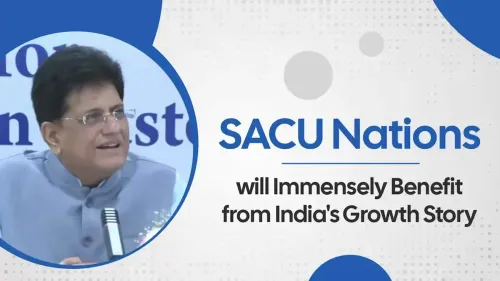
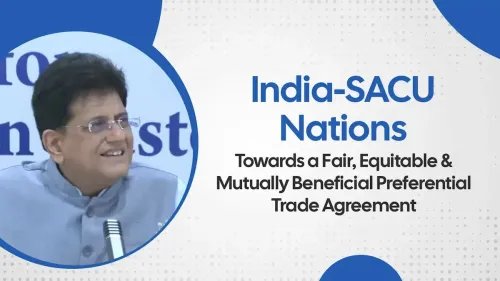
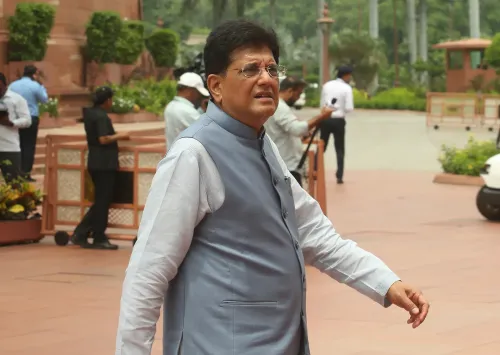
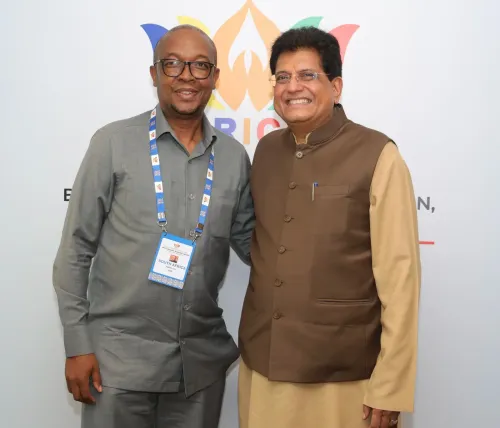
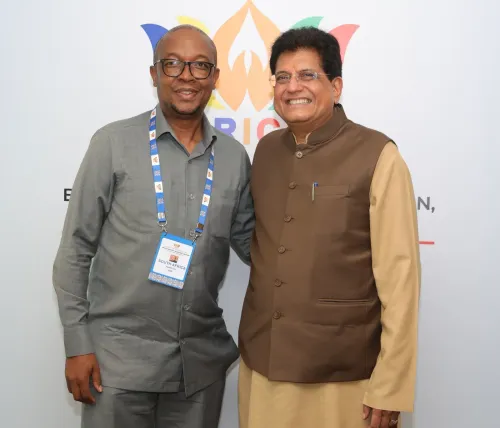
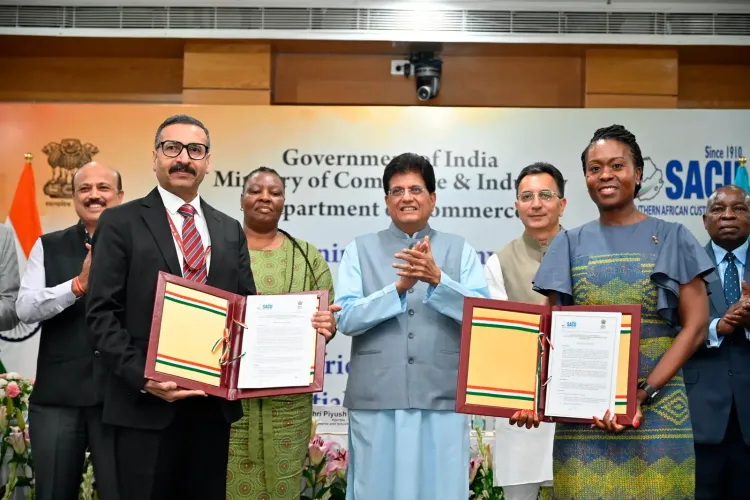
Piyush Goyal at India-SACU Preferential Trade Agreement ToR Signing
Synopsis
Union Commerce Minister Piyush Goyal addressed the signing of Terms of Reference for the India–SACU Preferential Trade Agreement on 12 August 2026, formally launching structured negotiations with the five-nation southern African customs bloc — South Africa, Botswana, Lesotho, Namibia and Eswatini — aimed at mutual market access and shared prosperity.
Key Takeaways
Terms of Reference signed on 12 August 2026 for the India–SACU Preferential Trade Agreement, formally launching negotiations.
SACU comprises South Africa, Botswana, Lesotho, Namibia and Eswatini , operating as a single customs territory with a common external tariff.
Minister Piyush Goyal framed the agreement as a vehicle to 'leverage each other's strengths and contribute to shared prosperity.' South Africa is India's largest trading partner in southern Africa and a fellow BRICS member, adding strategic depth to the commercial tie.
The move continues India's deliberate strategy of negotiating preferential access with African regional blocs rather than pursuing comprehensive FTAs.
Next milestones include formal tariff-concession negotiations, rules of origin discussions, and an eventual signed PTA text.
A new trade corridor between India and southern Africa moved from ambition to paperwork on Wednesday, 12 August 2026, as Union Commerce and Industry Minister Piyush Goyal addressed the signing ceremony for the Terms of Reference of the India–Southern African Customs Union (SACU) Preferential Trade Agreement — a bloc that knits together South Africa, Botswana, Lesotho, Namibia and Eswatini into a single customs territory.
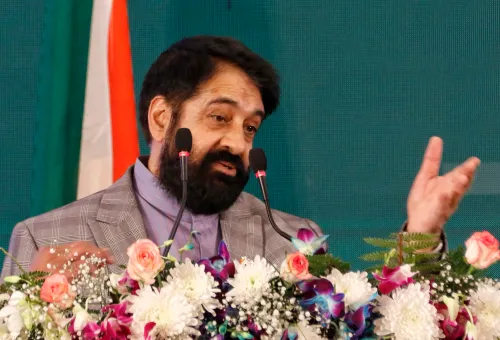
Speaking at the event, Minister Goyal described the ToR signing as 'an important step towards elevating economic engagement between India and SACU,' adding that a trade agreement can help both sides 'leverage each other's strengths and contribute to shared prosperity, delivering mutual benefits.' The remarks signal that New Delhi views the PTA not as a diplomatic courtesy but as a working instrument of commerce.
What SACU brings to the table — and why India wants in
SACU is Africa's oldest customs union, operating under a common external tariff across five member states. South Africa, the bloc's dominant economy, is already India's principal trading partner in the sub-continent and a fellow BRICS member — giving the relationship both commercial depth and geopolitical texture. A Preferential Trade Agreement would lower tariff barriers selectively, opening shelves in both directions for goods where each side holds a competitive edge. For Indian exporters — pharmaceuticals, textiles, engineering goods, IT-enabled services — the SACU market represents a relatively under-tapped destination with growing middle-class demand. For SACU industries, preferential access to India's 1.4 billion-strong consumer base and its manufacturing supply chains offers supply-chain diversification at scale.India's Africa trade push: pattern, not a one-off
The ToR signing fits squarely into a deliberate, decade-long Indian strategy of negotiating preferential access with African regional groupings rather than chasing comprehensive free trade agreements. South-South economic cooperation — the idea that developing economies can build resilient trade ties outside the traditional North-South axis — has been the philosophical spine of this approach. The SACU engagement continues that incremental, bloc-by-bloc liberalisation playbook. The Terms of Reference define the scope, timeline, and negotiating mandate that will govern formal PTA talks. The exact provisions agreed at this stage remain to be disclosed publicly, but the signing itself means both sides have formally committed to structured negotiations — moving past exploratory dialogue. The real test comes next: whether the two sides can agree on tariff schedules, rules of origin, and safeguard clauses fast enough to translate the ToR's promise into a signed, ratified agreement. India's trade diplomacy has a habit of moving methodically; the clock on this one has now officially started.Point of View
But the harder bargaining — tariff schedules, rules of origin, safeguards — lies entirely ahead. India's preference for preferential rather than comprehensive agreements reflects a pragmatic risk calculus: lock in early wins without exposing sensitive domestic sectors. With BRICS linkages already warming the India-South Africa axis, the PTA adds an economic layer to what has been a mostly diplomatic relationship. The pace at which both sides convert this mandate into a ratified text will be the real indicator of political will on both sides.
NationPress
27 Sept 2026
Frequently Asked Questions
What is the India-SACU Preferential Trade Agreement?
It is a proposed trade deal between India and the Southern African Customs Union — comprising South Africa, Botswana, Lesotho, Namibia and Eswatini — designed to reduce tariffs selectively and expand market access for goods and services on both sides.
What does signing the Terms of Reference mean?
The Terms of Reference define the scope, mandate, and framework for formal negotiations. Signing them means both India and SACU have officially committed to structured PTA talks, moving beyond exploratory discussions.
Which countries are in SACU?
SACU — the Southern African Customs Union — includes South Africa, Botswana, Lesotho, Namibia and Eswatini. It operates as a single customs territory with a common external tariff.
Why does India want a trade deal with SACU?
India seeks preferential access for its exports — pharmaceuticals, textiles, engineering goods — to a growing southern African market, while diversifying its trade relationships away from traditional partners as part of a broader South-South cooperation strategy.
What happens after the Terms of Reference are signed?
Formal PTA negotiations begin, covering tariff concessions, rules of origin, safeguard clauses, and other trade disciplines. A final agreement would then need to be signed and ratified by all parties before taking effect.