India-SACU trade pact talks gaining momentum, says South Africa's envoy

Synopsis
After years of slow progress, India-SACU trade pact talks are reportedly moving in the right direction — but with no agreement yet on which products are in or out, the hard part hasn't started. South Africa's Consul General says both sides are disappointed by how long this has taken, even as renewed momentum offers cautious hope for one of India's most strategically important emerging-market trade relationships.
Key Takeaways
South Africa's Consul General Gideon Labane confirmed on 26 October 2026 that India- SACU trade pact discussions are progressing.
SACU comprises South Africa , Botswana , Lesotho , Namibia , and Eswatini .
Both sides are reportedly disappointed that no trade agreement is yet in place, acknowledging it has slowed bilateral trade and investment.
Talks are described as being at a preliminary stage ; no decision has been reached on product inclusion or exclusion.
Strong historical ties, a shared colonial past, and a large Indian-origin community in South Africa underpin the bilateral relationship.
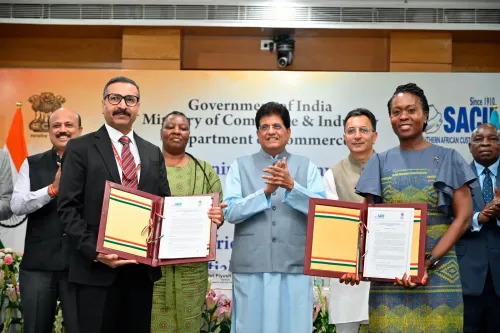
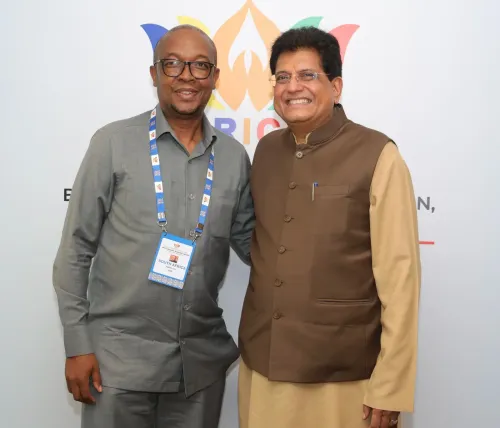
India and the Southern African Customs Union (SACU) are in active discussions over a proposed bilateral trade agreement, with negotiations reportedly gathering pace after a period of relative stagnation, South Africa's Consul General Gideon Labane said on Monday, 26 October 2026. Speaking on the sidelines of an event in Mumbai, Labane noted that while both sides remained committed to deepening economic ties, no final decision had yet been reached on product coverage under the pact.
Where Talks Stand
Labane confirmed that India had recently resumed discussions with SACU — the customs union comprising South Africa, Botswana, Lesotho, Namibia, and Eswatini — and that momentum had picked up. He cautioned, however, that negotiations remain at a preliminary stage and will require patience from all stakeholders.
'The discussions are moving in the right direction, but no decision has yet been made on which products will be included in the agreement or excluded from it,' Labane said.
Shared Frustration Over the Delay
Both sides have acknowledged that the prolonged absence of a formal trade framework has held back bilateral trade and investment flows. Labane was candid about the slow pace, attributing it to the inherent complexity of multi-government processes rather than any lack of political will.
'Both sides are disappointed that there is still no trade agreement in place. That has made progress slower than we would have liked, but we all understand how government processes can take time,' he said.
Historical and Cultural Ties as a Foundation
Beyond economics, Labane highlighted the deep historical and cultural bonds that underpin the India-South Africa relationship. He pointed to a shared colonial history as a source of mutual understanding, and to the large Indian-origin community in South Africa as a vital people-to-people bridge. These connections, he argued, provide a solid foundation for expanding cooperation across multiple sectors in the years ahead.
What to Watch Next
The key outstanding issue is product coverage — determining which goods will be included in or excluded from the agreement — a step that typically precedes any formal framework negotiations. Analysts note that a successful India-SACU pact would significantly expand India's trade footprint in southern Africa, a region where China has deepened its economic presence considerably. All eyes will now be on whether the renewed momentum translates into concrete timelines at the next round of official talks.
Point of View
Not a timeline. The real test is whether India's renewed engagement with SACU can outlast bureaucratic inertia and produce a product schedule — the first concrete step toward a functional deal. With China's economic footprint in southern Africa expanding, India cannot afford to treat this as a slow-burn diplomatic courtesy. A functioning trade pact with SACU would be one of New Delhi's most meaningful trade moves in sub-Saharan Africa, but getting from 'right direction' to 'signed framework' has historically proved the harder journey.
NationPress
26 Oct 2026
Frequently Asked Questions
What is the India-SACU trade agreement being discussed?
It is a proposed bilateral trade pact between India and the Southern African Customs Union (SACU), which groups South Africa, Botswana, Lesotho, Namibia, and Eswatini. Talks are at a preliminary stage, with both sides yet to agree on which products will be covered or excluded.
Why have India-SACU trade talks taken so long?
South Africa's Consul General Gideon Labane attributed the slow pace to the complexity of multi-government processes rather than a lack of political will. Both sides have acknowledged that the absence of an agreement has slowed bilateral trade and investment progress.
What is the current status of the negotiations?
Labane described the talks as 'moving in the right direction' after India recently resumed discussions with SACU. However, no decision has yet been made on product inclusion or exclusion, indicating negotiations remain at a preliminary stage.
Why does the India-SACU trade deal matter?
A formal trade agreement would significantly deepen India's economic engagement with southern Africa, a region where China has expanded its presence considerably. It would also build on strong historical and people-to-people ties, including a large Indian-origin community in South Africa.
What are the next steps in the India-SACU trade talks?
The immediate priority is agreeing on product coverage — determining which goods will be included in or excluded from the pact. That step must be completed before any formal trade framework can be finalised and signed.