How Will the First India-SACU Trade Pact Enhance Economic Relations?
Synopsis
In a groundbreaking statement, South Africa's High Commissioner to India, Prof. Anil Sooklal, revealed that the upcoming SACU-India Free Trade Agreement could revolutionize trade and investment flows between the two regions, marking the first such agreement with an African bloc. What does this mean for both nations' economic futures?
Key Takeaways
SACU-India Free Trade Agreement aims to boost trade and investment.
South Africa is India's largest trading partner in Africa.
Trade volume stands at approximately $20 billion .
India plays a significant role in advocating for the Global South.
Upcoming AI Summit in India is crucial for global cooperation.
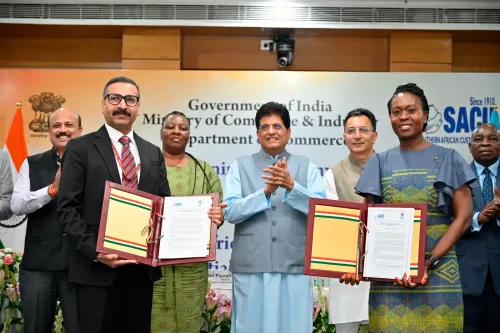
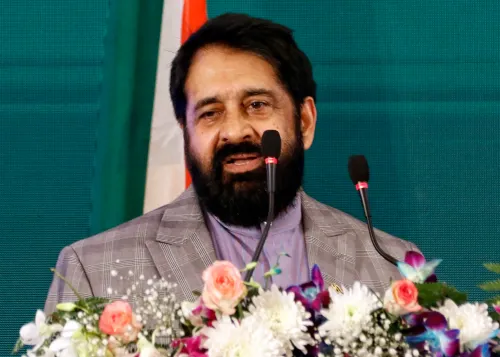
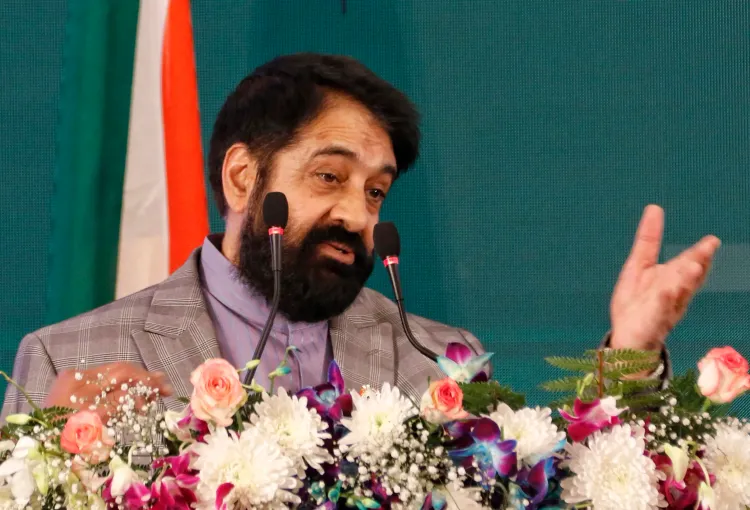
New Delhi, Feb 11 (NationPress) The High Commissioner of South Africa to India, Prof. Anil Sooklal, announced on Wednesday that the anticipated SACU (Southern African Customs Union)–India Free Trade Agreement is poised to greatly enhance trade and investment exchanges between the two regions. In an exclusive chat with IANS, the High Commissioner emphasized that this marks the first free trade agreement between India and an African regional bloc. The SACU comprises five member nations: Botswana, Eswatini, Lesotho, Namibia, and South Africa, with South Africa actively engaging in trade negotiations within this customs union. Both parties have agreed to accelerate discussions, he added.
Sooklal further noted that trade and investment exchanges between India and South Africa have been remarkably impactful. “South Africa is India’s largest trading partner in Africa, and India ranks as our fourth-largest global trading partner. Our bilateral trade is around $20 billion, constituting nearly 20% of India’s overall trade with Africa,” he remarked.
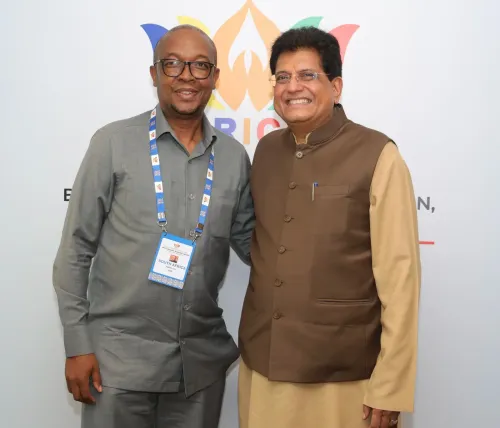
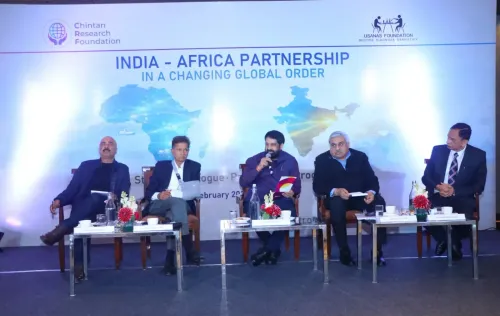
He also highlighted that South Africa’s Minister of Trade, Industry and Competition, Parks Tau, recently participated in the CII India–Africa Conclave, where South Africa was the guest nation. During this event, Minister Tau engaged in a bilateral discussion with Commerce and Industry Minister Piyush Goyal to explore crucial initiatives for strengthening trade and investment links between the two nations.
The High Commissioner remarked that India has emerged as a prominent advocate for the Global South. During India's G20 Presidency in 2023, Prime Minister Narendra Modi played a pivotal role in ensuring the African Union attained full membership in the G20, a move that received widespread acclaim across Africa.
India also convened the Voice of the Global South Summit, which spotlighted the challenges faced by developing nations. According to him, India continues to be a leading advocate and initiator in crafting a more inclusive global framework.
Sooklal emphasized that the India–Brazil–South Africa (IBSA) cooperation has made significant strides in addressing global governance issues. Recently, on the sidelines of the G20 Summit in South Africa, an IBSA Summit took place where Brazilian President Luiz Inacio Lula da Silva, Prime Minister Modi, and South African President Cyril Ramaphosa convened to deliberate on vital areas of collaboration.
Interestingly, a newer domain of joint effort is emerging in Artificial Intelligence.
IBSA has been instrumental in advocating for the reform of global institutions, including the WTO, Bretton Woods institutions, and the UN system, while tackling developmental challenges encountered by the Global South.
Regarding the US boycott of the G20 meeting in South Africa, the envoy stated that while it was regrettable that the United States did not attend, the summit in Johannesburg was highly successful. “All other member states were present, and we ratified a comprehensive declaration addressing significant global challenges,” he noted.
“This illustrated that the G20 serves as a collective platform. No single nation can disrupt it. Absence does not lead to constructive results; rather, cooperation is essential for addressing global issues,” he added.
On India's position against US tariff pressures, he mentioned that India has taken a principled stance against the weaponization of tariffs and the imposition of unjust unilateral actions.
As the world’s fourth-largest economy, India has shown that no external pressure can compel a nation to compromise its sovereignty. This approach has empowered many developing nations facing similar pressures, he pointed out.
Sooklal also remarked that the forthcoming AI Summit in India is a highly significant event. India, in collaboration with France, has been pivotal in initiating global discussions surrounding AI. As AI rapidly develops, it presents vast opportunities, particularly for developing nations, while simultaneously posing challenges that necessitate global cooperation.
Hosting the AI summit in India signifies that the Global South can take the lead in emerging technologies. This summit is likely to yield substantial outcomes and bolster international collaboration in AI governance, he concluded.
Point of View
It's evident that the proposed SACU-India Free Trade Agreement holds significant promise for enhancing economic ties between South Africa and India. This initiative marks a pivotal moment in regional trade relations, emphasizing the importance of cooperation and partnership in an increasingly interconnected global economy.
NationPress
10 Oct 2026
Frequently Asked Questions
What is the SACU-India Free Trade Agreement?
The SACU-India Free Trade Agreement is a proposed trade pact aimed at enhancing trade and investment between the Southern African Customs Union and India.
How many countries are part of SACU?
SACU consists of five member countries: Botswana, Eswatini, Lesotho, Namibia, and South Africa.
What is the significance of this trade agreement?
This agreement would be the first free trade pact between India and an African regional bloc, potentially boosting bilateral trade significantly.
What is the current trade volume between India and South Africa?
The current trade volume between India and South Africa stands at approximately $20 billion.
What role does India play in the Global South?
India is recognized as a leading voice advocating for the Global South, promoting inclusive global systems and addressing developmental challenges.