'Ethics Should Steer Scientific Advancement': Dattatreya Hosabale at Silicon Valley Event
Synopsis
In a compelling address at Stanford's Thrive 2026 conference, Dattatreya Hosabale stressed the necessity of **ethics and equality** in scientific progress, warning against unchecked technological growth that can deepen **social divides**. His insights intertwine India's ancient knowledge with contemporary issues in technology.
Key Takeaways
Scientific progress must be ethically grounded .
Unchecked technology can widen social divides .
Indian traditions integrate science and spirituality .
Education is crucial for preserving scientific temper .
Technology should be evaluated on economy, equality, and ethics .
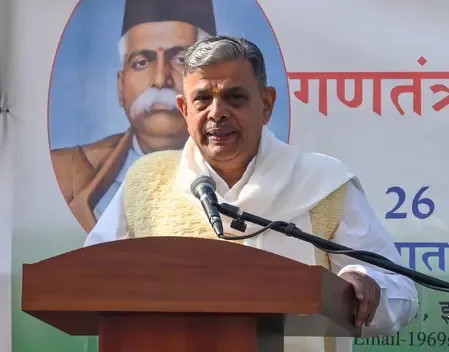
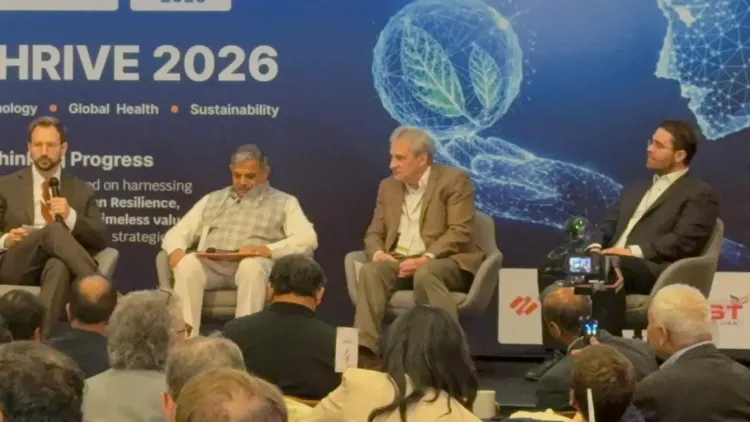
Stanford (California), April 17 (NationPress) Dattatreya Hosabale, the General Secretary of Rashtriya Swayamsevak Sangh, addressed a gathering in Silicon Valley on Friday, emphasizing that ethical principles and equality should steer scientific advancements. He cautioned that unregulated technological progress could exacerbate social inequalities.
During his speech at the Thrive 2026 conference held at Stanford University, Hosabale remarked that India's ancient knowledge systems perceive science and spirituality as intertwined.
He expressed his intent to “share insights from my civilization and also gain knowledge from around the globe.”
He characterized Indian traditions as deeply rooted in both empirical and transcendental exploration.
“Our roots are both sensory and super sensory, with culture, perception, and reasoning in mind, but we also aspire to transcend the limitations of human understanding,” he stated.
“In spiritual knowledge, there is no division between the spiritual and the secular.”
He explained that ancient practices like yoga showcased a scientific examination of human anatomy, psychology, and actions, asserting that “everything is science” within that context.
He noted that India's scientific heritage has faced significant disruptions over centuries. “Due to persistent invasions, our traditions were undermined,” he remarked, highlighting that the legacy of foreign dominance led to a diminished awareness of indigenous knowledge. He acknowledged ongoing policy initiatives aimed at reviving these traditions, stating, “the Indian knowledge system is being rejuvenated.”
Hosabale described early Indian inquiry as profoundly cosmological, filled with universal exploration, referring to traditions that investigated “the relationship between the microcosm and the macrocosm.”
He pointed to early achievements in “urban planning, university frameworks, and significant civil engineering.”
He warned that rapid technological advancements could lead to greater inequality if not managed with care. “Where technology progresses, society tends to become increasingly unequal,” he indicated. He connected disparities in access to education with broader gaps in “economic development, educational attainment, and overall quality of life.”
He insisted that governments must adopt a balanced approach. “Current governance must consider these urban areas,” he urged policymakers to address both innovation and its societal implications.
Hosabale underscored the importance of education in upholding a scientific mindset. If traditional knowledge is misinterpreted, he cautioned, “all past scientific inquiries may be dismissed as mere superstitions.”
He labeled the challenge as “finding true scientific concepts” within inherited traditions and incorporating them into educational curricula.
He also proposed a philosophical perspective on nature and technology. “We all emanate from the same source of energy,” he argued, asserting that this understanding fosters respect for nature rather than its exploitation.
He introduced a three-part evaluation criteria for technology: economy, equality, and ethics. Technologies that disrupt social harmony, exploit the environment, or lack ethical foundations should be reconsidered, he urged.
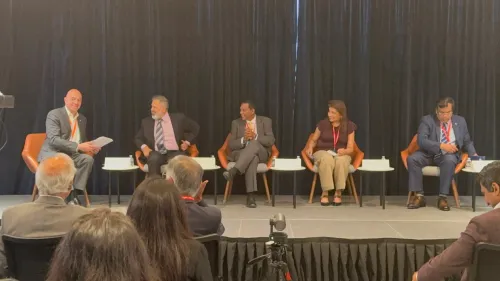
This session, organized by the Global Science Innovation Forum, convened scholars and technologists to engage in discussions surrounding the intersection of science, ethics, and civilizational knowledge systems.
Point of View
His insights serve as a reminder of the importance of balancing innovation with social responsibility.
NationPress
19 Sept 2026
Frequently Asked Questions
What did Dattatreya Hosabale emphasize in his speech?
He emphasized the need for ethics and equality to guide scientific progress, warning that unchecked technological growth could increase social divides.
How does Hosabale connect Indian traditions with science?
He described Indian traditions as integrating empirical and transcendental inquiry, asserting that practices like yoga reflect a scientific understanding of human anatomy and psychology.
What are the implications of rapid technological growth, according to Hosabale?
He warned that rapid advancements could lead to greater social inequality if not managed properly, linking education access to broader societal gaps.
What approach did Hosabale suggest for technology governance?
He called for a balanced approach that considers both innovation and its social impact, emphasizing the importance of ethical standards.
What criteria did Hosabale propose for evaluating technology?
He proposed a three-part test based on economy, equality, and ethics to assess the impact of technology on society.