PM Modi meets BRICS Parliamentary Forum MPs in Delhi
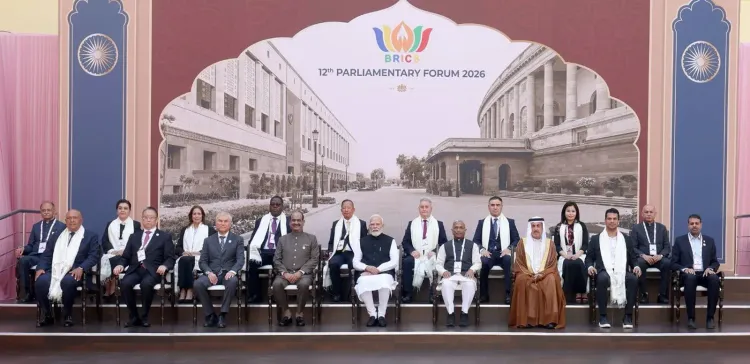
Synopsis
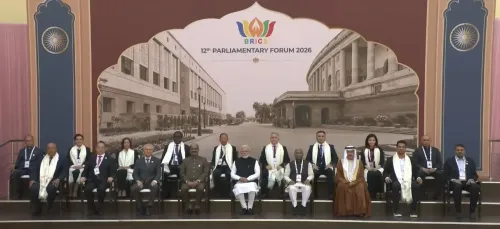
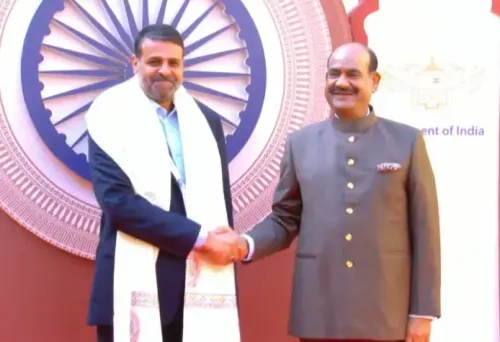
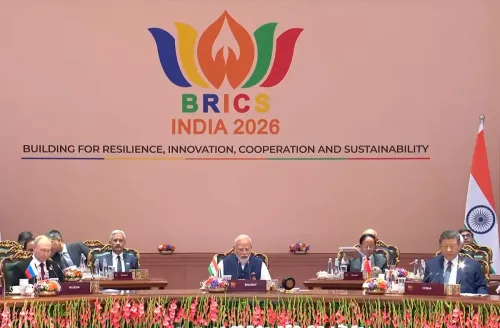
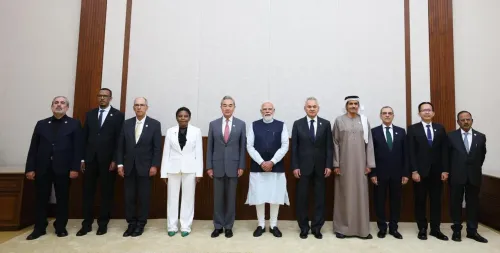
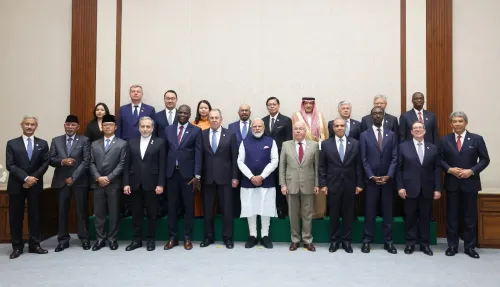
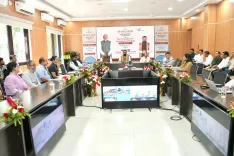
Prime Minister Narendra Modi met legislators from BRICS nations at the 12th BRICS Parliamentary Forum in New Delhi on 26 October 2026, exchanging perspectives on a wide range of issues in a direct show of India's multilateral parliamentary diplomacy.
Key Takeaways
Prime Minister Narendra Modi met MPs from BRICS nations at the 12th BRICS Parliamentary Forum 2026 in New Delhi on 26 October 2026 .
Modi described the interaction as 'wonderful,' with discussions spanning 'a wide range of issues.' BRICS comprises Brazil, Russia, India, China and South Africa , focused on economic cooperation and a multipolar global order.
India has hosted multiple BRICS events, including summits in Delhi (2012) and Goa (2016) .
Parliamentary forums complement executive-level BRICS summits, allowing legislators to engage on shared priorities such as global governance reform.
Modi's direct participation signals India's intent to use the forum as a substantive diplomatic platform, not a ceremonial event.
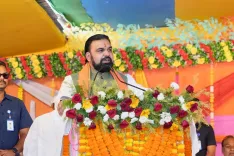
Diplomacy moved from the summit table to the parliamentary floor on Monday, 26 October 2026, as Prime Minister Narendra Modi sat down with legislators from across the BRICS nations for a wide-ranging exchange at the 12th BRICS Parliamentary Forum being held in New Delhi.
Modi described the meeting as a 'wonderful interaction,' saying the group 'exchanged perspectives on a wide range of issues' — the kind of frank, cross-border conversation that formal summits rarely allow. Parliamentarians, after all, carry the texture of domestic politics into the room: their questions cut closer to the ground.
Why Delhi is hosting BRICS legislators in 2026
BRICS — the intergovernmental grouping of Brazil, Russia, India, China and South Africa, built around the idea of a multipolar international order — has long operated on two parallel tracks: executive-level leaders' summits and parliamentary forums that keep legislators in the loop between those headline meetings. India has been a consistent host of both formats, having anchored BRICS Summits in Delhi in 2012 and Goa in 2016.
The parliamentary forum matters because it is where shared priorities — global governance reform, development finance, trade architecture — get road-tested by people who must eventually turn them into legislation or budget lines at home. A prime minister walking into that room signals that the executive wants those conversations to land, not merely be logged.
Modi's pattern of direct parliamentary engagement
India's approach to multilateral diplomacy has increasingly combined high-level bilateral meetings with broader, more informal formats that reach legislators, civil society, and business communities. By engaging directly with BRICS MPs rather than leaving that to protocol officials, Prime Minister Modi reinforces India's positioning as a convening power — a country that does not just attend multilateral tables but actively shapes the agenda around them.
The 12th Forum comes at a moment when the BRICS grouping has been navigating questions about its expanded membership, reform of global financial institutions, and the role of emerging economies in setting the terms of a post-unipolar order. Parliamentary-level dialogue adds a layer of legitimacy and continuity that no single summit can provide.
Whether Monday's exchange of perspectives translates into joint parliamentary statements or feeds into the next BRICS leaders' summit agenda will be the real measure of the forum's weight — but the Prime Minister's presence in that room made clear that New Delhi is not treating this as a ceremonial side event.
Point of View
Parliamentary-level dialogue gives those debates democratic legitimacy back home in each member state. For India, hosting the 12th Forum in Delhi also reinforces the capital's standing as a hub for emerging-economy diplomacy in 2026. The soft signal is unmistakable — New Delhi wants to be seen as the address where the multipolar order's agenda is shaped, not merely endorsed.
NationPress
26 Oct 2026
Frequently Asked Questions
What is the 12th BRICS Parliamentary Forum 2026?
The 12th BRICS Parliamentary Forum 2026 is a gathering of legislators from BRICS member nations — Brazil, Russia, India, China and South Africa — held in New Delhi to exchange views on shared priorities such as global governance reform and economic cooperation.
Why did PM Modi meet BRICS MPs?
Prime Minister Narendra Modi met BRICS parliamentarians at the forum to exchange perspectives on a wide range of issues, reinforcing India's role as an active shaper of multilateral dialogue rather than a passive participant.
Where is the BRICS Parliamentary Forum 2026 being held?
The 12th BRICS Parliamentary Forum 2026 is being held in New Delhi, India's capital, which has previously hosted multiple BRICS summits and ministerial meetings.
What is BRICS and who are its members?
BRICS is an intergovernmental grouping of Brazil, Russia, India, China and South Africa, established to advance economic cooperation, development finance, and a multipolar international order as an alternative to Western-dominated institutions.
Has India hosted BRICS events before?
Yes. India hosted the BRICS Summit in Delhi in 2012 and in Goa in 2016, and has consistently hosted parliamentary and ministerial-level BRICS meetings to shape the grouping's agenda.