Ethanol blending saved Indians ₹30/litre as petrol neared ₹125 in West Asian crisis
Synopsis
India's ethanol blending programme quietly saved Delhi consumers nearly ₹30 per litre during the West Asian crisis — the difference between paying ₹94.77 and a projected ₹125 per litre. With crude imports covering 88% of national demand and the programme already saving ₹1.97 lakh crore in foreign exchange, the government is making its clearest case yet that blending is not just green policy — it is a fiscal shield.
Key Takeaways
Petrol in Delhi was projected to hit ₹125 per litre during the West Asian crisis without ethanol blending; consumers actually paid ₹94.77 per litre .
20 per cent of every litre sold comprised domestically produced ethanol procured at pre-agreed stable prices, saving consumers nearly ₹30 per litre .
India's crude basket peaked at around $135 per barrel during the crisis, triggering the government's modelling exercise.
The EBP Programme has cumulatively saved more than ₹1.97 lakh crore in foreign exchange and cut over 950 lakh metric tonnes of CO₂ emissions.
Farmers and distillers have received more than ₹1.66 lakh crore in payments under the programme.
Imported crude still accounts for nearly 88 per cent of India's total oil requirement, underpinning the case for blending expansion.
Petrol prices in Delhi would have surged to approximately ₹125 per litre during the recent West Asian crisis had India not implemented its ethanol blending programme, the Ministry of Petroleum and Natural Gas said on Friday, 31 July. The government claimed the initiative cushioned consumers by nearly ₹30 per litre, keeping pump prices at ₹94.77 per litre even as global crude markets spiked sharply.
How Ethanol Blending Held the Line
When India's crude basket climbed to around $135 per barrel during the crisis, modelling by the ministry projected retail petrol prices in the national capital would have breached ₹125 per litre without blending. Instead, because 20 per cent of every litre comprised domestically produced ethanol procured at stable, pre-agreed prices, consumers were shielded from the full force of the import price shock.
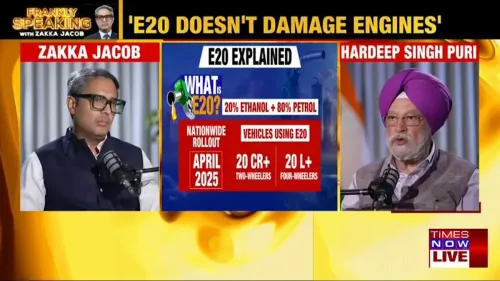
The ministry described the savings as a practical demonstration of how the Ethanol Blended Petrol (EBP) Programme strengthens India's energy security while reducing dependence on imported crude oil — which still accounts for nearly 88 per cent of the country's total oil requirement.
Cumulative Economic and Environmental Impact
According to the ministry, the EBP Programme has cumulatively saved India more than ₹1.97 lakh crore in foreign exchange by curbing crude oil imports. Over the same period, it has cut more than 950 lakh metric tonnes of carbon dioxide emissions — a figure that underscores the programme's dual role as both a fiscal and climate instrument.
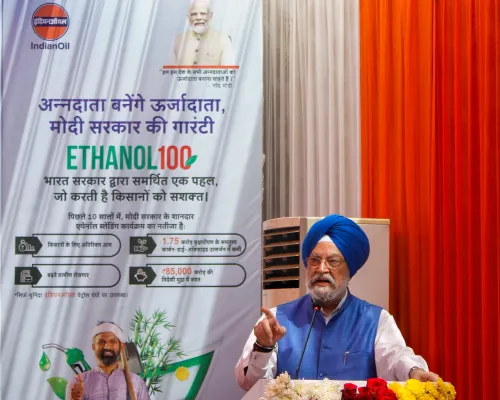
The programme has also channelled more than ₹1.66 lakh crore in payments to farmers and distillers, creating a stable domestic demand channel for agricultural produce and supporting rural incomes.
Food Security Safeguards
The ministry was explicit that ethanol production does not come at the cost of food security. Only surplus grain certified by the Department of Food and Public Distribution — after all food security obligations under the Public Distribution System, the National Food Security Act, welfare schemes, and mandatory buffer stock requirements are met — is approved for ethanol production.
Additionally, damaged grain, broken rice, and foodgrain unfit for human consumption are utilised under the programme, ensuring that usable food stocks are not diverted. The government said the EBP framework is designed to balance food security, farmer welfare, and energy security simultaneously.
India's Energy Security Calculus
With crude imports still covering the vast majority of domestic demand, the ministry characterised ethanol blending as an 'insurance policy' against global oil price volatility. This comes amid renewed global focus on supply-chain resilience following the West Asian crisis, which exposed the vulnerability of oil-import-dependent economies to sudden price dislocations.
Notably, India's 20 per cent blending target — now being operationalised — represents one of the most ambitious such mandates among major emerging economies. The ministry's data suggests that as blending levels rise, the per-litre savings buffer against future crude shocks will widen further.
The government is expected to outline the next phase of the EBP Programme's expansion in the coming months, with higher blending targets and broader feedstock diversification on the agenda.
Point of View
Not just an energy statistic — it arrives as the government seeks public and industry buy-in for higher blending mandates. The ₹30-per-litre savings claim is credible in directional terms, but the projection rests on a single crude-price scenario; real-world pump prices are also shaped by excise duty, dealer margins, and state taxes that the ministry's framing quietly sidesteps. More substantively, with crude imports still at 88 per cent of demand, even a 20 per cent blend leaves India deeply exposed to the next supply shock. The bigger question — whether blending targets can scale without eventually pressuring food grain prices — remains unanswered, and the ministry's food-security assurances, while procedurally sound, do not address the structural tension that emerges if ethanol demand grows faster than surplus grain availability.
NationPress
14 Sept 2026
Frequently Asked Questions
How much did ethanol blending save petrol consumers during the West Asian crisis?
The government says ethanol blending saved consumers nearly ₹30 per litre during the West Asian crisis. Without blending, petrol in Delhi was projected to cost around ₹125 per litre; with 20 per cent ethanol mixed in at stable domestic prices, consumers paid ₹94.77 per litre.
What is India's Ethanol Blended Petrol (EBP) Programme?
The EBP Programme mandates mixing domestically produced ethanol with petrol to reduce crude oil imports, lower carbon emissions, and support farmer incomes. India is currently operationalising a 20 per cent blending target, one of the most ambitious among major emerging economies.
Does ethanol blending affect food security in India?
The government says no food security is compromised. Only surplus grain certified by the Department of Food and Public Distribution — after meeting all PDS, National Food Security Act, welfare scheme, and buffer stock obligations — is approved for ethanol production. Damaged grain and broken rice unfit for consumption are also used.
How much foreign exchange has India saved through ethanol blending?
According to the Ministry of Petroleum and Natural Gas, the EBP Programme has saved India more than ₹1.97 lakh crore in foreign exchange by reducing crude oil imports since the programme's inception.
Why does India still depend heavily on imported crude oil?
Imported crude accounts for nearly 88 per cent of India's total oil requirement, reflecting limited domestic reserves relative to consumption. The government describes ethanol blending as an 'insurance policy' that reduces this exposure and cushions consumers against global price shocks.