White House Marks July 4 With Pledge to 1776 Patriots
Synopsis
The White House marked American Independence Day 2026 with a social-media post invoking the 'courage, fire, flesh, and blood' of the 1776 patriots, pledging allegiance to the flag and calling for the cause of independence to endure — continuing a tradition of executive civic messaging stretching back to the founding era.
Key Takeaways
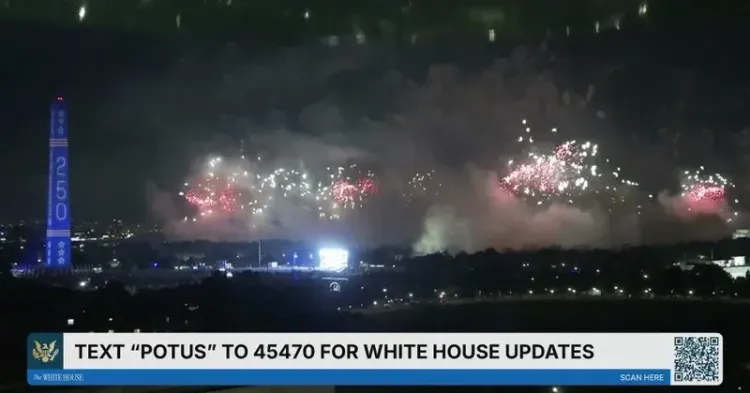
The White House posted an Independence Day message on X on 4 July 2026 , accompanied by one image.
The post quoted a pledge of allegiance to the flag and invoked the patriots of 1776 by name.
The phrase 'LONG LIVE THE CAUSE OF INDEPENDENCE' was emphasised in capital letters, signalling rhetorical weight.
US presidents have issued formal Independence Day proclamations and addresses since the late 18th century .
The post's audience includes US citizens , military veterans , and diaspora communities worldwide, including the large Indian-American community.
Observers will watch whether the 'cause of independence' framing is carried into subsequent legislative or civic-education initiatives.
The White House marked American Independence Day on 4 July 2026 with a stirring social-media post invoking the founding generation, pledging allegiance to the flag and calling for the cause of independence to endure. The post, shared on X on the morning of Sunday, 5 July 2026 (IST), drew directly on the revolutionary spirit of 1776 to frame the occasion as a living inheritance rather than a historical footnote.
The post read: 'We are made in the courage, fire, flesh, and blood of the best and the bravest people this world has ever produced. Tonight, we pledge allegiance to the flag they gave us — and we say, God bless the immortal patriots of 1776, and LONG LIVE THE CAUSE OF INDEPENDENCE.'
Context
July 4 marks the anniversary of the adoption of the Declaration of Independence in 1776, when thirteen American colonies formally broke from Britain to establish the United States of America. The declaration, drafted principally by Thomas Jefferson and adopted by the Second Continental Congress, remains the foundational civic document of the American republic. Each year, the date is observed with fireworks, public ceremonies, and presidential addresses across the country.
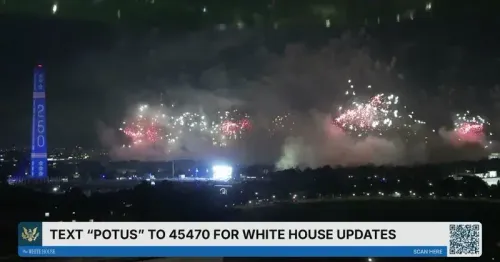
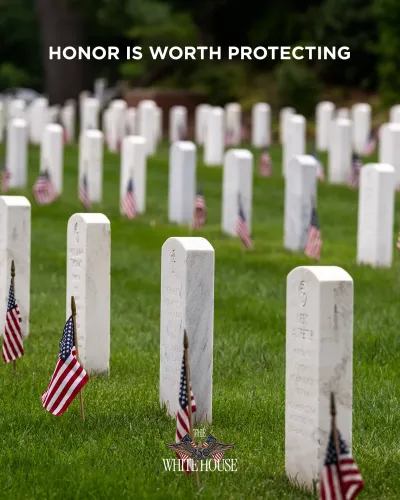
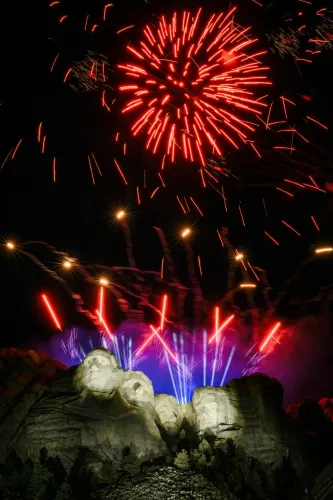
The White House post appeared with one image, amplifying the visual dimension of the commemoration. The phrase 'LONG LIVE THE CAUSE OF INDEPENDENCE' — rendered in capital letters — signals rhetorical emphasis on continuity with the revolutionary era rather than a specific contemporary policy position.
Policy Backdrop
Formal Independence Day proclamations and public addresses by the executive have been a fixture of American civic life since the late 18th century, maintained by administrations across the political spectrum. White House social-media accounts have, in recent years, extended this tradition to digital platforms, using posts on X and other channels to reach audiences beyond traditional broadcast.
Invoking the founding era — the Continental Army, the signatories of the Declaration, and the broader revolutionary generation — is a standard element of July 4 civic messaging. Historians note that such rhetoric functions as a unifying frame, positioning the sitting administration as a steward of national identity rather than advancing a partisan agenda.
Stakeholders and Impact
US citizens and military veterans are the primary audience for Independence Day messaging, which typically honours both the founding sacrifice and contemporary service members who are seen as its inheritors. The White House post's language — 'courage, fire, flesh, and blood' — explicitly links the patriots of 1776 to a living tradition of sacrifice and national belonging.
For the Indian-American community, one of the largest diaspora groups in the United States, Independence Day carries dual resonance: a celebration of their adopted country's founding alongside awareness of the colonial histories that shaped both nations. The post's global reach on social media means its imagery and language circulate well beyond Washington DC.
What's Next
Presidential Independence Day addresses typically set a rhetorical tone that congressional leaders and state governors echo in their own commemorations. Observers will watch whether subsequent White House communications build on the 'cause of independence' framing to advance specific legislative priorities — such as civic education measures or resolutions reaffirming national holidays — or whether the post stands as a standalone ceremonial statement. Annual July 4 messaging from the executive office will continue to serve as a barometer of how the administration positions American identity in its public communications.
Point of View
Fire, flesh, and blood' rather than contemporary policy, the messaging deliberately transcends partisan lines — a rhetorical move that administrations across history have found durable. The capitalised 'LONG LIVE THE CAUSE OF INDEPENDENCE' adds an unusually emphatic register, suggesting the communication team sought emotional intensity beyond routine ceremonial language. Whether this framing is subsequently operationalised into civic-education policy or remains symbolic will determine its lasting significance.
NationPress
5 Jul 2026
Frequently Asked Questions
What did the White House post on July 4 2026?
The White House posted a message on X invoking the 'courage, fire, flesh, and blood' of the 1776 patriots, pledging allegiance to the American flag, and declaring 'LONG LIVE THE CAUSE OF INDEPENDENCE' to mark Independence Day 2026.
Why does the US celebrate Independence Day on July 4?
July 4 marks the date in 1776 when the Second Continental Congress adopted the Declaration of Independence , formally separating thirteen American colonies from Britain and establishing the United States of America .
Who are the patriots of 1776 referred to in the White House post?
The 'patriots of 1776' refers to the founders, soldiers, and signatories of the Declaration of Independence who led the American Revolution , including figures such as George Washington , Thomas Jefferson , and John Adams .
How has the White House traditionally marked Independence Day?
US presidents have issued formal Independence Day proclamations and delivered public addresses since the late 18th century . In recent years, White House social-media accounts have extended this tradition to platforms such as X to reach broader audiences.
What does 'LONG LIVE THE CAUSE OF INDEPENDENCE' mean in the White House post?
The capitalised phrase emphasises continuity with the revolutionary ideals of 1776 , framing American independence not as a historical event but as an ongoing cause. It is a rhetorical device used to inspire civic pride rather than signal a specific policy position.