Nadda mourns Teejan Bai, calls her passing irreplaceable loss
Synopsis
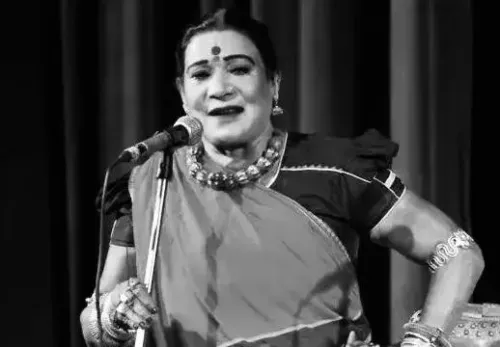
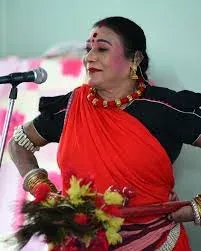
Union Health Minister J. P. Nadda paid tribute to Padma Vibhushan-awarded Pandwani vocalist Teejan Bai on her passing, calling her death an irreparable loss to folk art and praising her role in bringing Chhattisgarh's Mahabharata singing tradition to global audiences.
Key Takeaways
Union Health Minister and BJP national president J.
Nadda condoled the passing of Teejan Bai on July 5, 2026 .
Teejan Bai was a celebrated exponent of Pandwani , a traditional folk-singing form from Chhattisgarh recounting Mahabharata episodes.
She was a recipient of the Padma Vibhushan , one of India's highest civilian honours.
Nadda described her passing as an 'irreparable loss' ( अपूरणीय क्षति ) to the world of folk art.
He praised her 'powerful voice, charismatic stage presence, and unique style of narrative singing' for giving Pandwani global recognition.
Memorial events and cultural programmes honouring her legacy are anticipated in Chhattisgarh and at national festivals.
Union Health Minister and BJP national president J. P. Nadda on Sunday, July 5, 2026, expressed deep grief over the passing of renowned Pandwani vocalist and Padma Vibhushan awardee Teejan Bai, describing her death as an irreparable loss to the world of folk art.
Context
In a post on X, Nadda wrote: 'सुविख्यात पंडवानी गायिका और पद्म विभूषण से सम्मानित तीजन बाई के निधन का समाचार अत्यंत दुःखद है' — 'The news of the passing of celebrated Pandwani singer and Padma Vibhushan recipient Teejan Bai is extremely saddening.' He praised her 'powerful voice, charismatic stage presence, and unique style of narrative singing,' crediting her with giving Pandwani 'a new identity not just in the country but on the world stage.'
Nadda concluded with a prayer: 'ईश्वर से प्रार्थना करता हूँ कि दिवंगत आत्मा को श्रीचरणों में स्थान दें और शोकाकुल परिजनों और प्रशंसकों को इस दुःख की घड़ी में सम्बल प्रदान करें। ॐ शांति:!' — 'I pray to God to grant the departed soul a place at His feet and give strength to the bereaved family and admirers in this hour of grief. Om Shanti!'
Policy Backdrop
Teejan Bai was born in Chhattisgarh and dedicated her life to Pandwani, a traditional folk-singing form from the region that recounts episodes from the Mahabharata through distinctive vocal and performative techniques. She is widely credited with elevating the art form from rural Chhattisgarhi stages to national and international audiences.
Her recognition with the Padma Vibhushan — one of India's highest civilian honours — placed her among an elite group of folk and tribal artists acknowledged by the state for their contribution to intangible cultural heritage. The Padma awards have periodically spotlighted artists from regional traditions, reflecting a long-standing official effort to project India's diverse folk forms on the global stage.
Stakeholders and Impact
Teejan Bai's passing is a significant moment for Chhattisgarh's cultural community and for folk artists across India. She served as both a practitioner and an ambassador of Pandwani, training younger performers and performing internationally to bring the Mahabharata's oral tradition to new audiences.
Central ministers routinely issue tributes to Padma laureates from regional art traditions, and Nadda's statement underscores the government's recognition of intangible cultural heritage as part of India's soft-power identity. The condolence from a senior Union minister and the ruling party's national president signals the weight the establishment places on her contribution.
What's Next
Cultural observers and state authorities in Chhattisgarh are expected to announce memorial programmes honouring Teejan Bai's legacy. National folk festivals and cultural institutions may incorporate special Pandwani performances as tributes.
Her death raises urgent questions about the preservation of Pandwani as a living tradition — the focus will now shift to whether institutional support can sustain and promote the art form for future generations, ensuring the legacy she built endures beyond her extraordinary career.
Point of View
Reinforcing the party's cultural-nationalism messaging. The condolence also implicitly highlights the government's investment in projecting India's intangible heritage globally — a soft-power strand that runs through several flagship cultural initiatives. Teejan Bai's passing, however, sharpens a persistent policy challenge: the survival of living oral traditions after their most iconic practitioners are gone. The real test will be whether institutional mechanisms exist to sustain Pandwani as a performed, evolving art form rather than an archived relic.
NationPress
5 Jul 2026
Frequently Asked Questions
What did JP Nadda say about Teejan Bai's death?
Union Health Minister J. P. Nadda called Teejan Bai's passing an 'irreparable loss' to the folk art world, praising her powerful voice, charismatic stage presence, and unique narrative singing style. He prayed for peace for her soul and strength for her bereaved family and admirers.
What awards did Teejan Bai receive?
Teejan Bai was awarded the Padma Vibhushan, one of India's highest civilian honours, in recognition of her extraordinary contribution to Pandwani folk singing and Indian intangible cultural heritage.
What happens to Pandwani after Teejan Bai's death?
Teejan Bai's passing raises concerns about the future of Pandwani as a living tradition. Cultural institutions and the Chhattisgarh state government are expected to announce memorial programmes, and attention will focus on training younger artists to carry the tradition forward.