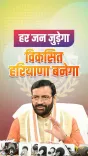
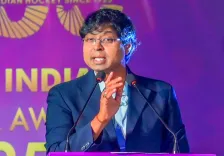
CM Samrat Choudhary mourns Pandavani legend Teejan Bai
Synopsis
Bihar Chief Minister Samrat Choudhary mourned the passing of celebrated Pandavani vocalist Teejan Bai on 5 July 2026, crediting her unique art and voice with bringing Indian folk culture to the world stage. She was a Padma Bhushan awardee and the foremost exponent of the Chhattisgarh-born Mahabharata ballad tradition.
Key Takeaways
Bihar CM Samrat Choudhary issued a formal condolence message on 5 July 2026 for Pandavani singer Teejan Bai .
Teejan Bai was a Chhattisgarh -born exponent of Pandavani , a solo ballad tradition drawn from the Mahabharata.
She was awarded the Padma Bhushan in 2019 by the Government of India, among other national honours.
Choudhary credited her with giving Indian folk culture a new identity on the world stage .
Cultural institutions are expected to announce memorial and archival initiatives in her name.
Her passing raises questions about the future transmission of Pandavani to younger practitioners.
Bihar Chief Minister Samrat Choudhary on Sunday, 5 July 2026, expressed deep grief over the passing of renowned Pandavani vocalist Teejan Bai, calling the news 'extremely sorrowful' and paying tribute to her lifelong contribution to Indian folk culture.
Context
In his post, Chief Minister Choudhary wrote: 'Prakhyat Pandavani gayika Teejan Bai ji ke nidhan ka samachar atyant duhkhad hai' ['The news of the passing of the celebrated Pandavani singer Teejan Bai is extremely sorrowful']. He described her as an artist who, through her 'unparalleled art, powerful voice and dedication', gave Indian folk culture a new identity on the world stage. He prayed that the departed soul be granted peace at the feet of the divine, and that her family and 'countless admirers' be given the strength to bear the immense grief.
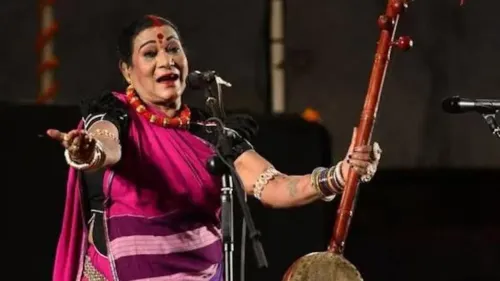
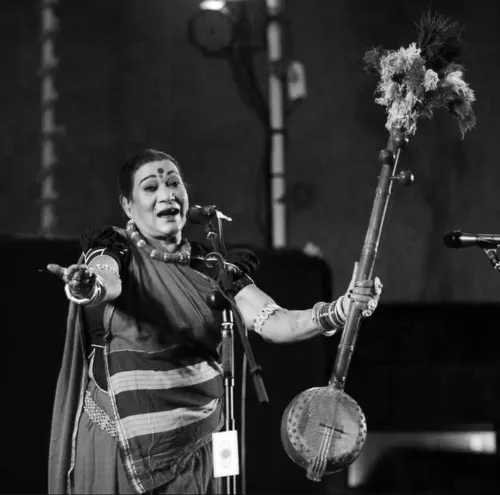
Teejan Bai was a Chhattisgarh-born exponent of Pandavani, a traditional ballad form that narrates episodes from the Mahabharata through solo song and performance. Over several decades, she carried the art from village stages in Chhattisgarh to international festival circuits, making Pandavani one of the most globally recognised forms of Indian folk performance.
Policy Backdrop
The Government of India conferred the Padma Bhushan on Teejan Bai in 2019, acknowledging her singular role in preserving and popularising an oral tradition that had remained largely regional until her rise to prominence. She had previously received the Padma Shri and the Sangeet Natak Akademi Award, making her one of the most decorated folk artists in the country.
Successive central and state governments have supported documentation and festival platforms for Pandavani since the 1980s, recognising folk performance traditions as instruments of both cultural diplomacy and domestic heritage preservation. Teejan Bai was consistently positioned at the centre of those efforts.
Stakeholders and Impact
The loss is felt acutely by the folk-arts community across Chhattisgarh and beyond, where Teejan Bai was regarded not merely as a performer but as an institution. Cultural organisations, Pandavani practitioners, and Mahabharata-tradition scholars have long looked to her as the primary ambassador of the form.
For the broader Indian cultural establishment, her passing marks the end of an era in which a single artist, largely self-taught and rooted in a rural oral tradition, achieved recognition at the highest levels of national and international performance. Her work demonstrated that regional folk forms could command the same prestige as classical traditions.
What's Next
Observers expect that Chhattisgarh and national cultural institutions may announce memorial concerts, archival initiatives, or awards named in her honour. The Sangeet Natak Akademi and state academies are likely to be among the first to formalise a tribute. The question of how Pandavani will be transmitted to the next generation — given that Teejan Bai was its most prominent living exponent — will now become a pressing concern for cultural policymakers and practitioners alike.
Point of View
Not Bihar, underscoring that her stature had long transcended regional boundaries. Her passing also exposes a structural vulnerability in India's oral folk traditions: when an art form's global profile rests almost entirely on a single practitioner, institutional succession planning becomes urgent. The coming months will test whether cultural bodies can convert political condolences into concrete archival and training programmes.
NationPress
4 Oct 2026
Frequently Asked Questions
What did Bihar CM Samrat Choudhary say about Teejan Bai?
Chief Minister Samrat Choudhary called the news of her passing 'extremely sorrowful' and said she had given 'Indian folk culture a new identity on the world stage' through her unparalleled art and powerful voice. He prayed for peace for the departed soul and strength for her family and admirers.
What awards did Teejan Bai receive?
Teejan Bai received the Padma Shri , the Sangeet Natak Akademi Award , and the Padma Bhushan in 2019 , making her one of the most decorated folk artists in India.
What happens to Pandavani after Teejan Bai's passing?
Cultural policymakers and practitioners now face the challenge of ensuring the transmission of Pandavani to younger artists. Memorial concerts, archival projects, and institutional awards in her name are expected to be announced by Chhattisgarh and national cultural bodies.