CM Himanta Flags Assam Forest Guards Saving Elephants on Rail Lines
Synopsis
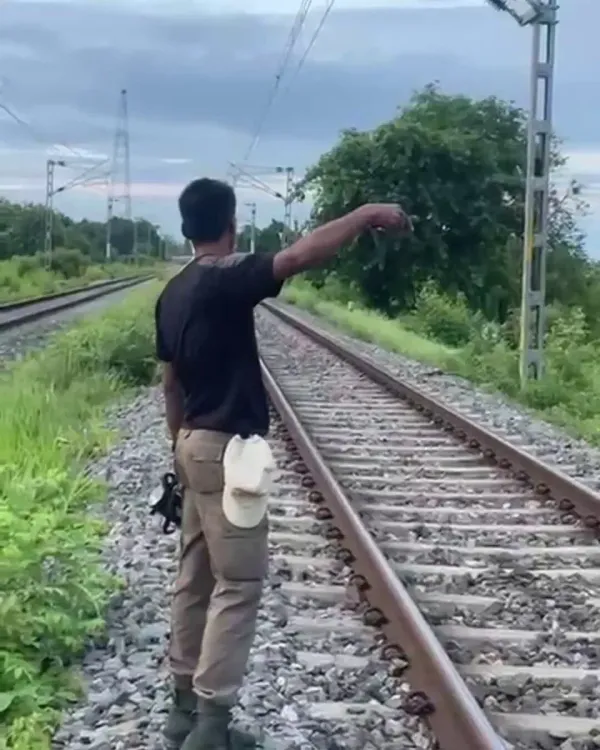
Assam CM Himanta Biswa Sarma on 19 August 2026 shared footage of forest guards alerting a high-speed train in Hojai, allowing elephants to cross a railway corridor safely — spotlighting the state's ongoing human-led wildlife protection system.
Key Takeaways
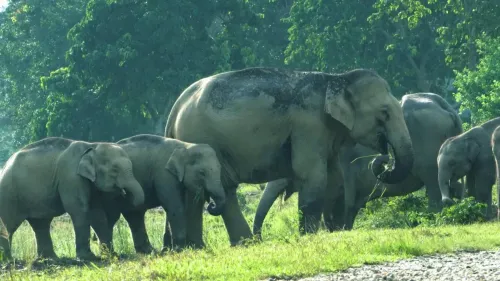
On 19 August 2026 , Assam Forest Department personnel in Hojai district alerted a high-speed train, enabling a herd of elephants to cross the railway corridor safely.
CM Himanta Biswa Sarma shared video of the incident on X, framing it under the initiative 'Creating Corridors of Safety.' Assam and Indian Railways have run joint elephant-corridor mitigation programmes since the mid-2010s, including speed restrictions and stationed alert personnel.
Project Elephant , launched in 1992 , provides the national policy foundation for such habitat-protection and conflict-reduction efforts.
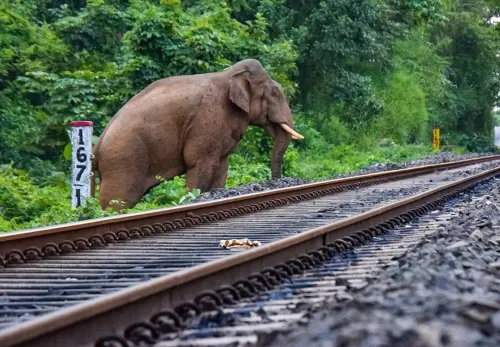
Elephant-train collisions remain a recurring hazard in Assam and across Northeast India, where movement corridors intersect active rail lines.
Automated sensor-based warning systems are being watched as a potential next step beyond the current human-staffed alert model.
A high-speed train braked in time. A herd of elephants crossed safely. And on the morning of Wednesday, 19 August 2026, in Hojai district of central Assam, what could have been a tragedy became a routine success — because a forest guard was standing watch.
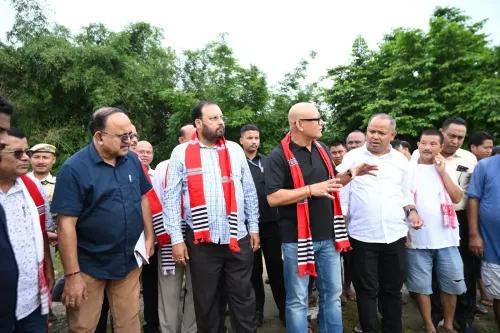
Assam Chief Minister Himanta Biswa Sarma shared a video of the early-morning intervention, writing that Assam Forest Department personnel 'are always on guard to allow safe passage to gentle giants' along the state's elephant corridors near railway lines. The Hojai incident, he noted, saw a high-speed train alerted in time — 'saving precious lives.'
The men standing between a herd and a locomotive
This is not a story about luck. It is a story about a system — imperfect, human, but operational. Across identified elephant corridors in Assam, forest personnel are stationed specifically to watch for approaching herds and flag down oncoming trains. The model is low-tech but direct: a person on the ground, a radio or signal, a train that slows. On this morning in Hojai, it worked. Hojai, a district in central Assam, sits within a landscape where elephant movement routes intersect with active railway tracks — a collision of two vital networks, one ecological, one industrial. The tension between them has produced fatalities on both sides over many years.Decades of conflict, layers of response
Project Elephant, launched nationally in 1992, set the policy foundation for protecting elephant habitats and reducing human-elephant conflict across India. In Assam specifically, the state forest department and Indian Railways have coordinated mitigation efforts since the mid-2010s — deploying signage, imposing speed restrictions at sensitive stretches, and stationing alert personnel at known crossing points. Elephant-train collisions remain a recurring hazard across the Northeast. The same movement corridors that sustain elephant populations also cross some of the busiest rail arteries connecting Assam to the rest of India. Each intervention — a guard posted, a train slowed, a herd counted through — is a small act in a long, unresolved negotiation between infrastructure and wildlife.What the Hojai morning signals for corridor safety
CM Sarma's post, framed as 'Creating Corridors of Safety,' functions as both acknowledgement and advocacy. By highlighting the Hojai incident publicly, the Chief Minister draws attention to the human effort behind each safe crossing — forest personnel whose vigilance rarely makes headlines unless something goes wrong. The broader question now is scale. Personnel-based alert systems depend on deployment, shift coverage, and communication infrastructure. Automated sensor-based warning systems — capable of detecting elephant movement and triggering alerts without a guard physically present — are being watched as the next operational layer, with potential rollout on additional Assam rail sections under consideration. Until then, the gentle giants of Assam's forests move through the night and the early morning, and somewhere along the track, a forest guard is watching.Point of View
A theme that plays well both environmentally and politically in a state where human-elephant conflict is a lived reality for millions. It also implicitly makes the case for sustained investment in forest department staffing at a time when automated alternatives are still limited. The broader arc here is the Northeast's ongoing struggle to reconcile rapid rail expansion — critical for connectivity — with some of India's densest wild elephant populations. Until sensor-based systems are widely deployed, the human guard remains the last line of defence, and making that visible is both policy communication and a quiet argument for resources.
NationPress
3 Oct 2026
Frequently Asked Questions
What happened at the Hojai elephant corridor on 19 August 2026?
Assam Forest Department personnel stationed at a railway corridor in Hojai district spotted an approaching elephant herd and alerted a high-speed train in time, allowing the animals to cross safely without a collision.
What is the Assam elephant corridor railway safety programme?
Assam's forest department and Indian Railways have coordinated mitigation efforts since the mid-2010s, stationing guards at identified elephant crossing points along railway tracks, enforcing speed restrictions, and using alert systems to prevent elephant-train collisions.
How many elephants die in train collisions in Assam?
Elephant-train collisions have been a recurring and documented hazard in Assam and across Northeast India for many years, though the exact number of fatalities varies annually. The Hojai intervention on 19 August 2026 is an example of the measures in place to prevent such deaths.
What is Project Elephant and how does it relate to Assam?
Project Elephant is a centrally sponsored scheme launched in 1992 to protect elephant habitats, corridors, and reduce human-elephant conflict across India. Assam, home to a significant share of India's wild elephant population, is one of the key states covered under this programme.
What is CM Himanta Biswa Sarma's 'Creating Corridors of Safety' initiative?
'Creating Corridors of Safety' is the framing used by Assam CM Himanta Biswa Sarma to describe the state's ongoing efforts to protect elephant movement routes along railway lines, primarily through forest personnel stationed at corridors to alert trains when herds approach.