What Happened to the Seven Elephants and Calf After Collision with Rajdhani Express in Assam?
Synopsis
In a devastating incident in Assam, seven elephants were killed and a calf injured after colliding with the Rajdhani Express. This tragic event not only caused loss of wildlife but also disrupted rail services significantly. The need for preventive measures against human-wildlife conflict is more pressing than ever.
Key Takeaways
Seven elephants were killed in a collision with the Rajdhani Express.
One calf was injured and received medical care.
Several train coaches were derailed, but no human injuries were reported.
Rail services in the Northeast faced significant disruptions.
Authorities stress the need for improved measures to prevent future incidents.
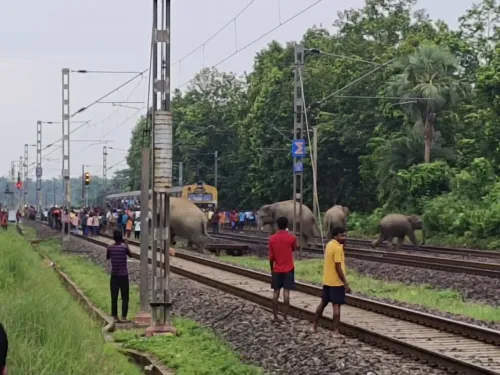
New Delhi, Dec 20 (NationPress) Tragically, seven elephants lost their lives and a calf was injured when a herd came into contact with the Sairang-New Delhi Rajdhani Express in Hojai, Assam, early Saturday morning. This unfortunate incident caused a significant disruption in rail services.
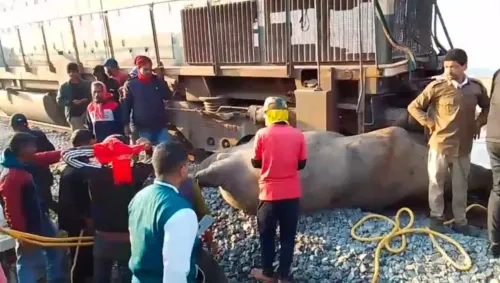
Officials reported that the collision occurred at approximately 2:17 a.m. as the Rajdhani Express, heading to New Delhi, struck a herd of elephants crossing the train tracks. The forest department later confirmed the deaths of seven elephants, while one calf was rescued, albeit injured, and received medical care.
In addition to the elephant casualties, several train coaches derailed during the incident. Fortunately, there were no reported injuries among the passengers or railway staff.
The Sairang-New Delhi Rajdhani Express operates between Sairang, near Aizawl in Mizoram, and Anand Vihar Terminal in Delhi. The accident took place roughly 126 kilometers from Guwahati. Following the crash, railway officials and emergency response teams were dispatched to the scene to carry out rescue operations and evaluate the damage.
Reports indicate that rail services to Upper Assam and other regions in the Northeast experienced significant disruptions due to the derailment and the elephant carcasses on the tracks. As a precautionary approach, several trains passing through the affected area were rerouted to alternative paths to reduce inconvenience for passengers.
Passengers who were in the derailed coaches were temporarily relocated to vacant berths in other coaches. Railway authorities stated that once the train arrives in Guwahati, additional coaches will be added to ensure all affected passengers are accommodated before the train continues its journey.
Officials clarified that the accident did not occur within a designated elephant corridor. The loco pilot reportedly spotted the herd on the tracks and applied emergency brakes immediately; however, the elephants ran into the train, resulting in the crash and subsequent derailment.
Restoration efforts are currently in progress to clear the tracks and restore normal train operations as quickly as possible. Forest and railway officials are collaborating closely at the site to manage the situation and ensure safety. Senior railway officials, including the General Manager of Northeast Frontier Railway and the Divisional Railway Manager of Lumding, have arrived at the accident scene to oversee the recovery process.
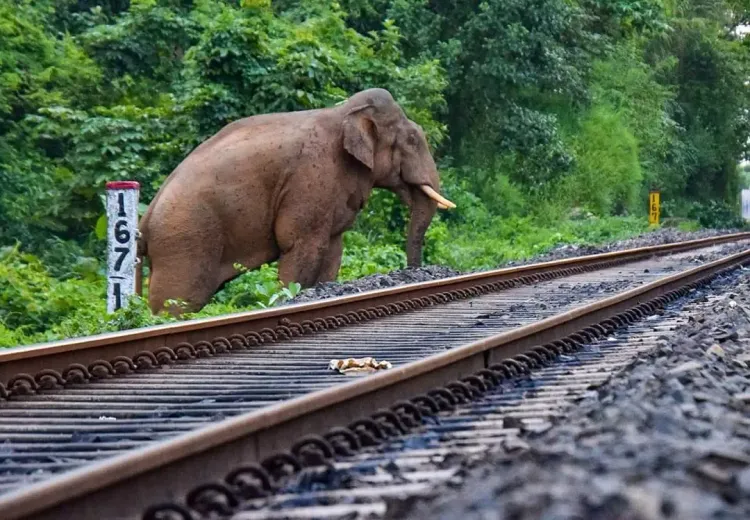
Helpline numbers have been activated at Guwahati railway station: 0361-2731621/2731622/2731623. This incident underscores the ongoing concerns regarding human-wildlife conflict in the Northeast, especially the dangers posed by railway lines running through forested and bordering areas. Authorities stressed the necessity for enhanced preventive measures to avert such tragic events in the future.
Point of View
This incident serves as a poignant reminder of the fragile relationship between human infrastructure and wildlife. While rail travel is essential for connectivity, it must be managed responsibly to minimize conflicts with wildlife. As we reflect on this tragic event, it is imperative that authorities take decisive action to prevent future occurrences, ensuring safety for both passengers and wildlife.
NationPress
30 Sept 2026
Frequently Asked Questions
How did the elephant collision occur?
The collision occurred when the New Delhi-bound Rajdhani Express struck a herd of elephants crossing the tracks at approximately 2:17 a.m.
Were there any injuries to passengers?
Fortunately, no passengers or railway staff were injured in the incident, although several coaches were derailed.
What actions are being taken following the incident?
Railway authorities are actively working on restoration efforts to clear the tracks and resume train operations while ensuring the safety of passengers.
Is there a helpline for affected passengers?
Yes, helpline numbers have been activated at Guwahati railway station: 0361-2731621/2731622/2731623.
What does this incident reveal about human-wildlife conflicts?
This tragic event highlights the ongoing challenges related to human-wildlife conflict, particularly in regions where rail lines intersect with natural habitats.