Assam proposes Gajmitra 2.0 to curb human-elephant conflict

Synopsis
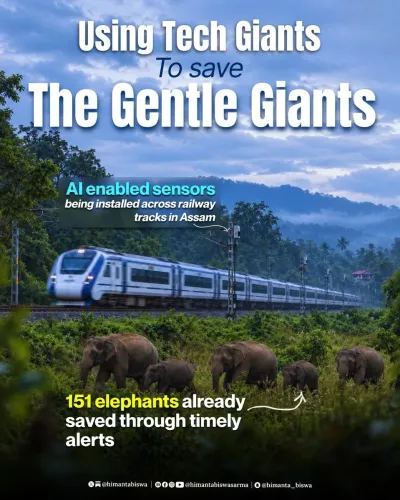
Assam's Chief Minister's Office has proposed Gajmitra 2.0 under the state budget — a community-led, science-driven initiative to tackle chronic human-elephant conflict. Building on existing conservation gains and the national Project Elephant framework, the scheme aims to protect both rural livelihoods and the state's rich wildlife heritage.
Key Takeaways
The Chief Minister's Office of Assam announced Gajmitra 2.0 on 19 July 2026 as part of the Assam Budget .
The scheme proposes a community-led and science-driven approach to reduce human-elephant conflict in Assam.
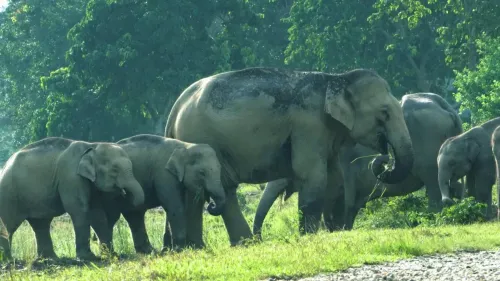
Assam hosts one of India's largest Asian elephant populations, with conflict concentrated in districts bordering forests and farmlands.
The initiative builds on India's Project Elephant framework, a centrally sponsored scheme in place since 1992 .
Rural communities and the state forest department are the primary stakeholders identified in the proposal.
Specific budget allocations, pilot districts, and operational guidelines are pending the formal tabling of the Assam Budget .
The Chief Minister's Office of Assam announced on Sunday, 19 July 2026 that the state government proposes to launch Gajmitra 2.0, a community-led and science-driven initiative aimed at mitigating human-elephant conflict and protecting Assam's wildlife heritage, as part of the Assam Budget.
Context
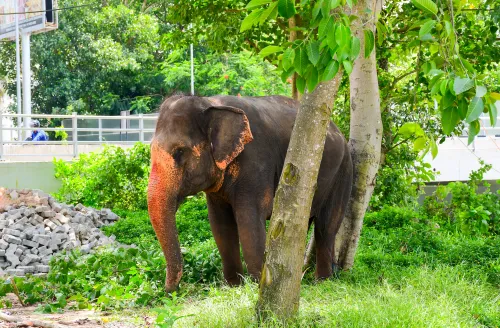
Assam is home to one of the largest populations of Asian elephants in India, with herds ranging across districts that border forests and farmlands. The state has long grappled with recurring incidents of human-elephant conflict, where elephants stray into agricultural land and human settlements, causing crop damage, property loss, and casualties on both sides. Gajmitra 2.0 is framed as a build on existing conservation successes, signalling a shift from reactive measures to a structured, participatory model.
Policy Backdrop
India's Project Elephant, a centrally sponsored scheme launched in 1992, has provided the foundational framework for elephant conservation across range states, covering habitat protection, corridor restoration, and conflict mitigation. Assam has operated within this framework while also deploying physical barriers, early-warning systems, and community awareness programmes at the local level. Gajmitra 2.0 is positioned as an evolution of these efforts, explicitly combining local community participation with scientific inputs — a dual approach that aligns with the broader national trajectory in wildlife management.
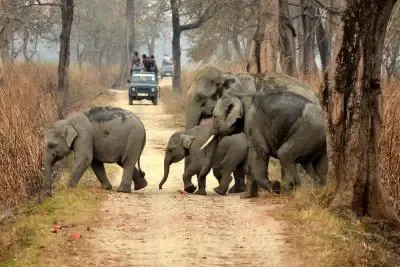
Kaziranga National Park, a UNESCO World Heritage Site in Assam, exemplifies the state's conservation credentials, supporting significant elephant herds alongside its celebrated one-horned rhinoceros population. The proposed scheme would extend the conservation ethic beyond protected areas into the conflict-prone buffer zones where communities and elephants most frequently intersect.
Stakeholders and Impact
The primary stakeholders in Gajmitra 2.0 are rural communities living along forest fringes and the state forest department, which would coordinate implementation. For farming households, effective conflict mitigation translates directly into protection of livelihoods, as crop raids by elephants can devastate seasonal harvests. The community-led design signals that local knowledge and participation are intended to be central to the scheme's operation, rather than top-down enforcement alone.
Wildlife conservationists and researchers stand to engage through the science-driven component, potentially contributing to corridor mapping, movement tracking, and evidence-based early-warning systems. The announcement under the Assam Budget header also indicates that dedicated financial allocations are expected, though specific figures, pilot districts, and operational guidelines are yet to be detailed publicly.
What's Next
The full contours of Gajmitra 2.0 — including its budget allocation, target districts, and implementation timeline — are expected to become clearer once the Assam Budget is formally tabled. Subsequent implementation reports from the state forest department will be closely watched by conservation groups and affected communities alike. If the scheme delivers measurable reductions in conflict incidents, it could serve as a replicable model for other elephant-range states across India grappling with similar challenges.
Point of View
The state government is signalling institutional commitment rather than a standalone pilot, lending it greater policy weight. The dual emphasis on community participation and scientific rigour addresses a persistent tension in conflict-mitigation programmes, where ground-level buy-in and evidence-based design have historically been pursued separately. Whether the scheme delivers on both counts will depend heavily on the quality of inter-agency coordination between forest officials, researchers, and panchayat-level bodies once implementation begins.
NationPress
18 Oct 2026
Frequently Asked Questions
What is Gajmitra 2.0 in Assam?
Gajmitra 2.0 is a proposed Assam government initiative announced in July 2026 that aims to reduce human-elephant conflict through a community-led and science-driven approach, building on earlier conservation work in the state.
Why is human-elephant conflict a problem in Assam?
Assam is home to one of India's largest Asian elephant populations, and habitat fragmentation alongside agricultural expansion has pushed elephants into farmland and villages, causing crop damage, property loss, and casualties on both sides.
How does Gajmitra 2.0 relate to Project Elephant?
Project Elephant is a centrally sponsored scheme launched by the Government of India in 1992 to support elephant conservation across range states. Gajmitra 2.0 is designed to operate within this national framework while adding a stronger community participation and scientific component at the state level.
When will Gajmitra 2.0 be launched and what is its budget?
Specific launch details, budget allocations, and pilot districts for Gajmitra 2.0 are expected to be disclosed when the Assam Budget is formally tabled; these details had not been made public at the time of the announcement.
Which areas of Assam are most affected by human-elephant conflict?
Conflict is most prevalent in districts bordering forests and farmlands across Assam, where elephant herds move outside protected areas such as Kaziranga National Park into agricultural zones.