Goyal Spotlights GI-Tagged Kolhapuri Chappal's Artisan Legacy

Synopsis
Union Commerce Minister Piyush Goyal championed the GI-tagged Kolhapuri Chappal on 18 October 2026, praising its centuries-old artisan tradition and crediting Maharashtra's coalition leadership for advancing heritage craft opportunities.
Key Takeaways
Union Commerce Minister Piyush Goyal publicly celebrated the GI-tagged Kolhapuri Chappal on 18 October 2026 .
The Kolhapuri Chappal received its Geographical Indication registration in 2019 under the GI Act of 1999 .
The GI tag protects handcrafted leather footwear made by artisans in the Kolhapur region of western Maharashtra .
Goyal credited CM Devendra Fadnavis , Dy.
CM Eknath Shinde , and Dy.
CM Sunetra Pawar for supporting artisan opportunities in Maharashtra.
India's broader GI registration drive aims to protect generational handicraft skills and strengthen rural artisan livelihoods.
The post signals continued coordination between the Union Commerce Ministry and Maharashtra on promoting traditional products domestically and internationally.
A slip-on that has survived centuries of fashion churn just got a fresh moment in the national spotlight. Union Commerce and Industry Minister Piyush Goyal on Sunday, 18 October 2026, celebrated the GI-tagged Kolhapuri Chappal — the iconic handcrafted leather footwear of western Maharashtra — calling it 'a proud legacy of India's generational artistry and craftsmanship.'
Quoting the Marathi phrase 'जगात भारी, आपली कोल्हापूरी!' ('The best in the world, our Kolhapuri!'), Goyal's post was a full-throated salute to a product that carries both cultural weight and economic relevance for thousands of artisan families centred in Kolhapur, a city in the Konkan-Deccan belt of western Maharashtra.
From Workshop Floor to GI Certificate
The Kolhapuri Chappal's formal recognition as a Geographical Indication product came in 2019, under the Geographical Indications of Goods (Registration and Protection) Act, 1999. That tag is more than a badge — it legally ensures that only footwear crafted in the designated region using traditional methods can carry the Kolhapuri name, protecting artisans from cheap imitations flooding the market.
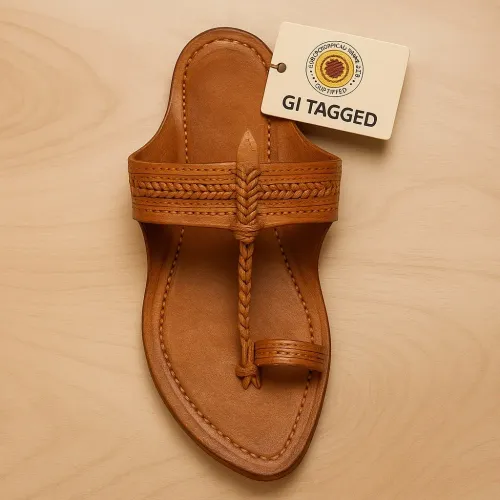
The chappal's construction — hand-stitched vegetable-tanned leather, intricate interlaced patterns, a flat sole built for durability — is a technique passed down across generations of craftsmen in the Kolhapur district and surrounding areas. The GI tag anchors that knowledge geographically and incentivises its preservation.
Maharashtra's Leadership Coalition and Heritage Commerce
Goyal specifically credited the state's ruling coalition — Chief Minister Devendra Fadnavis, Deputy Chief Minister Eknath Shinde, and Deputy Chief Minister Sunetra Pawar — for creating an environment where 'Maharashtra's rich heritage continues to inspire pride and create new opportunities for our artisans.' The shout-out signals coordination between the Union Commerce Ministry and the Maharashtra government on promoting GI-tagged goods as both cultural exports and livelihood engines.
India has steadily expanded its GI registration portfolio for handicrafts and textiles — a deliberate strategy to protect generational skills and unlock rural incomes. State governments have increasingly aligned with central frameworks to push these products into domestic retail and international markets, from craft fairs to e-commerce platforms.
Why the Chappal's Global Moment Matters
Traditional Indian footwear clusters have faced persistent pressure from mass-manufactured alternatives. GI protection combined with active ministerial promotion offers artisans a two-pronged shield: legal exclusivity and market visibility. The Kolhapuri Chappal has already found footing in global fashion circles — appearing in boutiques abroad and on international runways — but the bulk of artisan communities still depend on domestic demand and government-supported marketing channels.
With the Commerce Ministry's eye on export incentives for handicraft clusters, a renewed push on the Kolhapuri brand could translate directly into higher order volumes for the craftsmen who shape each pair by hand. The chappal that outlasted empires may yet be a centrepiece of India's next artisan-export story.
Point of View
The Commerce Ministry's growing focus on GI products reflects a deliberate shift toward 'Brand India' soft-power exports, where traditional crafts double as economic assets. If the rhetoric translates into concrete export incentives or cluster-development funding, Kolhapuri artisans stand to gain measurably — but the gap between ministerial tweets and workshop-floor outcomes remains the real metric to watch.
NationPress
18 Oct 2026
Frequently Asked Questions
What is a GI tag and why did the Kolhapuri Chappal get one?
A Geographical Indication (GI) tag is a legal certification under India's GI Act of 1999 that links a product to a specific region and its traditional methods. The Kolhapuri Chappal received its GI registration in 2019, ensuring only footwear crafted in the Kolhapur region using traditional techniques can legally carry the name.
When did the Kolhapuri Chappal get its GI tag?
The Kolhapuri Chappal was granted Geographical Indication status in 2019 by India's GI Registry, recognising its unique handcrafted leather construction originating from the Kolhapur district of Maharashtra.
Why is Piyush Goyal talking about Kolhapuri chappals?
As Union Commerce and Industry Minister, Piyush Goyal has been vocal about promoting India's GI-tagged handicrafts. His 18 October 2026 post celebrated the Kolhapuri Chappal as a symbol of generational artisanship and praised Maharashtra's leadership for supporting artisan livelihoods.
Who are the artisans behind Kolhapuri chappals?
Kolhapuri chappals are made by traditional leather craftsmen in the Kolhapur district and surrounding areas of western Maharashtra. The craft involves hand-stitching vegetable-tanned leather with intricate interlaced patterns, a skill passed down across generations of artisan families.
What does the GI tag mean for Kolhapuri chappal artisans economically?
The GI tag provides legal protection against imitation products, giving genuine Kolhapuri artisans exclusive rights to the name. Combined with government-supported marketing and potential export incentives, it helps artisans command better prices and access wider domestic and international markets.