AI in healthcare: MeitY Secretary pitches disease screening to surgical planning
Synopsis
India's top IT ministry official made a pointed case at a Varanasi conclave that AI is no longer a futuristic add-on for healthcare — it is a practical necessity for reaching communities that conventional health infrastructure has long missed. From surgical planning to remote ICU oversight, the MeitY Secretary's remarks signal that the Centre sees AI as a core plank of its public health access agenda.
Key Takeaways
Krishnan addressed the Tech Conclave on AI for Health & Assistive Technologies in Varanasi on 18 October 2026 .
He said AI can improve healthcare across applications including disease screening , medical diagnostics , remote ICU monitoring , and AI-assisted surgical planning .
Krishnan highlighted support under the IndiaAI Mission and called for collaboration among IIT BHU , STPI , industry, and startups.
STPI Director General Arvind Kumar cited the organisation's 27 Centres of Entrepreneurship and stressed the need to expand startup ecosystems beyond established tech hubs.
The conclave was jointly organised by STPI and CIIE, IIT BHU , bringing together policymakers, healthcare professionals, and startup founders.
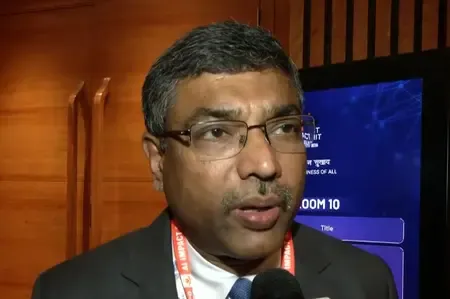
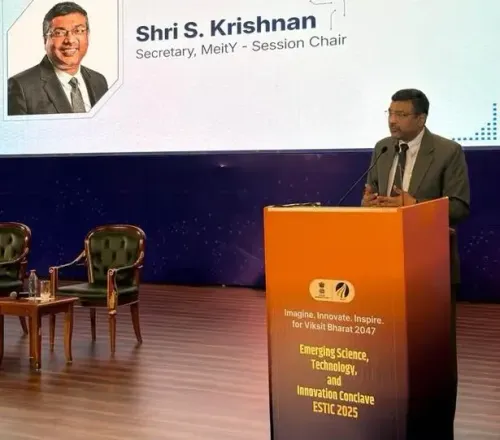
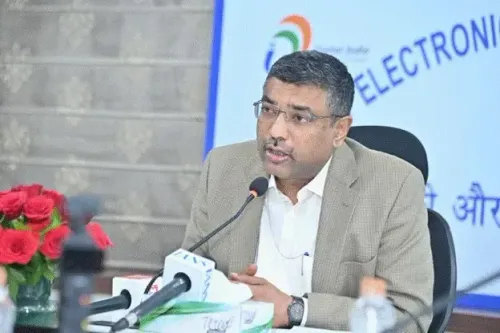
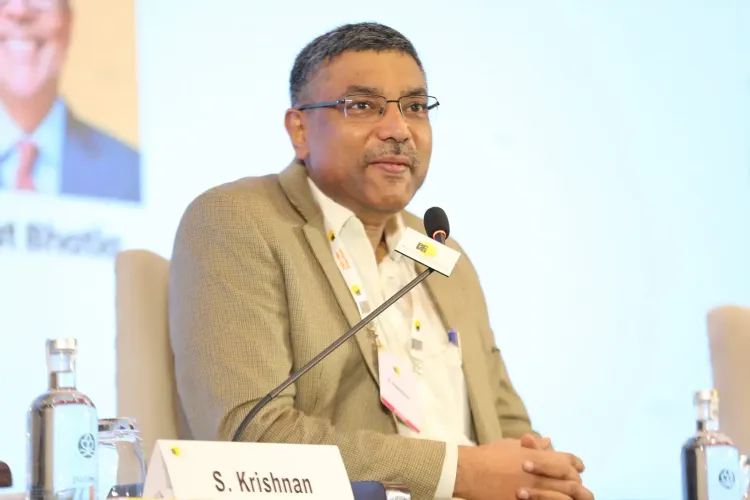
MeitY Secretary S. Krishnan on Sunday, 18 October 2026, said Artificial Intelligence holds the potential to transform healthcare delivery in India — from disease screening and medical diagnostics to remote ICU monitoring and AI-assisted surgical planning — and called for concerted action to make health services more accessible, affordable, and high-quality. He was speaking at the Tech Conclave on 'AI for Health & Assistive Technologies' in Varanasi, jointly organised by Software Technology Parks of India (STPI) and the Centre for Innovation, Incubation and Entrepreneurship (CIIE), IIT BHU.
Key Remarks from the MeitY Secretary
Delivering the keynote address, Krishnan underlined the importance of integrating AI education across disciplines and harnessing the convergence of technology, medical sciences and research to build practical, deployable solutions. He called for deeper collaboration among IIT BHU, STPI, industry stakeholders, and startups to develop scalable healthcare and assistive technology offerings.
'Artificial intelligence can play an important role in making healthcare more accessible, strengthening clinical decision-making and improving service delivery, particularly for communities with limited access to healthcare services,' Krishnan stated.
He also flagged the support structures available under the IndiaAI Mission and allied government programmes aimed at accelerating innovation in the sector. On the startup front, he stressed STPI's role in linking early-stage ventures with investors, venture capital networks, and market access pathways to sustain a broader innovation ecosystem.
STPI Director General's Perspective
STPI Director General Arvind Kumar reflected on India's technology journey over the past three decades and argued that the country now has a window to replicate its IT services success by nurturing indigenous AI innovation. He pointed to India's startup ecosystem as a model where young innovators have transitioned from job-seekers to job-creators, and stressed the importance of translational research, intellectual property creation, and market access in making that transition durable.
Kumar also highlighted STPI's network of 27 Centres of Entrepreneurship, emphasising the need to grow startup ecosystems beyond established technology hubs through tighter academia-industry-government collaboration.
The Broader Policy Context
The conclave brought together policymakers, academicians, healthcare professionals, and startup founders — a cross-section reflecting the Centre's push to treat AI health applications not merely as a technology project but as a public health imperative. This comes amid a wider national effort under the IndiaAI Mission to position India as a global leader in applied AI, with health identified as a priority vertical alongside agriculture and education.
Notably, India's public healthcare infrastructure continues to face challenges of reach and quality, particularly in tier-2 and tier-3 cities and rural areas — the very contexts in which AI-driven diagnostics and remote monitoring hold the most promise.
What Comes Next
The conclave's emphasis on collaboration between IIT BHU, STPI, and the startup community suggests follow-on pilots and incubation partnerships are likely. With the IndiaAI Mission already disbursing funding for applied research, stakeholders will watch whether the Varanasi conclave translates into concrete projects targeting underserved healthcare markets.
Point of View
But the gap between policy articulation and ground-level deployment remains wide. India has been talking about AI-driven diagnostics for years; the challenge is that most pilots remain confined to urban teaching hospitals, far from the underserved communities Krishnan invoked. The IndiaAI Mission provides a funding scaffold, but without mandated outcome metrics — patients reached, diagnostics delivered, costs reduced — the risk is that the Varanasi conclave becomes one more high-visibility event that generates decks rather than deployments. The signal to watch is whether STPI's 27 Centres of Entrepreneurship actually incubate products validated in rural or semi-urban settings, not just polished demos at the next conclave.
NationPress
18 Oct 2026
Frequently Asked Questions
What did MeitY Secretary S. Krishnan say about AI in healthcare?
Krishnan said AI can make healthcare more accessible, strengthen clinical decision-making, and improve service delivery — particularly for communities with limited access — through applications ranging from disease screening and diagnostics to remote ICU monitoring and AI-assisted surgical planning. He was speaking at the Tech Conclave on AI for Health & Assistive Technologies in Varanasi on 18 October 2026.
What is the Tech Conclave on AI for Health & Assistive Technologies?
It is a conclave jointly organised by Software Technology Parks of India (STPI) and the Centre for Innovation, Incubation and Entrepreneurship (CIIE), IIT BHU, in Varanasi, bringing together policymakers, academicians, healthcare professionals, and startup founders to discuss AI's role in healthcare and citizen well-being.
What is the IndiaAI Mission and how does it relate to healthcare?
The IndiaAI Mission is a government initiative aimed at fostering AI innovation across priority sectors, with healthcare identified as a key vertical. MeitY Secretary Krishnan highlighted it as a source of support for startups and researchers working on AI-driven health solutions.
What did STPI Director General Arvind Kumar say at the conclave?
Kumar reflected on India's three-decade technology journey and argued the country can replicate its IT services success through indigenous AI innovation. He highlighted STPI's network of 27 Centres of Entrepreneurship and called for expanding startup ecosystems beyond established technology hubs through stronger academia-industry-government collaboration.
Why does AI in healthcare matter for India specifically?
India's public healthcare infrastructure faces significant challenges of reach and quality in tier-2, tier-3, and rural areas. AI-driven diagnostics, remote monitoring, and assisted surgical planning offer scalable tools to serve populations that conventional infrastructure has historically underserved, making the MeitY push particularly relevant for equitable health access.