CM Himanta Plans Drones, Wider Gaja Mitra in Assam Budget 2026
Synopsis
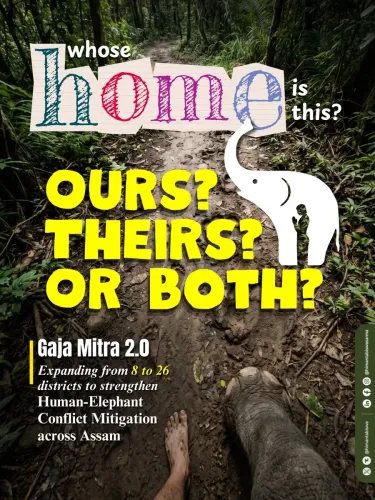
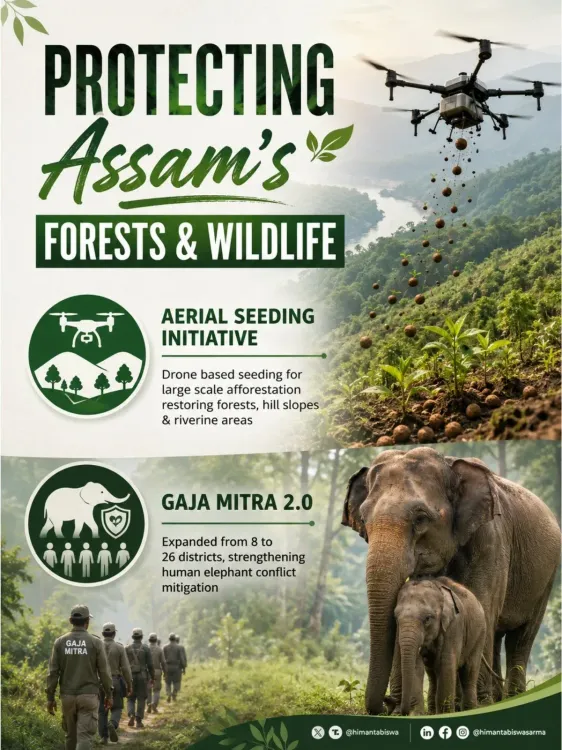
Assam CM Himanta Biswa Sarma has announced drone-led afforestation drives and a district-wide expansion of the Gaja Mitra human-elephant conflict scheme as part of Assam Budget 2026, combining technology adoption with community-based wildlife conservation.
Key Takeaways
CM Himanta Biswa Sarma announced on 10 July 2026 that Assam will use drones to conduct afforestation drives as part of Assam Budget 2026 .
The Gaja Mitra initiative, which addresses human-elephant conflict through community participation, will be expanded to more districts across the state.
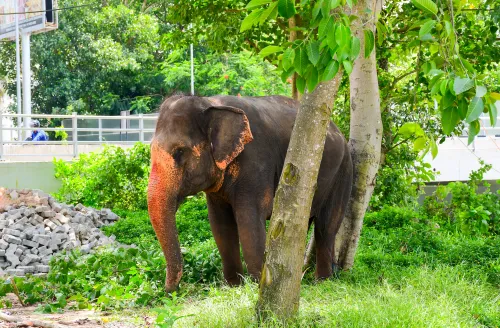
Assam has one of India's largest Asian elephant populations and has faced persistent human-wildlife conflict in forest-fringe areas.
The proposals continue a pattern of integrating digital tools and drones into Assam 's forest governance under successive state budgets.
District-wise rollout timelines and budget allocations for drone procurement and Gaja Mitra expansion are expected to be detailed in the full budget documents.
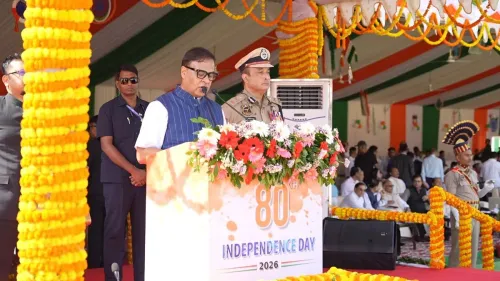
Assam Chief Minister Himanta Biswa Sarma on Friday, 10 July 2026, announced plans to deploy drones for afforestation drives and expand the state's Gaja Mitra initiative to additional districts, framing both moves as part of a technology-driven approach to environmental conservation under the Assam Budget 2026.
Context
Posting on X, CM Sarma stated: 'We are adopting technology to preserve our environment. We will use drones to undertake afforestation drives and expand our Gaja Mitra initiative to more districts.' The announcement was tagged #AssamBudget2026, signalling that both proposals are embedded in the state's fiscal priorities for the 2026-27 financial year.
Assam is home to one of India's largest populations of Asian elephants and carries significant forest cover across its districts. The state has long grappled with deforestation pressures and recurring human-elephant conflict in forest-fringe communities, making both announcements directly relevant to longstanding ecological challenges.
Policy Backdrop
Gaja Mitra is an Assam government scheme designed to address human-elephant conflict through community participation and monitoring in elephant habitats. The programme mobilises local communities living near elephant corridors to act as observers and first responders, reducing both crop damage and retaliatory harm to elephants.
The Assam government has run community-based elephant conflict mitigation programmes across multiple districts since the mid-2010s, and successive state budgets have progressively incorporated technology for afforestation and forest monitoring. The use of drones for aerial seeding and plantation monitoring has also been piloted in other Indian states under national green mission frameworks, lending the proposal a broader policy precedent.
Stakeholders and Impact
The communities most directly affected are those living on the edges of elephant habitats — farmers and villagers who bear the brunt of human-wildlife conflict. An expanded Gaja Mitra network would bring more such communities under a structured early-warning and co-existence framework.
The Assam Forest Department will be the primary implementing agency for both the drone-based afforestation programme and the district-level rollout of Gaja Mitra. Technology vendors for drone procurement and civil society organisations already partnering on wildlife conflict mitigation are also likely to be engaged. Broader beneficiaries include elephant populations whose habitats stand to gain from both expanded forest cover and reduced conflict pressure.
What's Next
Attention will now turn to the specifics of the Assam Budget 2026 documents — in particular, the district-wise rollout timelines for Gaja Mitra expansion and the budget head allocations earmarked for drone procurement and deployment. The pace at which the forest department scales these initiatives will determine whether the announcements translate into measurable gains in forest cover and a reduction in human-elephant conflict incidents across the state.
If implemented at scale, the combination of aerial afforestation technology and an enlarged community-monitoring network could position Assam as a model for technology-augmented wildlife governance in Northeast India.
Point of View
Though the absence of specific district names or procurement figures leaves room for scepticism about timelines. The expansion of Gaja Mitra is particularly significant: community-based conflict mitigation has stronger long-term track records than purely enforcement-driven approaches, and scaling it suggests the state is betting on participatory models. Taken together, the moves position Assam as an early mover on drone-augmented conservation in Northeast India, a region where forest governance has historically lagged behind western and southern states.
NationPress
8 Oct 2026
Frequently Asked Questions
What is the Gaja Mitra scheme in Assam?
Gaja Mitra is an Assam government initiative that works to reduce human-elephant conflict by engaging local communities living near elephant habitats as monitors and early-warning responders, helping protect both livelihoods and elephant populations.
How will Assam use drones for afforestation?
CM Himanta Biswa Sarma announced that Assam will deploy drones to carry out afforestation drives as part of Assam Budget 2026 , though specific operational details and district targets are yet to be released in the full budget documents.
Which districts will Gaja Mitra be expanded to?
CM Sarma 's announcement did not specify which districts will be added; the budget documents for 2026-27 are expected to carry the district-wise rollout plan for the expanded Gaja Mitra programme.
What is Assam Budget 2026 focusing on for the environment?
Based on CM Sarma 's statement, Assam Budget 2026 includes technology-driven environmental measures such as drone-based afforestation and an expanded community wildlife conflict scheme, consistent with the state's pattern of integrating digital tools into forest governance.
Why is human-elephant conflict a problem in Assam?
Assam hosts one of India's largest Asian elephant populations, and expanding human settlements near forest areas have increased contact between elephants and farming communities, leading to crop damage, property loss, and occasional casualties on both sides.