CM Himanta marks World Elephant Day with conservation pledge
Synopsis
On World Elephant Day, 12 August 2026, Assam Chief Minister Himanta Biswa Sarma called the elephant an inseparable part of the state's natural heritage and pledged commitment to conservation and peaceful coexistence between elephants and rural communities.
Key Takeaways
Assam CM Himanta Biswa Sarma posted a World Elephant Day message on 12 August 2026 emphasising conservation and human-elephant coexistence.
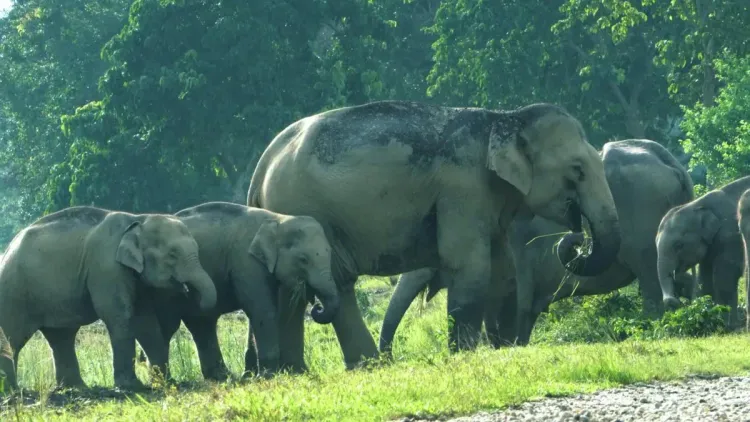
Assam hosts one of India's largest wild Asian elephant populations, spread across reserves in districts including Sonitpur, Nagaon, and Karbi Anglong .
The state has notified multiple elephant reserves under Project Elephant , the central government scheme launched in 1992 .
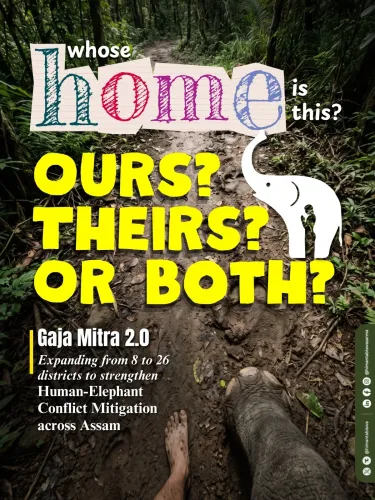
Human-elephant conflict driven by habitat fragmentation remains a persistent challenge for rural communities across Assam.
World Elephant Day has been observed globally every 12 August since 2012 to raise awareness on elephant conservation.
Assam's forests hold one of Asia's most significant wild elephant populations — and on World Elephant Day, 12 August 2026, Assam Chief Minister Himanta Biswa Sarma used the global observance to reaffirm the state's commitment to protecting them and easing the friction between elephants and the communities that share their landscape.
In his post, CM Sarma called the elephant 'an inseparable part of Assam's natural heritage and a symbol of the richness of our forests,' urging a renewed commitment to 'conservation and peaceful coexistence with our communities.' The phrasing is deliberate — coexistence, not just protection — signalling awareness of the real-world tension that defines Assam's relationship with its elephant population.
A state where forests and farms collide
Assam is among the most critical habitats for the Asian elephant in India, with significant herds ranging across its forest reserves and tea-garden corridors. But habitat fragmentation driven by agricultural expansion has pushed elephants into closer, and often deadly, contact with rural communities. Crop raids, property damage, and fatalities — on both sides — are a recurring reality across districts like Sonitpur, Nagaon, and Karbi Anglong.
The state has notified several elephant reserves under the Government of India's Project Elephant framework, the central scheme launched in 1992 to secure long-term wild elephant survival. Successive Assam governments have paired habitat protection with community awareness drives, using state forest department resources alongside central funding to manage conflict zones.
World Elephant Day as a policy signal
World Elephant Day, observed globally every 12 August since 2012, has become a fixture in the conservation calendar — and for state governments, a moment to publicly signal continuity of effort. For CM Sarma, the post lands at a time when the next assembly session's budget allocations for human-elephant conflict mitigation will be closely watched by conservationists and affected communities alike.
The language of 'peaceful coexistence' is the harder promise. Protecting elephants in a reserve is one thing; protecting them — and the farmers on the forest edge — simultaneously is where policy meets its most stubborn test in Assam.
On a day the world pauses to celebrate one of nature's most majestic animals, the real measure of that commitment will be written not in posts, but in the next budget line for the forest department.
Point of View
The stakes behind the symbolism are unusually concrete. The state sits at the sharp end of India's human-elephant conflict crisis, where habitat loss and agricultural encroachment have made coexistence a live policy problem, not a rhetorical one. The emphasis on 'peaceful coexistence with communities' rather than pure wildlife protection reflects a political calculation: forest-edge voters bear the heaviest cost of elephant encounters. Whether the next state budget translates this language into funded mitigation infrastructure will be the real test of the commitment signalled here.
NationPress
26 Sept 2026
Frequently Asked Questions
When is World Elephant Day observed?
World Elephant Day is observed every year on 12 August . It has been a global annual event since 2012 , dedicated to raising awareness about elephant conservation.
What is Project Elephant in India?
Project Elephant is a Government of India scheme launched in 1992 to protect wild elephants, preserve their habitats, and address human-elephant conflict. Assam has notified several elephant reserves under this framework.
How many elephants are in Assam?
Assam is home to one of the largest populations of Asian elephants in India. The exact current count is subject to periodic census updates by the state forest department and the central government.
What is human-elephant conflict in Assam?
Human-elephant conflict in Assam refers to recurring clashes between wild elephant herds and rural communities, typically involving crop raids, property damage, and fatalities. It is driven by habitat fragmentation and agricultural expansion into forest corridors.
What did Assam CM Himanta Biswa Sarma say on World Elephant Day 2026?
CM Himanta Biswa Sarma called the elephant 'an inseparable part of Assam's natural heritage' and reaffirmed the state's commitment to conservation and 'peaceful coexistence' between elephants and local communities on 12 August 2026 .