CM Himanta: Assam ranks 2nd in India's elephant population
Synopsis
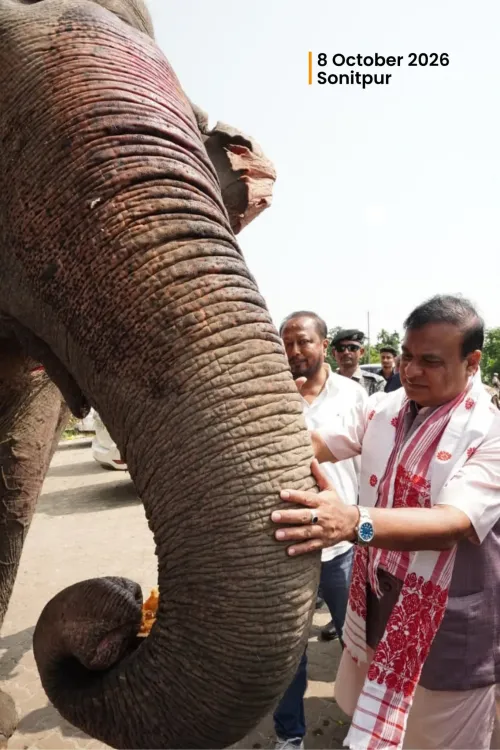
Assam CM Himanta Biswa Sarma, speaking at Jamugurihat on 8 October 2026, noted that Assam's forests shelter over 5,800 wild elephants, ranking the state second in India. He linked the state's wildlife richness to its sacred identity, invoking the goddess Kamakhya and Lord Ganesha.
Key Takeaways
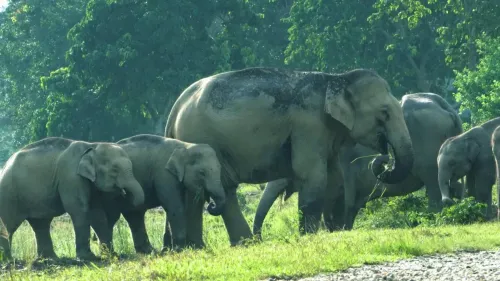
Assam ranks second in India for wild elephant population, with over 5,800 elephants in its forests.
CM Himanta Biswa Sarma made the remarks at Jamugurihat , Sonitpur district, on 8 October 2026 .
India holds the world's largest Asian elephant population, estimated above 30,000 ; Karnataka leads the state-wise count.
Jamugurihat lies on a key elephant corridor linking Bhutan's foothills to Assam's Brahmaputra lowlands.
CM Sarma framed Assam's elephant wealth through the lens of the state's Shakta heritage, invoking Maa Kamakhya and Gajanan .
More than 5,800 wild elephants roam the forests of Assam — making it the second-largest elephant-bearing state in India — a fact Assam Chief Minister Himanta Biswa Sarma highlighted with quiet pride at Jamugurihat on 8 October 2026.
Assam's 5,800-strong herd and what it signals
Posting from Jamugurihat in the Sonitpur belt — one of Assam's most ecologically significant elephant corridors — CM Sarma noted that the state's forests shelter over 5,800 elephants, placing Assam second only to Karnataka in the national count. The observation was woven with a cultural thread: 'Jahan Maa Kamakhya ka vaas ho, wahan Gajanan ka hona bhi swabhavik hai' — 'Where the goddess Kamakhya dwells, the presence of Gajanan (the elephant deity, Lord Ganesha) is only natural.' The remark tied Assam's wildlife reality to its deep Shakta and Shaiva religious identity, a connection locals in the Brahmaputra valley have long felt viscerally.
India's elephant map — where Assam stands
India holds the world's largest population of Asian elephants, with the national count hovering above 30,000. Karnataka leads with roughly 6,000-plus animals; Assam's 5,800+ places it firmly in second. The Northeast's river islands, tall grasslands, and dense sal forests provide critical habitat — and Assam's Kaziranga National Park and the Brahmaputra floodplains are among Asia's most important elephant landscapes. Maintaining that population, however, demands constant attention to human-elephant conflict, which remains one of the most pressing wildlife-management challenges in the state.
Why Jamugurihat matters to this story
Jamugurihat, a busy market town in Sonitpur district, sits at the edge of the Himalayan foothills where elephant movement between Bhutan and Assam's lowland forests is frequent. The region is both a flashpoint for human-elephant conflict and a corridor that conservationists consider irreplaceable. A senior state official highlighting elephant numbers here — rather than from a desk in Guwahati — underlines that the issue has ground-level political salience, not just conservation-report relevance.
Assam's forests carry a second world: one measured not in policy documents but in footprints the size of dinner plates. The question now is whether the pride in that number translates into the corridors, the compensation, and the coexistence frameworks the animals — and the communities alongside them — actually need.
Point of View
Reframing the elephant as 'Gajanan' rather than a menace is shrewd political communication. It also signals that the BJP's Northeast strategy increasingly integrates ecological stewardship with regional pride. Whether this soft messaging translates into harder policy — stronger corridors, faster compensation, reduced retaliatory killings — is the live test.
NationPress
8 Oct 2026
Frequently Asked Questions
Which state has the highest elephant population in India?
Karnataka has the highest wild elephant population in India, with over 6,000 elephants. Assam ranks second with more than 5,800.
How many elephants are in Assam?
Assam's forests are home to more than 5,800 wild elephants, making it the state with the second-largest elephant population in India.
Where is Jamugurihat located?
Jamugurihat is a market town in Sonitpur district, Assam, situated near the Himalayan foothills and an important elephant movement corridor between Bhutan and the Brahmaputra lowlands.
What is Assam's total wild elephant count in 2026?
According to Assam Chief Minister Himanta Biswa Sarma, as of October 2026, Assam has over 5,800 wild elephants roaming its forests.
Why is Assam significant for elephant conservation in India?
Assam's river islands, tall grasslands, and dense forests — particularly around Kaziranga and the Brahmaputra floodplains — are among Asia's most important Asian elephant habitats, supporting the second-largest state population in India.