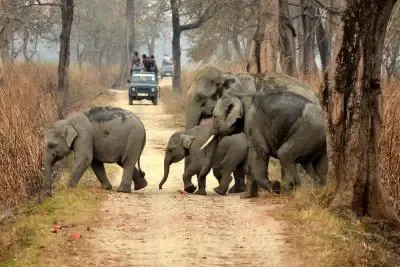
CM Himanta Expands Gaja Mitra to 26 Assam Districts

Synopsis
Assam Chief Minister Himanta Biswa Sarma has announced the expansion of Gaja Mitra, the state's human-elephant conflict mitigation scheme, from 8 to 26 districts. The move scales a community-government partnership model that the CM credited with changing how development and elephant welfare are balanced in the state.
Key Takeaways
CM Himanta Biswa Sarma announced the expansion of Gaja Mitra on July 16, 2026 .
The scheme will scale from 8 to 26 districts , adding 18 new districts across Assam .
Gaja Mitra is built on a community-government partnership model to reduce human-elephant conflict.
Assam hosts one of India's largest Asian elephant populations, making conflict mitigation a critical policy priority.
The expansion complements Project Elephant , the Government of India's centrally sponsored conservation scheme launched in 1992 .
Rural farming communities in elephant corridors are the primary beneficiaries of the expanded coverage.
Assam Chief Minister Himanta Biswa Sarma on Thursday, July 16, 2026, announced the expansion of the state's flagship human-elephant conflict mitigation programme, Gaja Mitra, from 8 to 26 districts, citing the scheme's success in fostering cooperation between local communities and the government to protect both people and elephants.
Context
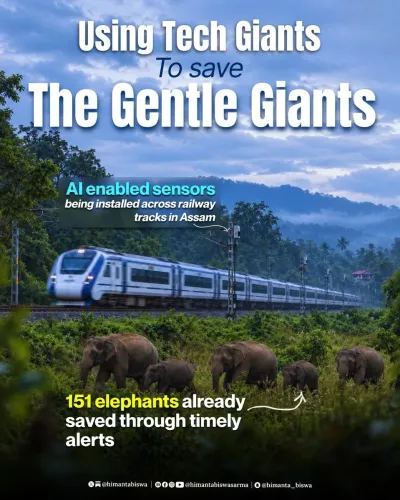
Posting on X, CM Sarma wrote that Assam has 'the privilege of sharing our land with the gentle giants,' acknowledging that 'too often, growth comes at the cost of their welfare.' He credited Gaja Mitra with 'demonstrating how communities and government can work together to reduce human-elephant conflict,' and confirmed the scheme would now be scaled to cover 18 additional districts across the state.
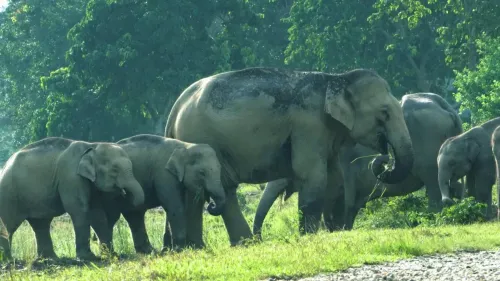
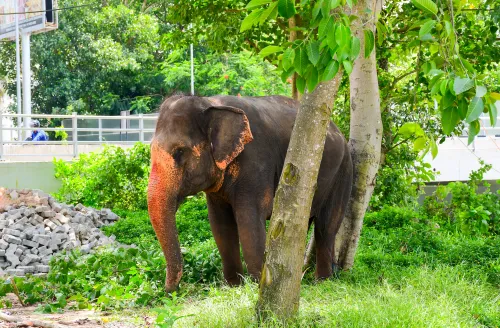
Assam is home to one of India's largest populations of Asian elephants, whose habitats increasingly overlap with agricultural land and human settlements, making human-elephant conflict a persistent challenge in rural areas.
Policy Backdrop
Gaja Mitra is an Assam government initiative built on a community-government partnership model designed to reduce incidents of conflict while improving elephant welfare. The programme reflects a broader philosophy of placing local communities at the centre of wildlife management rather than treating conservation as a purely top-down administrative function.
At the national level, Project Elephant — a centrally sponsored scheme launched by the Government of India in 1992 — has long provided the policy framework for elephant conservation, habitat protection, and conflict mitigation across the country. State-level programmes such as Gaja Mitra operate within and complement this broader architecture.
Similar community-based models have been adopted in Kerala, Karnataka, and Tamil Nadu, combining early-warning systems, habitat management, and awareness campaigns to manage conflict in elephant corridors.
Stakeholders and Impact
The primary beneficiaries of the expanded scheme are rural farming communities living along elephant corridors in the 18 newly included districts. These populations bear the heaviest burden of crop raids, property damage, and, in the most serious cases, loss of life that accompanies human-elephant conflict.
For elephants, the expansion signals a commitment to reducing retaliatory actions and improving coexistence conditions across a wider geographic footprint. Conservation practitioners and wildlife officials in the state are also expected to play a larger operational role as the programme scales.
The announcement aligns with the BJP-led state government's stated priority of balancing economic development in Northeast India with environmental stewardship — a tension that has grown sharper as agriculture and infrastructure expand into traditional wildlife habitats.
What's Next
The critical details to watch will be the rollout timeline, funding allocation, and administrative framework for bringing 18 additional districts under the Gaja Mitra umbrella. How the state government structures community engagement and trains local coordinators in the new districts will determine whether the programme's reported success can be replicated at scale.
State-level data on conflict incident trends — crop losses, human casualties, elephant deaths — following the expansion will serve as the clearest measure of whether the model holds beyond its original footprint. Observers will also watch for any enhanced coordination with Project Elephant authorities at the central level as the programme grows.
Point of View
If executed well, also positions Assam as a template for Northeast India at a time when the region's biodiversity corridors face mounting development pressure. The real test, however, lies in implementation: expanding from 8 to 26 districts is an administrative challenge as much as a conservation one.
NationPress
15 Oct 2026
Frequently Asked Questions
What is the Gaja Mitra scheme in Assam?
Gaja Mitra is an Assam government initiative that brings together local communities and government agencies to reduce human-elephant conflict and improve elephant welfare in the state.
How many districts will Gaja Mitra cover after expansion?
Following CM Himanta Biswa Sarma's announcement on July 16, 2026, Gaja Mitra will expand from 8 to 26 districts, adding 18 new districts across Assam.
What is human-elephant conflict and why is it a problem in Assam?
Human-elephant conflict refers to clashes between elephants and people — typically involving crop raids, property damage, or injuries — that arise when elephant habitats overlap with agricultural land. Assam, home to one of India's largest Asian elephant populations, faces this challenge acutely in rural areas.
How does Gaja Mitra relate to Project Elephant?
Project Elephant is a centrally sponsored scheme launched by the Government of India in 1992 for elephant conservation and conflict mitigation nationwide. Gaja Mitra is a state-level Assam programme that operates within this broader national framework, focusing on community-led solutions.
Which states in India have similar human-elephant conflict programmes?
Kerala, Karnataka, and Tamil Nadu have adopted comparable community-based models that combine early-warning systems, habitat management, and awareness campaigns to manage conflict in elephant corridors.