Punjab CM Office: Mawan-Dhiyan Satikar Yojana funds reach needy families
Synopsis
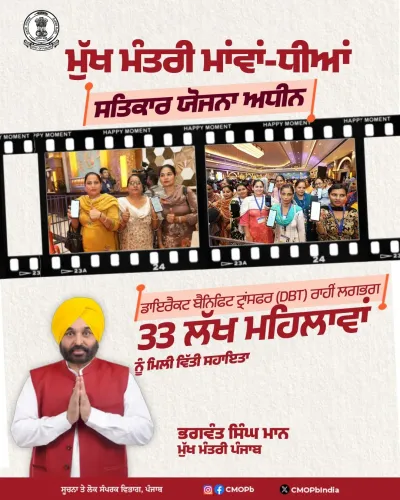
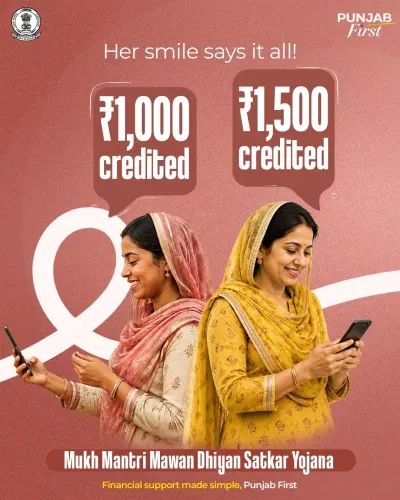
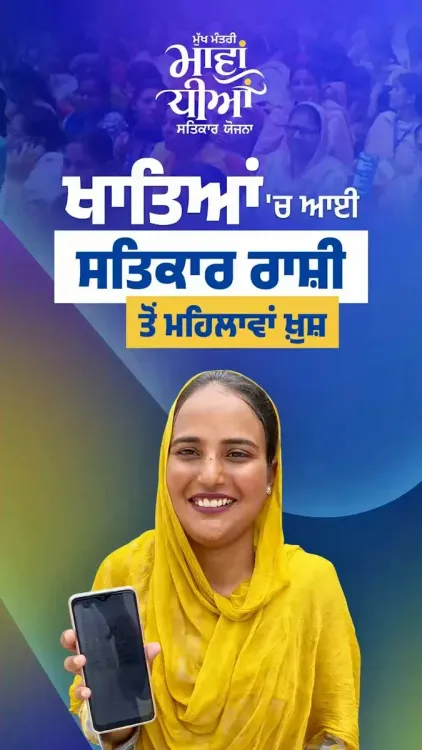
The Chief Minister's Office of Punjab shared beneficiary testimonials on 16 July 2026 highlighting the Mawan-Dhiyan Satikar Yojana, a state scheme delivering direct cash transfers to needy families with daughters. Women beneficiaries expressed happiness as the 'satikar rashi' reached their bank accounts.
Key Takeaways
The Chief Minister's Office of Punjab shared a video on 16 July 2026 featuring beneficiary testimonials for the Mawan-Dhiyan Satikar Yojana .
The scheme provides direct financial transfers — called satikar rashi (honour amount) — to needy families with daughters in Punjab.
Beneficiaries expressed happiness upon receiving funds directly in their bank accounts , reflecting the scheme's use of the Direct Benefit Transfer framework.
The scheme is part of Punjab's broader effort to address gender-linked economic vulnerability through targeted state welfare programmes.
Future disbursement cycles and independent evaluations of utilisation patterns will determine the scheme's long-term social impact.
The Chief Minister's Office of Punjab on Thursday, 16 July 2026, shared beneficiary testimonials highlighting the impact of the state government's Mawan-Dhiyan Satikar Yojana, a direct cash-transfer scheme targeting families with daughters from economically weaker sections.
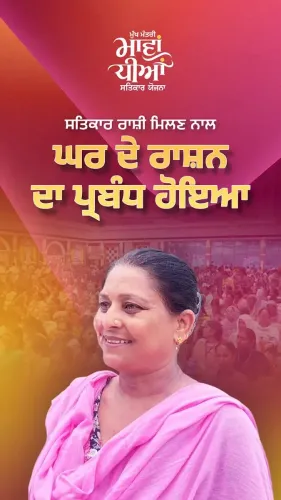
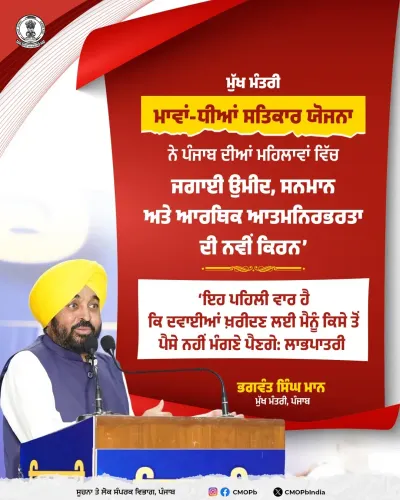
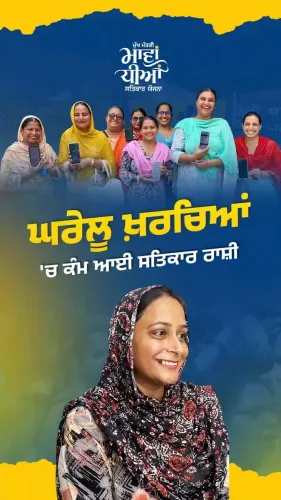
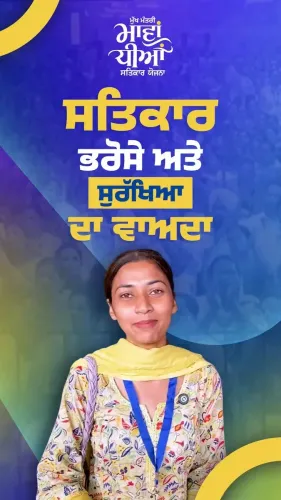
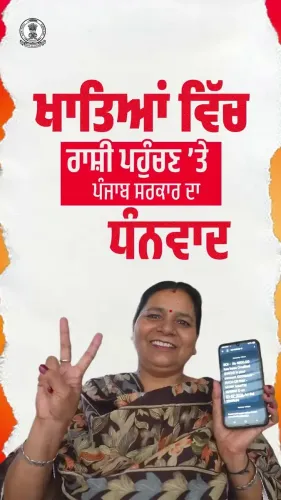
The post, shared in Punjabi, quotes women beneficiaries expressing their joy upon receiving the satikar rashi (honour amount) under the scheme. As the official account stated: 'When this amount reached the accounts of needy families, they appeared extremely happy.' The video accompanying the post features beneficiaries speaking about the financial assistance they received.
Context
The Mawan-Dhiyan Satikar Yojana — translating loosely as the 'Mothers and Daughters Respect Scheme' — is a Punjab government initiative designed to provide direct financial support to households with girl children. The scheme is part of a broader push by the state administration to address gender-linked economic vulnerability through targeted cash transfers. Beneficiary feedback shared via the Chief Minister's Office underscores the government's effort to communicate scheme outcomes directly to the public.Policy Backdrop
Indian states have significantly expanded direct-benefit transfer programmes in recent years, particularly those focused on girl-child welfare and women's economic empowerment. Such schemes aim to reduce the financial burden on families with daughters, counter son-preference biases, and improve household financial security for women. Punjab's Mawan-Dhiyan Satikar Yojana fits within this national pattern of gender-sensitive fiscal transfers administered through bank accounts, ensuring funds reach beneficiaries with reduced leakage. The use of direct bank transfers aligns with the broader Direct Benefit Transfer framework that has become standard practice across Indian states.Stakeholders and Impact
The primary beneficiaries of the scheme are needy families — particularly those from lower-income households — who have daughters. Women beneficiaries featured in the official communication described the satikar rashi as a meaningful source of support. The scheme's framing around 'respect' (satikar) is deliberate, positioning the financial transfer not merely as aid but as an acknowledgement of the dignity of mothers and daughters. For Punjab's rural and semi-urban poor, such transfers can play a meaningful role in meeting household expenses, supporting girls' education, or building modest savings.What's Next
The government is expected to continue periodic disbursement cycles under the scheme, with official communications likely to track beneficiary reach and satisfaction. Independent assessments of utilisation patterns and the scheme's broader social impact — including whether transfers translate into improved educational or health outcomes for girl children — will be important indicators of its long-term effectiveness. Observers will watch for announcements on expanded coverage or enhanced transfer amounts in future budget cycles.Point of View
The Punjab government signals a values-based welfare approach aimed at countering deep-rooted social biases. The scheme's long-term credibility, however, will hinge on transparent data on beneficiary numbers, transfer amounts, and measurable outcomes for girls.
NationPress
16 Jul 2026
Frequently Asked Questions
What is the Mawan-Dhiyan Satikar Yojana in Punjab?
The Mawan-Dhiyan Satikar Yojana is a Punjab government welfare scheme that provides direct financial transfers, called 'satikar rashi' or honour amount, to needy families with daughters, aiming to address gender-linked economic vulnerability.
Who benefits from the Mawan-Dhiyan Satikar Yojana?
The scheme targets economically weaker families in Punjab, particularly those with daughters. Women from these households receive the financial assistance directly in their bank accounts.
How is the Mawan-Dhiyan Satikar Yojana amount transferred?
The scheme uses the Direct Benefit Transfer framework, meaning the satikar rashi is credited directly into beneficiaries' bank accounts, reducing leakage and ensuring funds reach the intended recipients.
What did Punjab CMO post about the Satikar Yojana on 16 July 2026?
The Chief Minister's Office of Punjab shared a video featuring women beneficiaries expressing happiness after receiving their satikar rashi under the Mawan-Dhiyan Satikar Yojana, highlighting the scheme's reach into needy households.
Is the Mawan-Dhiyan Satikar Yojana similar to other Indian girl-child schemes?
Yes, it is part of a broader national pattern of state-level direct cash transfer programmes focused on girl-child welfare and women's economic empowerment, a trend that has grown significantly across Indian states in recent years.