CM Dhami Reaffirms Commitment to Sanatan Culture and Public Welfare
Synopsis
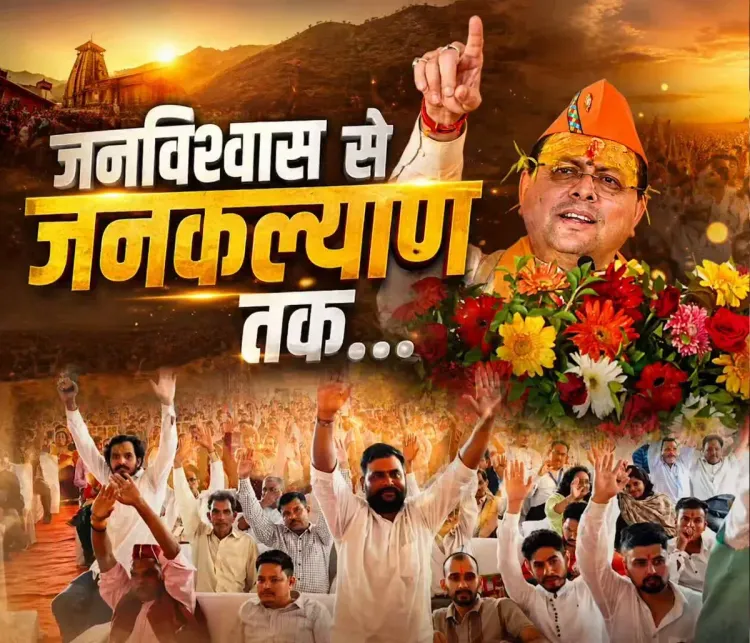
Uttarakhand Chief Minister Pushkar Singh Dhami on 16 July 2026 reaffirmed his government's commitment to protecting Sanatan culture's traditions while converting public aspirations into real outcomes, continuing a BJP governance pattern that links heritage promotion with administrative delivery.
Key Takeaways
CM Pushkar Singh Dhami posted on 16 July 2026 reaffirming commitment to Sanatan culture preservation and public welfare delivery.
The post used the phrase 'sankalp se siddhi' (from resolve to achievement), a formulation closely associated with BJP governance messaging since 2017 .
Uttarakhand is home to the Char Dham pilgrimage circuit, making cultural governance central to the state's identity and economy.
The BJP government in Uttarakhand has since 2017 advanced infrastructure and policy support for pilgrimage, Sanskrit education, and temple management.
The statement mirrors a broader pattern of BJP -led state governments integrating cultural heritage messaging with routine administrative communication.
Policy watchers will monitor upcoming assembly session allocations for cultural department schemes as a measure of follow-through.
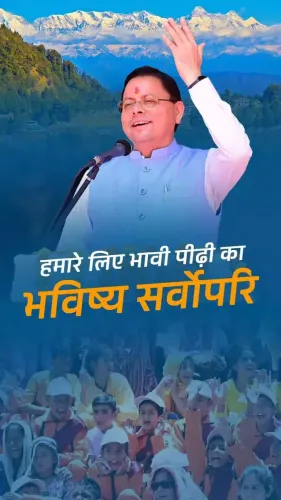
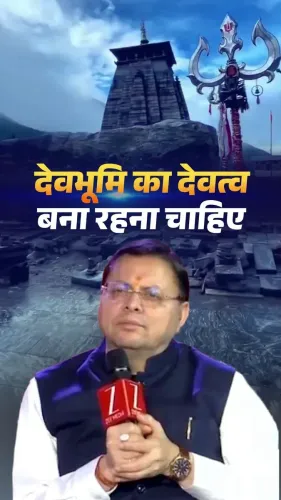
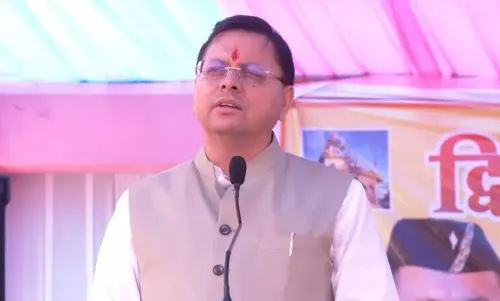
Uttarakhand Chief Minister Pushkar Singh Dhami on Thursday, 16 July 2026, reaffirmed his government's dual commitment to preserving the traditions of Sanatan culture and translating public aspirations into tangible outcomes, posting the message on X.
In the post, written in Hindi, CM Dhami stated: 'हमारी सरकार सनातन संस्कृति की गौरवशाली परंपराओं के संरक्षण एवं संवर्धन के साथ-साथ जनआकांक्षाओं को संकल्प से सिद्धि तक पहुंचाने के लिए पूर्ण प्रतिबद्धता के साथ निरंतर कार्य कर रही है।' — translated: 'Our government is continuously working with full commitment to protect and promote the glorious traditions of Sanatan culture, while also taking public aspirations from resolve to achievement.'
Context
Uttarakhand holds a unique position in India's cultural and religious landscape, home to major Hindu pilgrimage centres including the Char Dham sites — Badrinath, Kedarnath, Gangotri, and Yamunotri. For the state's BJP government, the promotion of Sanatan Dharma is both a governance priority and a cultural identity. CM Dhami, who has served as Chief Minister since 2021, has consistently framed state administration within this cultural context.
The phrase 'sankalp se siddhi' (from resolve to achievement) echoes a formulation used widely in BJP governance communications since 2017, signalling a deliberate alignment between cultural messaging and administrative delivery. The post accompanied a video, suggesting it may be part of a broader outreach or event communication.
Policy Backdrop
Since the BJP formed the government in Uttarakhand in 2017, the administration has advanced infrastructure projects supporting the Char Dham pilgrimage circuit, including road connectivity and facilities for pilgrims. Cultural preservation efforts have extended to Sanskrit education, temple management, and support for traditional practices across the hill state.
This messaging pattern mirrors statements regularly issued by BJP chief ministers across states such as Uttar Pradesh and Madhya Pradesh, where cultural heritage promotion is integrated into routine governance communication. Since 2014, this approach has become a visible feature of BJP-led state administrations at the national level.
Stakeholders and Impact
The primary stakeholders of this policy direction are Hindu devotees, pilgrims visiting Uttarakhand's sacred sites, and communities dependent on the religious tourism economy. Sanskrit scholars, temple trusts, and cultural institutions in the state also stand to benefit from policy attention in this domain.
For the broader public, the 'public aspirations' dimension of CM Dhami's statement signals that the government views cultural governance and welfare delivery as complementary rather than competing priorities. This framing is designed to appeal across both devout and development-focused constituencies in the state.
What's Next
Observers will watch for concrete follow-through in the form of state budget allocations or notifications from the Uttarakhand cultural department on schemes relating to Sanskrit education, temple management, or pilgrimage infrastructure in the coming assembly session. Any legislative steps on religious site governance or cultural education policy would be seen as a direct expression of the commitment articulated in this post.
The statement positions CM Dhami's administration ahead of what could be a broader policy communication cycle, with cultural preservation likely to remain a central theme in Uttarakhand's governance narrative through the remainder of the current term.
Point of View
Using Sanatan Dharma as both a value statement and a political signal. The pairing of heritage preservation with welfare delivery — 'sankalp se siddhi' — reflects a deliberate strategy to hold together two distinct voter constituencies: the devout and the development-aspirant. For Uttarakhand specifically, where the pilgrimage economy is a major driver of livelihoods, this is not merely symbolic; it carries direct policy implications for budget priorities. The post keeps Dhami's administration visible on the cultural front ahead of what could be a busy legislative calendar.
NationPress
15 Oct 2026
Frequently Asked Questions
What did Uttarakhand CM Pushkar Singh Dhami say about Sanatan culture?
CM Dhami stated on 16 July 2026 that his government is continuously working with full commitment to protect and promote the glorious traditions of Sanatan culture, while also taking public aspirations from resolve to achievement.
What is Sanatan Dharma and why is it significant in Uttarakhand politics?
Sanatan Dharma refers to the eternal traditions of Hinduism. Uttarakhand is home to the Char Dham pilgrimage circuit and is considered a sacred state, making cultural and religious governance a central political issue for the BJP-led administration.
What does 'sankalp se siddhi' mean in BJP governance?
'Sankalp se siddhi' translates to 'from resolve to achievement' and is a phrase associated with BJP governance messaging, used to signal that policy commitments will be translated into concrete outcomes for citizens.
What cultural schemes has the Uttarakhand government pursued under CM Dhami?
The Uttarakhand government has focused on infrastructure for the Char Dham pilgrimage circuit, Sanskrit education, and temple management as part of its broader cultural preservation agenda under CM Dhami since 2021.
How does Uttarakhand's cultural policy compare with other BJP-ruled states?
Uttarakhand's approach mirrors that of BJP-governed states like Uttar Pradesh and Madhya Pradesh, where cultural heritage promotion is integrated with administrative delivery — a pattern visible across BJP state governments since 2014.