CM Dhami: 34,000 Govt Jobs Filled Under Anti-Cheating Law
Synopsis
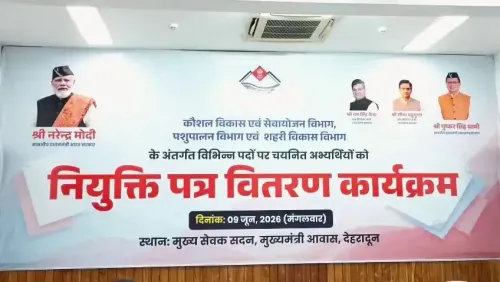
Uttarakhand CM Pushkar Singh Dhami claimed on 16 July 2026 that his government provided jobs to over 34,000 youth in four years through fair recruitment after enacting the country's strictest anti-cheating law, tagging PM Modi and senior BJP leaders in the post.
Key Takeaways
CM Pushkar Singh Dhami claimed on 16 July 2026 that 34,000-plus government jobs were filled in Uttarakhand over the past four years.
The jobs were reportedly provided through transparent, merit-based processes following the state's landmark anti-cheating legislation.
Uttarakhand enacted the Uttarakhand Competitive Examination (Measures for Prevention and Control of Unfair Means) Act in 2023 , described as India's strictest state-level anti-cheating law.
The 34,000 figure is the government's own claim and has not been independently verified from established public records.
CM Dhami tagged PM Narendra Modi , Amit Shah , Rajnath Singh , and BJP handles, signalling an intent to project the state's governance record centrally.
Multiple BJP-governed states have enacted similar anti-cheating laws amid nationwide paper-leak controversies.
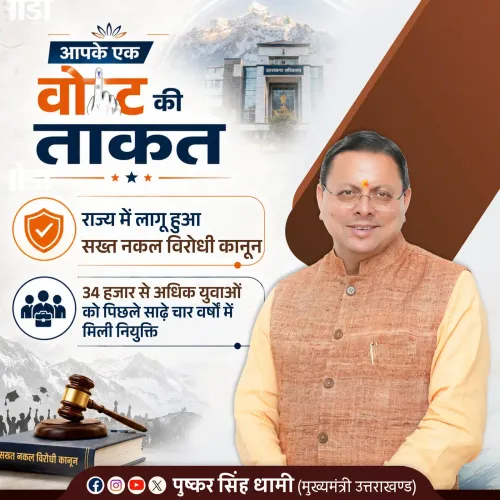
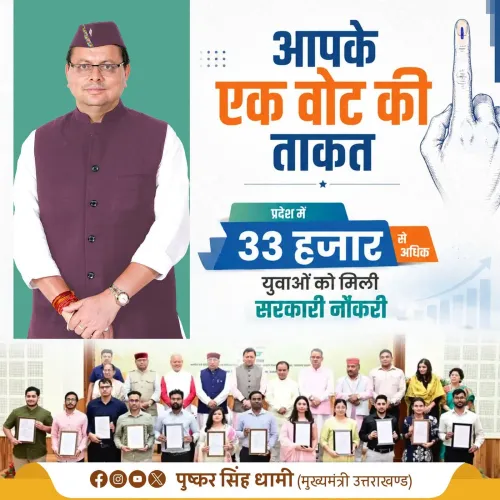
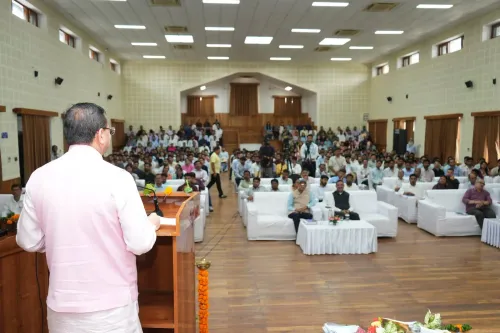
Uttarakhand Chief Minister Pushkar Singh Dhami on Thursday, 16 July 2026, claimed that his government has provided government jobs to more than 34,000 youth through transparent and fair processes over the past four years — a period that followed the enactment of what he described as the country's strictest anti-cheating law.
Posting in Hindi on X, CM Dhami wrote: 'देश का सबसे सख्त नकल विरोधी कानून लागू करने के बाद पिछले चार वर्षों में हमारी सरकार ने 34 हजार से अधिक युवाओं को पारदर्शी एवं निष्पक्ष प्रक्रिया के माध्यम से सरकारी नौकरियां प्रदान की हैं।' ['After implementing the country's strictest anti-cheating law, our government has provided government jobs to more than 34,000 youth through a transparent and fair process in the past four years.'] He added that this stands as proof of his government's 'clear intent, transparent recruitment system, and firm commitment to ensuring merit-based opportunities.'
Context
The post comes amid sustained national scrutiny over examination paper leaks and recruitment irregularities that have roiled states across India. Uttarakhand has positioned itself as a model of reform, with CM Dhami tagging Prime Minister Narendra Modi, Home Minister Amit Shah, Defence Minister Rajnath Singh, and the BJP's national and state handles in the post — signalling a deliberate effort to showcase the state's governance record to the party's central leadership.
The claim of 34,000-plus appointments over four years is the government's own figure and has not been independently verified from established public records. NationPress notes this caveat while reporting the announcement.
Policy Backdrop
In 2023, Uttarakhand enacted the Uttarakhand Competitive Examination (Measures for Prevention and Control of Unfair Means) Act, widely cited as the most stringent state-level anti-cheating legislation in the country. The law prescribes severe penalties — including imprisonment and heavy fines — for candidates, paper-setters, or officials found guilty of malpractice in competitive examinations.
The legislation was a direct response to a series of recruitment exam scandals in the state that had eroded public trust and triggered protests among job aspirants. Multiple BJP-governed states have since moved to enact or strengthen similar laws, aligning with the Centre's broader push for digital transparency, biometric verification, and zero-tolerance policies in public examinations.
Stakeholders and Impact
Uttarakhand's youth and government job aspirants are the primary beneficiaries cited in the post. The state has a relatively young demographic and a significant portion of its workforce competes for public-sector roles, making recruitment integrity a politically and socially sensitive issue.
If the government's figures are borne out, the appointments would represent a meaningful addition to the state's public workforce. Aspirants, civil society groups, and opposition parties are likely to scrutinise the data for details on which departments absorbed the recruits, the nature of the posts, and the timelines of selection.
What's Next
Attention will now turn to Uttarakhand's forthcoming recruitment notifications and the enforcement record under the 2023 anti-cheating Act — including conviction rates and any legal challenges filed against it. CM Dhami's decision to amplify the announcement by tagging the Prime Minister and senior Union ministers suggests the state may seek to hold up its recruitment model as a template for other states grappling with exam-malpractice controversies. How the Centre responds — and whether the figures are corroborated through official data releases — will determine the broader political and policy resonance of this claim.
Point of View
Particularly as paper-leak scandals have become a political liability for ruling parties across India. By tagging the Prime Minister and senior Union ministers, Dhami is positioning Uttarakhand as a proof-of-concept for the party's merit-and-transparency pitch ahead of future electoral cycles. The claim of 34,000 jobs, however, will face scrutiny — the absence of independently verified data leaves room for opposition challenges. Broader credibility will hinge on whether enforcement outcomes under the 2023 anti-cheating Act, including prosecutions and convictions, are made public.
NationPress
15 Oct 2026
Frequently Asked Questions
What is the Uttarakhand anti-cheating law CM Dhami is referring to?
It is the Uttarakhand Competitive Examination (Measures for Prevention and Control of Unfair Means) Act, enacted in 2023 and described as the strictest state-level anti-cheating legislation in India, prescribing severe penalties for exam malpractice.
How many government jobs did Uttarakhand fill in the last four years according to CM Dhami?
CM Dhami claimed that more than 34,000 government jobs were provided to youth in Uttarakhand over the past four years through transparent and fair recruitment processes.
Is the 34,000 government jobs figure verified?
The figure of 34,000 jobs is the Uttarakhand government's own claim as stated by CM Dhami on X; it has not been independently confirmed from established public records as of the date of this report.
Why did CM Dhami tag PM Modi and other BJP leaders in his post?
Dhami tagged Prime Minister Narendra Modi, Home Minister Amit Shah, Defence Minister Rajnath Singh, and BJP's national and state handles to highlight Uttarakhand's governance record to the party's central leadership, signalling a broader political messaging intent.
What broader pattern does Uttarakhand's anti-cheating law fit into?
Several BJP-governed states have enacted stringent anti-cheating laws after repeated paper-leak scandals undermined public confidence in recruitment, aligning with the Centre's push for digital transparency and zero-tolerance policies in public examinations.