India reaffirms Montreal Protocol commitment at OEWG48 in Bangkok
Synopsis
At a critical preparatory session of the Montreal Protocol in Bangkok, India pushed for more than just compliance — it called for a structural, long-term approach to phasing down HFCs and out HCFCs. With India's cooling sector expanding rapidly, the country's negotiating stance at OEWG48 will carry real weight when binding phase-down deadlines are finalised.
Key Takeaways
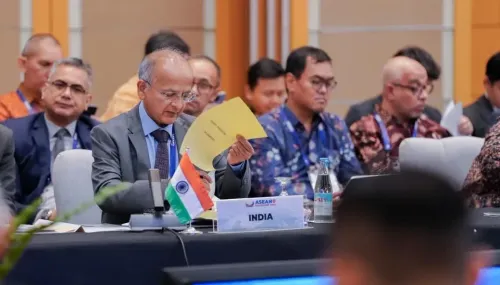
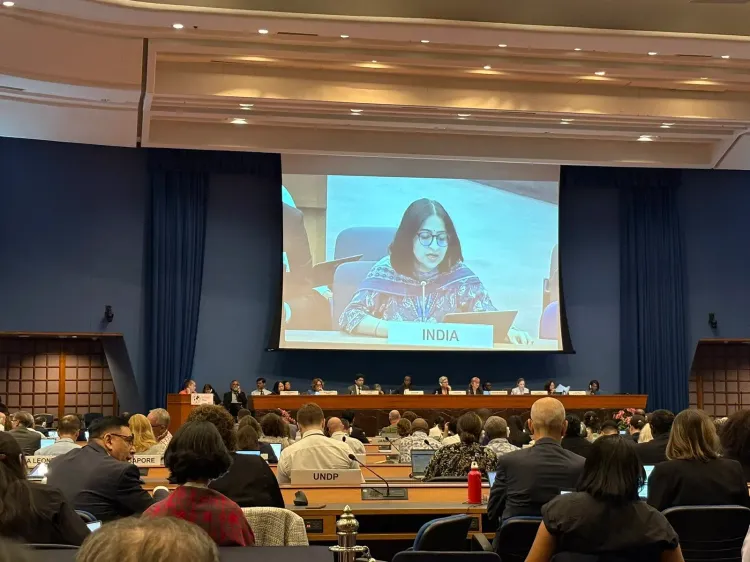
Jagpreet Kaur , First Secretary of the Indian Embassy in Thailand , represented India at OEWG48 in Bangkok from 13–17 July 2026 .
India called for a 'holistic approach' to phase out HCFCs and phase down HFCs under the Kigali Amendment .
The Montreal Protocol , adopted on 16 September 1987 , regulates nearly 100 man-made ozone-depleting chemicals and has achieved universal ratification.
India, as an Article 5 (developing) country , stressed the need for technology transfer and financial support alongside compliance obligations.
Outcomes from OEWG48 will shape binding decisions at the next full Meeting of the Parties to the Montreal Protocol.
Jagpreet Kaur, First Secretary of the Indian Embassy in Thailand, on 17 July 2026 underscored India's firm commitment to implementing the Montreal Protocol at the 48th meeting of the Open-Ended Working Group (OEWG48) of Parties to the Montreal Protocol, being held in Bangkok, Thailand from 13–17 July 2026. Kaur made interventions across multiple agenda items, drawing attention to the challenges faced by developing nations as the global community enters a critical phase of the Kigali Amendment.
India's Key Interventions at OEWG48
According to the Embassy of India in Thailand, which shared the update on social media platform X, Kaur's interventions highlighted the need for a 'holistic approach that goes beyond mere compliance.' The Embassy noted that India emphasised 'long-term strategies for sustaining the phase-out of Hydrochlorofluorocarbons (HCFCs) and phase-down of Hydrofluorocarbons (HFCs).' These chemicals are central to the Kigali Amendment, which entered into force in 2019 and targets the gradual reduction of HFCs — potent greenhouse gases widely used in refrigeration and air conditioning.
What the Montreal Protocol Requires
Adopted on 16 September 1987, the Montreal Protocol on Substances that Deplete the Ozone Layer is among the most successful multilateral environmental agreements in history, having achieved universal ratification — a distinction shared by very few international treaties. It regulates the production and consumption of nearly 100 man-made chemicals classified as Ozone-Depleting Substances (ODS). Under the Protocol, all signatory nations carry binding, time-targeted, and measurable obligations, including annual data reporting, national licensing systems for ODS trade, and phased elimination of controlled substances.
Article 5 Countries and the Kigali Challenge
Developing nations, referred to as 'Article 5 countries' under the Protocol, operate on differentiated timelines compared to developed nations — a recognition of their economic constraints and developmental priorities. As an Article 5 country, India has consistently argued for adequate technology transfer and financial support to meet its phase-down commitments. Notably, this is a recurring tension at OEWG sessions: developed country parties push for faster timelines while Article 5 nations stress the need for enabling conditions. India's interventions at OEWG48 appear to reinforce this position, calling for structural solutions rather than compliance-only frameworks.
Why This Meeting Matters
The OEWG48 session serves as a preparatory platform ahead of the full Meeting of the Parties, where binding decisions are made. Discussions at Bangkok are expected to shape negotiating positions on HFC phase-down schedules, financing mechanisms under the Multilateral Fund, and technical assistance for developing economies. For India — one of the world's largest consumers of HFCs given its rapidly expanding cooling sector — the stakes are considerable. The country's domestic industry is in the midst of transitioning to low-global-warming-potential alternatives, a process that requires both investment and regulatory clarity.
What Comes Next
Outcomes from OEWG48 will feed into the agenda of the next full Meeting of the Parties to the Montreal Protocol. India is expected to continue advocating for flexibility provisions and enhanced support for Article 5 countries as HFC phase-down deadlines approach in the coming years.
Point of View
Multilateral financing, alternative supply chains — remain unevenly distributed. India's cooling demand is structurally rising, driven by urbanisation and climate change, which means HFC phase-down is not an abstract treaty obligation but an industrial policy challenge. What mainstream coverage often misses is that the pace of the Kigali Amendment's implementation will directly shape India's refrigeration and air-conditioning manufacturing sector, which employs hundreds of thousands. The 'holistic approach' India advocates is not diplomatic boilerplate — it is a demand for the global framework to keep pace with ground realities that compliance-only metrics cannot capture.
NationPress
17 Jul 2026
Frequently Asked Questions
What is the OEWG48 meeting and why is India participating?
The 48th Open-Ended Working Group (OEWG48) of Parties to the Montreal Protocol is a preparatory meeting held in Bangkok from 13–17 July 2026, where countries discuss implementation of ozone-layer protection commitments. India is participating to advance its positions on HFC phase-down timelines and support mechanisms for developing nations ahead of binding decisions at the full Meeting of the Parties.
What is the Kigali Amendment to the Montreal Protocol?
The Kigali Amendment, adopted in 2016 and in force since 2019, extended the Montreal Protocol's scope to include the phase-down of Hydrofluorocarbons (HFCs) — potent greenhouse gases used in refrigeration and air conditioning. It sets differentiated timelines for developed and developing countries to reduce HFC consumption and production.
What are Article 5 countries under the Montreal Protocol?
Article 5 countries are developing nations that operate under extended timelines for phasing out ozone-depleting substances, in recognition of their economic and developmental constraints. India is an Article 5 country and has consistently called for adequate financial and technical support to meet its obligations under both the Montreal Protocol and the Kigali Amendment.
Why does HFC phase-down matter specifically for India?
India is one of the world's largest and fastest-growing consumers of HFCs, driven by rapid expansion in its cooling, refrigeration, and air-conditioning sectors. Phasing down HFCs requires transitioning to low-global-warming-potential alternatives, which involves significant industrial investment and regulatory change, making the terms of international support critical for India.
What happens after OEWG48?
The outcomes and negotiating positions developed at OEWG48 will feed into the agenda of the next full Meeting of the Parties to the Montreal Protocol, where binding decisions on phase-down schedules and financing mechanisms will be made. India is expected to continue pressing for flexibility provisions and enhanced multilateral support for Article 5 countries.