Historic Milestone: Kalpakkam Fast Breeder Reactor Achieves Criticality, Modi Hails Breakthrough
Synopsis
India's Prototype Fast Breeder Reactor at Kalpakkam has achieved criticality, marking the most significant advance in India's three-stage nuclear programme in decades. PM Modi called it a historic milestone during Mann Ki Baat on April 26, 2025, highlighting that this 500 MWe indigenously built reactor breeds its own fuel and unlocks India's massive thorium reserves.
Key Takeaways
India's Prototype Fast Breeder Reactor (PFBR) at Kalpakkam, Tamil Nadu achieved criticality, successfully sustaining a self-sustaining nuclear chain reaction.
PM Narendra Modi hailed the milestone during the 133rd episode of Mann Ki Baat on April 26, 2025 , calling it a historic milestone in India's nuclear journey.
The 500 MWe sodium-cooled reactor uses mixed oxide (MOX) fuel and breeds more fissile material than it consumes, advancing India's three-stage nuclear programme's second stage .
The reactor is built entirely on Swadeshi indigenous technology by IGCAR under the Department of Atomic Energy with no foreign design transfer.
The PFBR directly unlocks Stage Three of India's nuclear programme, targeting the use of India's 300,000-plus tonne thorium reserves for long-term energy security.
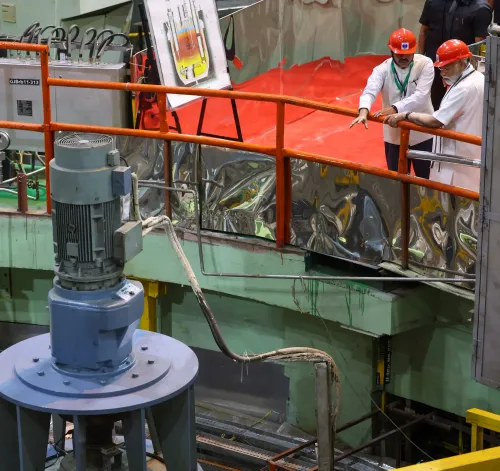
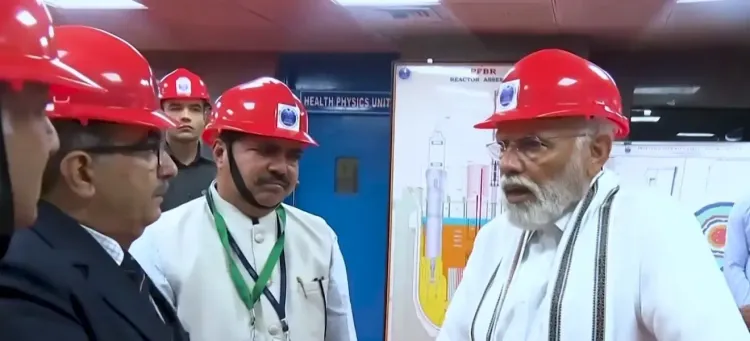
PM Modi personally witnessed the core loading of the reactor in March 2024 at Kalpakkam, underscoring the political priority placed on this programme.
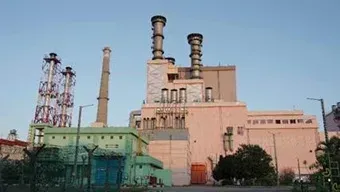
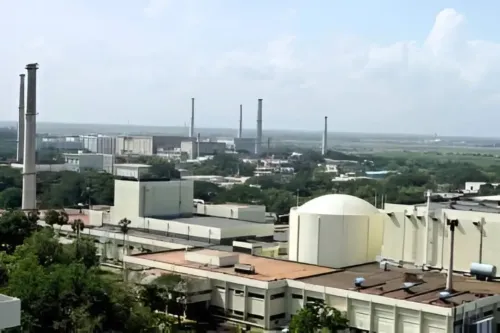
New Delhi, April 26, 2025: India's Prototype Fast Breeder Reactor (PFBR) at Kalpakkam, Tamil Nadu has achieved criticality — a landmark moment in the country's three-stage civil nuclear programme. Prime Minister Narendra Modi on Sunday described the development as a historic milestone in India's nuclear energy journey, celebrating the achievement as a triumph of indigenous science and technology during the 133rd episode of Mann Ki Baat.
What Criticality Means for India's Nuclear Future
Achieving criticality means the reactor has successfully sustained a self-sustaining nuclear chain reaction — the critical threshold that marks the formal beginning of a reactor's operational phase. This is not merely a technical milestone; it is the gateway to India unlocking an entirely new era of energy independence.
The 500 MWe sodium-cooled fast breeder reactor is uniquely designed to produce, or breed, more fissile material than it consumes. It operates on mixed oxide (MOX) fuel, combining uranium and plutonium. This design directly enables the third stage of India's nuclear programme, which aims to harness the country's vast thorium reserves — estimated at over 300,000 tonnes, among the largest in the world — for long-term, sustainable energy security.
PM Modi's Remarks at Mann Ki Baat
Speaking during his monthly radio programme, Prime Minister Modi said that despite the hustle and bustle of elections, the country had shared happiness over the achievements of its scientists. He called the PFBR's criticality a big achievement of the country.
Modi stated that India has always viewed science as linked with the nation's progress, and that the civil nuclear programme has made significant contributions to industrial growth, the energy sector, and the health sector. He noted that the programme has provided immense assistance to everyone from farmers to modern innovators.
Modi specifically underscored the Swadeshi (indigenous) nature of the reactor, emphasising that it was built entirely using Indian technology and expertise — a point of national pride given the technological embargoes India faced after its 1974 Pokhran-I and 1998 Pokhran-II nuclear tests.
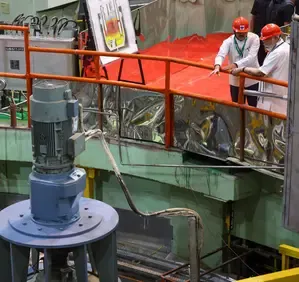
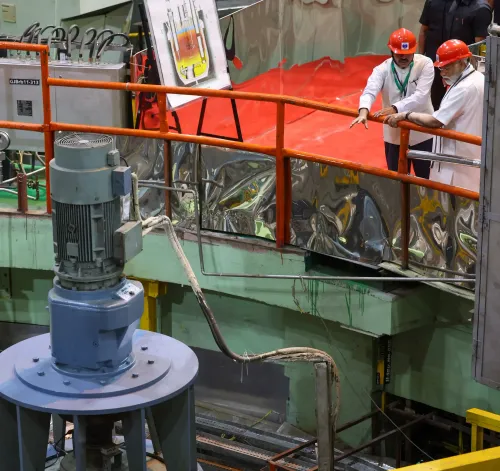
He also recalled personally witnessing the core loading of the reactor in March 2024 at Kalpakkam, congratulating all those who made an invaluable contribution to India's nuclear programme and stating that their efforts would give new energy to the resolution of a Viksit Bharat.
India's Three-Stage Nuclear Programme: The Strategic Context
The PFBR's criticality is a pivotal step in the three-stage nuclear programme conceived by Dr. Homi Bhabha in the 1950s. The first stage involved Pressurised Heavy Water Reactors (PHWRs) using natural uranium. The second stage — now advancing with the PFBR — uses fast breeder reactors to generate plutonium from spent fuel. The third stage will deploy Advanced Heavy Water Reactors (AHWRs) fuelled primarily by thorium.
India's strategic rationale is clear: the country has limited uranium reserves but holds some of the world's richest thorium deposits, primarily concentrated in Kerala, Jharkhand, and Odisha. By mastering the fast breeder cycle, India is building a self-reliant nuclear fuel chain that could power the country for centuries without dependence on uranium imports.
Notably, the Indira Gandhi Centre for Atomic Research (IGCAR) in Kalpakkam, operating under the Department of Atomic Energy (DAE), has led this project over decades — surviving international sanctions, funding constraints, and complex engineering challenges entirely through domestic expertise.
Why This Achievement Matters Beyond Energy
The PFBR's success carries implications far beyond electricity generation. It signals India's arrival as one of a handful of nations — alongside Russia, France, China, and Japan — capable of operating fast breeder reactor technology. Russia's BN-800 and BN-1200 reactors and China's CFR-600 are the closest global comparators, but India's programme is entirely self-developed without foreign reactor design transfer.
From an energy security standpoint, India currently imports over 85% of its crude oil and remains heavily dependent on coal for electricity. The nuclear programme, if scaled, could dramatically reduce this import burden. The government's target of achieving 100 GW of nuclear capacity by 2047 — part of the Viksit Bharat vision — now has a more credible technological foundation.
Critics and independent energy analysts have pointed out that the PFBR project faced repeated delays since its original 2010 commissioning target, raising questions about the pace of scaling up. The gap between achieving criticality and achieving full commercial operation remains a critical watch point for India's energy planners.
What Comes Next
Following criticality, the reactor will undergo a phased power ramp-up before reaching full commercial operation. The Nuclear Power Corporation of India Limited (NPCIL) and IGCAR are also working on plans for additional fast breeder reactors, with proposals for six more FBRs at various stages of planning.
As India accelerates its clean energy transition ahead of its 2070 net-zero commitment, the fast breeder reactor programme represents one of the most consequential technological bets the country has made. The world will be watching whether India can convert this criticality milestone into gigawatts of carbon-free power within the next decade.
Point of View
The execution gap between milestone announcements and commercial-scale delivery demands scrutiny. The deeper story is not just that India has a fast breeder reactor — it is whether India can build fast breeder reactors fast enough to matter in its energy transition.
NationPress
15 Oct 2026
Frequently Asked Questions
What does it mean that the Kalpakkam fast breeder reactor achieved criticality?
Achieving criticality means the reactor has successfully initiated and sustained a self-sustaining nuclear chain reaction, marking the formal beginning of its operational phase. This is the critical technical threshold before a reactor can begin generating electricity at scale.
What is the Prototype Fast Breeder Reactor (PFBR) at Kalpakkam?
The PFBR is a 500 MWe sodium-cooled reactor built entirely with indigenous Indian technology at Kalpakkam, Tamil Nadu, under the Department of Atomic Energy. It is designed to breed more fissile plutonium than it consumes, enabling India's second stage of its three-stage nuclear programme.
Why is the fast breeder reactor important for India's energy security?
The PFBR is central to India's long-term energy strategy because it paves the way for the third stage of the nuclear programme, which will use India's vast thorium reserves — among the world's largest — as fuel. This could make India self-sufficient in nuclear fuel for centuries.
What did PM Modi say about the Kalpakkam reactor in Mann Ki Baat?
PM Modi called the PFBR's criticality a historic milestone in India's nuclear energy journey during the 133rd episode of Mann Ki Baat on April 26, 2025. He also recalled personally witnessing the reactor's core loading in March 2024 and congratulated all scientists involved.
Which countries have fast breeder reactor technology similar to India's PFBR?
Only a handful of nations operate fast breeder reactors, including Russia with its BN-800 and BN-1200 reactors, and China with its CFR-600. India's PFBR is notable because it was developed entirely through indigenous technology without foreign design assistance.