India set to become 2nd nation operating fast breeder reactor after Russia
Synopsis
India has crossed a nuclear threshold. The PFBR at Kalpakkam achieving criticality isn't just a technical milestone — it unlocks the second stage of a 70-year-old three-stage nuclear vision and positions India to harness its vast thorium reserves. With 100 GW of capacity targeted by 2047 and ₹20,000 crore committed to SMRs, India is betting nuclear will be as central to its clean energy future as renewables.
Key Takeaways
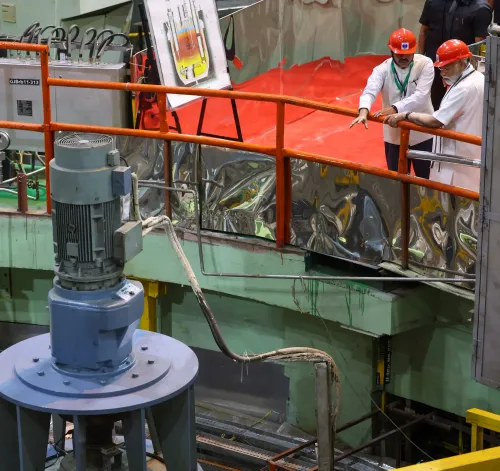
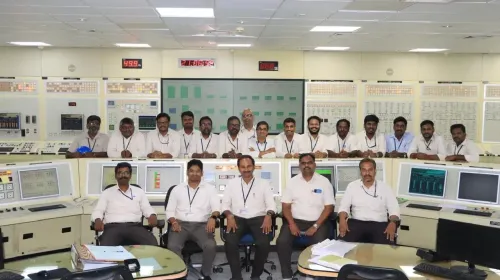
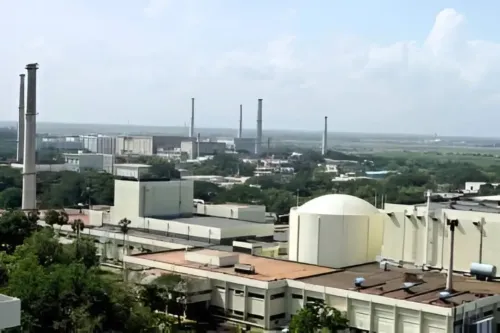
Prototype Fast Breeder Reactor (PFBR) at Kalpakkam, Tamil Nadu achieved first criticality on 6 April , announced by Union Minister Jitendra Singh on Monday.
The 500 MWe reactor is indigenously designed and marks the second stage of India's three-stage nuclear power programme.
India becomes the second country after Russia to operate a commercial-level fast breeder reactor.
The reactor produces more fuel than it consumes, enabling future use of India's vast thorium reserves.
Government targets 100 GW nuclear capacity by 2047 and plans five SMRs by 2033 under a ₹20,000 crore Nuclear Mission.
Private sector participation in nuclear energy will expand under the SHANTI Act and supportive policy frameworks.
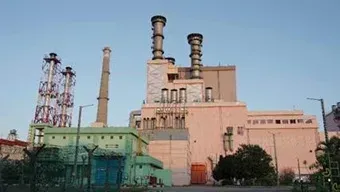
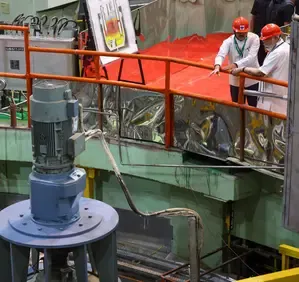
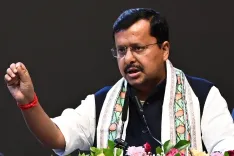
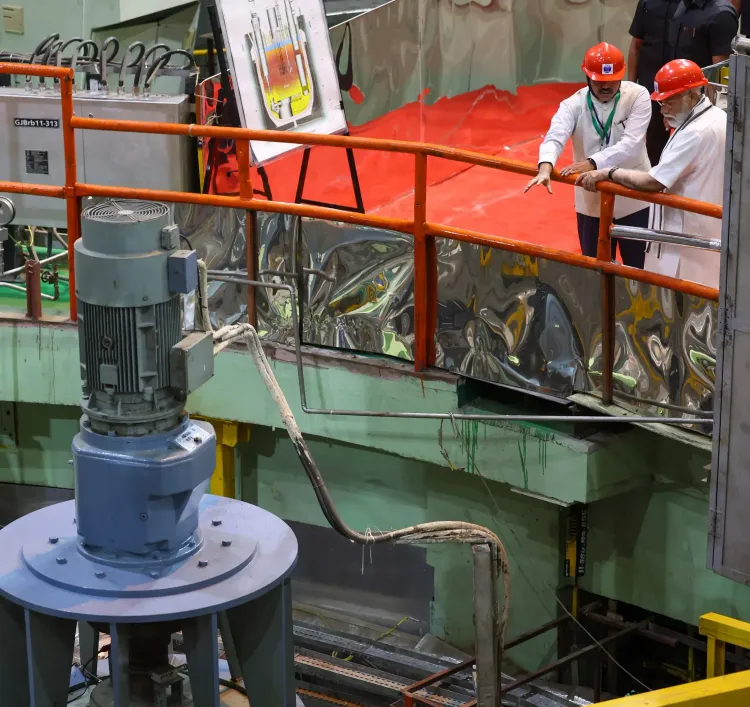
Union Minister Jitendra Singh on Monday announced that India is poised to become the second country after Russia to operate a commercial-level fast breeder reactor, following the Prototype Fast Breeder Reactor (PFBR) at Kalpakkam, Tamil Nadu achieving first criticality on 6 April. The indigenously designed 500 MWe reactor, developed by the Indira Gandhi Centre for Atomic Research (IGCAR) and constructed by BHAVINI, marks the commencement of the second stage of India's three-stage nuclear power programme.
What the reactor achieves
The PFBR utilises uranium-plutonium mixed oxide fuel and is engineered to produce more fuel than it consumes — a breakthrough that positions India to unlock its vast thorium reserves in the third stage of its nuclear strategy. This fuel cycle efficiency represents a fundamental shift in India's approach to long-term energy security and nuclear sustainability.
Global context and India's milestone
Currently, Russia remains the only nation operating commercial fast breeder reactors at scale. While the United States, United Kingdom, France, Japan, Germany, and China have historically developed or operated experimental fast reactors, most of these programmes have been decommissioned or remain inactive. India's achievement thus positions it uniquely among major democracies pursuing advanced nuclear fuel cycles.
Three-stage nuclear programme explained
India's nuclear strategy, conceived in the 1950s, unfolds across three stages: the first uses natural uranium in heavy-water reactors; the second (now commencing) employs fast breeder reactors to convert U-238 into fissile plutonium; and the third leverages thorium, of which India holds the world's second-largest reserves. The PFBR's operational status accelerates this transition.
India's clean energy and capacity targets
Minister Singh emphasised that nuclear energy is integral to India's clean energy transition and long-term sustainability objectives. The government has set a target of 100 GW of nuclear capacity by 2047, aligned with the Net Zero by 2070 commitment. Sectors including Artificial Intelligence, data infrastructure, and advanced manufacturing will increasingly rely on continuous, reliable clean energy sources, where nuclear power is deemed indispensable.
Small Modular Reactors and private sector participation
The minister highlighted the Nuclear Mission, recently launched with an allocation of ₹20,000 crore, which plans deployment of five Small Modular Reactors (SMRs) by 2033. SMRs are envisioned for captive power generation in industrial settings, dense urban zones, remote grid-disconnected areas, and repurposing of decommissioned thermal plants. The SHANTI Act and supportive policy frameworks are expected to enable greater private sector participation in scaling India's nuclear capacity. A balanced energy portfolio combining nuclear, renewable, and other clean sources will be essential to achieving India's decarbonisation goals.
Point of View
Elegant in theory, has faced decades of delays; the second stage took 50+ years to reach this point. The real test is whether SMR rollout and private sector participation can accelerate the third-stage transition faster than government-led nuclear efforts historically have. Without that acceleration, the 2047 targets risk becoming aspirational rather than achievable.
NationPress
16 Sept 2026
Frequently Asked Questions
What is the Prototype Fast Breeder Reactor (PFBR) and why does it matter?
The PFBR is a 500 MWe indigenously designed reactor at Kalpakkam, Tamil Nadu, that achieved first criticality on 6 April. It marks the commencement of the second stage of India's three-stage nuclear programme by using uranium-plutonium mixed oxide fuel to produce more fuel than it consumes, enabling future use of India's vast thorium reserves.
Why is India's fast breeder reactor significant globally?
India becomes only the second country after Russia to operate a commercial-level fast breeder reactor. Most other nations — including the US, UK, France, Japan, Germany, and China — have decommissioned or halted their fast reactor programmes, making India's achievement unique among major democracies pursuing advanced nuclear fuel cycles.
What is India's three-stage nuclear programme?
Stage one uses natural uranium in heavy-water reactors; stage two (now commencing with the PFBR) employs fast breeder reactors to convert uranium-238 into fissile plutonium; stage three leverages thorium, of which India holds the world's second-largest reserves. The PFBR's operational status accelerates the transition to stage three.
What are Small Modular Reactors (SMRs) and how do they fit into India's nuclear strategy?
SMRs are smaller, flexible nuclear units planned under the ₹20,000 crore Nuclear Mission, with five units targeted by 2033. They will serve captive power generation in industrial settings, dense urban zones, remote grid-disconnected areas, and repurposed thermal plants, enabling private sector participation and faster capacity scaling.
What is India's nuclear capacity target and timeline?
India aims to achieve 100 GW of nuclear power capacity by 2047, aligned with its Net Zero by 2070 commitment. The government is combining fast breeder reactors, SMRs, and renewable energy to build a balanced clean energy portfolio.